When Feeling Good Starts Costing You More Than You Realize

If you make more than $100,000 a year, you’d probably expect to feel pretty comfortable, right?

You have a good income. You pay your bills. You’re not out there buying $300 worth of clothes every time you have a bad day. You’re not making huge, impulsive purchases that you know you can’t afford.

So why does it feel like there’s never enough money at the end of the month?

You sit down and create a budget. You account for the housing, utilities, groceries, insurance, savings, gas, subscriptions and everything else you can think of.

You give every dollar a job. And yet you’re still coming up short. Or maybe you aren’t technically short, but there is very little left over.

You look at the numbers and think, where is all my money going?

This is where I think it’s worth looking a little deeper because sometimes the problem isn’t that you’re spending frivolously. It’s that you’re spending consistently.

Maybe every month there are massages. Maybe you get your nails done. Maybe there are wellness programs, supplements, memberships, treatments, classes or other things you’ve decided are important to your well-being.

And individually, none of these purchases seem unreasonable.

In fact, they’re easy to justify.

“I work hard.”

“I deserve this.”

“This is self-care.”

“It’s good for me.”

And maybe it is. Self-care matters. Doing things that make you feel good isn’t inherently a problem.

But what if you started asking a different question?

Not just, “Do I enjoy it?”

But…What am I hoping this will change for me?

There is a difference. And sometimes it’s a really important difference.

Because you can have a six-figure income and still use money to manage emotions you haven’t dealt with.

You can spend money on things that look completely healthy and responsible on the outside while something very different is happening underneath.

Maybe you’re exhausted. Maybe you’re lonely. Maybe you’re overwhelmed.

Maybe you’ve spent years taking care of everyone else and don’t know what it feels like to take care of yourself without buying something.

Maybe your life changed and you’re trying to figure out who you are now.

Maybe you’re constantly chasing that little feeling of relief. And every time you find something that gives you a little bit of it, you do it again.

Another appointment.

Another program.

Another treatment.

Another thing that promises to help you feel better, look better, be better or finally get your life together.

And because each purchase makes sense on its own, you never really see the pattern until you look at the whole picture.

That’s when the questions get more uncomfortable.

What if a lack of money isn’t the real problem?

What if your spending is telling you something?

That’s where financial coaching can become about so much more than a budget. Because I can help you put numbers on a spreadsheet all day long. But, if your spending is meeting an emotional need, a budget alone isn’t going to solve the problem.

You can make the perfect budget on paper and still find yourself spending money in the same places month after month because the spending is doing a job.

And until you understand what that job is, it’s really difficult to change the pattern.

That’s where the real work begins.

Not with cutting out every massage or telling yourself you can’t get your nails done. And definitely not with making your life miserable in the name of saving money.

But with getting curious about your money, your choices, your emotions, and about what you’re really trying to create with all that spending.

Because sometimes the thing you’re trying to buy isn’t the massage. It isn’t the manicure. And it isn’t the wellness program.

It’s the feeling you hope that comes with it.

And that is a very different conversation.

Maybe it’s time to start having it.

What Are You Putting Off?

Procrastination is one of those things we all know about, and most of us have probably been guilty of it at one time or another. I know I have. There are things in life that I know need to be done, but somehow, I can find ten other things that suddenly seem much more important. Sometimes it is something as simple as cleaning out a closet or making a phone call. Other times, it is something that carries a little more weight, like making a difficult decision, having a conversation we have been avoiding, or finally dealing with something that has been hanging over our heads.

The funny thing about procrastination is that we usually know exactly what we are doing. We tell ourselves we will get to it tomorrow. Tomorrow comes, and we decide we will do it next week. Before we know it, weeks or even months have passed, and the thing we have been avoiding is still sitting there.

I have been thinking about how often we do this with our money.

Maybe you know you need to sit down and really look at where your money is going each month, but you keep putting it off. You may already have a pretty good idea that you are spending more than you want to, but you don’t want to see the actual numbers. Maybe you have credit card balances that have been bothering you for a while, but opening the statements makes you uncomfortable. Perhaps you have been telling yourself that you will start saving when things settle down, or that you will figure out a budget after the next paycheck.

And somehow, the next paycheck keeps coming.

This is where I think procrastination gets interesting. Sometimes we aren’t actually avoiding the task. We are avoiding the feeling we think will come with doing the task.

Looking at your finances may bring up anxiety. It may bring guilt or frustration. You may be disappointed in yourself because you thought you would be further along by now. You may be afraid of what you will discover once you start adding everything up. Or maybe you simply don’t know where to start, so it feels easier to do nothing than to sit down and try to figure it all out.

So we avoid it.

And for a little while, that feels better.

We don’t have to think about the credit card balance. We don’t have to make a decision. We don’t have to admit that the way we are spending money isn’t really working anymore. We can go on with our day and pretend that we will deal with it later.

The problem is that later usually comes.

And whatever we were avoiding is still waiting for us.

Sometimes it has even grown.

The balance is a little higher. Another bill has been added. Another month has gone by without saving. Another purchase has been made that we really didn’t need. Another paycheck has disappeared without us feeling like we have much to show for it.

Then we wonder why money feels so stressful.

I don’t think the answer is always that we need more discipline or a better budget. Sometimes we need to understand what is happening underneath the behavior.

What are we actually avoiding?

That is a much more interesting question.

Maybe looking at your money brings up feelings you don’t particularly want to deal with. Maybe spending has become a way to make yourself feel better, and getting serious about your finances means you might have to find another way to get that feeling.

Maybe you are afraid that if you really look at everything, you will have to make some changes. And change can be uncomfortable, even when we know the change is good for us.

I have experienced enough changes in my own life to know that sometimes we hold onto things simply because they are familiar. Even when familiar isn’t working particularly well.

Money can be the same way.

We can get into patterns of spending, saving, avoiding, ignoring and starting over. We promise ourselves that this month will be different, and then life happens. Something unexpected comes up. We get tired. We have a stressful week. We buy something because we deserve it. We tell ourselves we’ll make up for it next month.

Then next month looks a lot like the one before it.

If that sounds familiar, I don’t think the answer is to beat yourself up over it. Shame rarely creates the kind of lasting change we are looking for. I think the better place to start is with curiosity.

Instead of asking, “Why can’t I get this together?” ask yourself, “What am I avoiding?”

What happens inside you when you think about looking at your bank account? What do you feel when you think about paying off debt? What are you hoping a purchase will make you feel? What decision have you been putting off because you aren’t sure what the right answer is?

Those questions can tell us a lot because sometimes the behavior we see on the outside is only part of the story.

And this is especially true when life has changed.

Divorce, an empty nest, a career change, the loss of a spouse, a new marriage, starting over in a completely different season of life — these things can change much more than our circumstances. They can change how we see ourselves, what we need, what we want and even what we believe will make us happy.

Sometimes our spending changes right along with us.

We buy things because we are trying to create comfort. We spend because we are trying to feel successful. We shop because we are bored or lonely or exhausted. We spend because our old life no longer feels like our life, and we are trying to figure out what the new one is supposed to look like.

Then we wonder why the money isn’t working.

Maybe the first step isn’t another budget.

Maybe it is slowing down long enough to ask ourselves some better questions.

What am I putting off?

What am I afraid I will find if I finally deal with it?

What am I hoping my money will give me that money can’t actually provide?

And perhaps most importantly, what would change if I stopped waiting for the perfect time to deal with it?

You don’t have to fix everything at once. You don’t even have to know exactly what the finished picture looks like.

You just have to be willing to stop avoiding the first thing.

Because sometimes the biggest change in our finances begins with something much smaller than a new budget or a bigger paycheck.

Sometimes it begins with finally being willing to look.

Before We Blame the Budget, Let’s Look at the Why

You know those nights when you’ve just had enough?

You’ve been going all day.

You’re tired.

Your brain is tired.

Your patience is tired.

You go grocery shopping, and all you can think about is getting home.

You unload the groceries.

You put some of them away.

And then you order a pizza.

Wait.

Didn’t we just go grocery shopping?

Yes.

Yes, we did.

There is literally food in the refrigerator.

But we don’t care.

Because tonight, we’re done.

We don’t want to cook.

We don’t want to think about what to cook.

We don’t want another decision.

We just want someone to bring us a pizza.

So we order it.

And maybe a little treat to go with it.

Then we sit down on the couch.

Finally.

We can relax.

We turn on the television and start scrolling through the streaming services.

Netflix.

Hulu.

Amazon Prime.

Disney+.

Whatever else we’re paying for this month.

And somehow, after scrolling through all of them, we decide there is absolutely nothing to watch.

So what do we do?

We pay $20 for a movie.

A movie we could have probably watched on one of the four streaming services we’re already paying for if we’d had the patience to look long enough.

But we don’t.

Because tonight isn’t really about the movie.

And it probably wasn’t really about the pizza either.

See, sometimes we’re not spending money because we want something.

We’re spending money because we want to feel something different. Or feel nothing at all.

We want the day to be over.

We want our brain to shut up for a minute.

We want to be taken care of.

We want something easy.

We want comfort.

We want a reward for making it through the day.

And sometimes spending money is the quickest way we know how to get there.

That’s the part of our spending that can be really hard to see.

Because when we look at the bank account, all we see is:

Pizza.

Treat.

Movie.

$20 here.

$15 there.

And we think:

“Why am I always spending so much money?”

But maybe a better question is:

“What was I really looking for when I spent that money?”

One of my clients had a moment like this recently.

She had gone grocery shopping.

She had food in the house.

And then she ordered pizza.

Then she bought another treat.

Then she got home, sat on the couch and spent $20 on a movie even though she already had multiple streaming services.

And instead of just brushing it off, she stopped.

She looked at what she’d done.

And she asked herself:

“Why did I do that?”

That question was the breakthrough because she finally became curious about her own behavior.

Instead of saying:

“I shouldn’t have done that.”

She asked:

“Why did I?”

That’s a very different question.

How often do we do things with our money without really knowing why?

We buy something because we’re stressed.

We order dinner because we’re exhausted.

We go shopping because we’re bored.

We buy something new because we need a little excitement.

We treat ourselves because we’ve had a hard week.

We spend because we feel like we deserve something.

We buy something because everyone else seems to have it.

We shop when we’re lonely.

We spend when we’re celebrating.

We spend when we’re sad.

We spend when we’re angry.

Heck, sometimes we spend when we’re just having a Tuesday.

And most of the time, we don’t stop to ask ourselves what’s really happening.

We just swipe.

Click.

Order.

Done.

Until the credit card bill shows up.

And then we’re staring at the statement wondering how we managed to spend that much money.

But one thing I do know; our spending usually makes sense to us in the moment.

That’s why telling ourselves, “I just need to stop spending so much” doesn’t always work.

Because in the moment, the spending is solving something.

Maybe not a financial problem.

An emotional one.

The pizza solves the problem of being too tired to cook.

The shopping trip solves the problem of boredom.

The new purse gives us a little excitement.

The Amazon package gives us something to look forward to.

The $20 movie gives us two hours where we don’t have to think about the day we just had or some other situation we’re dealing with.

And for a little while…it works.

That’s what makes it so easy to repeat.

But what happens when the feeling wears off?

The pizza is gone.

The treat is gone.

The movie ends.

The package arrives.

The excitement fades.

And we’re left with the same stress.

The same exhaustion.

The same loneliness.

The same problems.

Except now we’ve spent money too.

And that’s when we start beating ourselves up.

“I have got to get better with money.”

“I don’t know why I do this.”

“I need more discipline.”

“I can’t seem to stick to a budget.”

Maybe.

But maybe we need to look a little deeper.

Because if we’re using money to make ourselves feel better, then the problem isn’t simply that we’re spending too much.

We’re asking our money to do a job it was never designed to do.

Money can buy comfort.

But it can’t create peace.

It can buy dinner.

But it can’t fix exhaustion.

It can buy something beautiful.

But it can’t fix insecurity.

It can buy entertainment.

But it can’t make us happy when we’re unhappy with our lives.

It can give us a temporary escape.

But eventually, we have to come back.

And sometimes that little escape costs us a lot more than we realize.

Not just financially.

So what if we stopped judging ourselves long enough to get curious?

The next time we find ourselves making one of those purchases that makes us think, “Why did I buy that?”, let’s pause.

Not to shame ourselves.

Just to notice.

Ask:

What was I feeling right before I bought it?

Was I tired?

Stressed?

Bored?

Lonely?

Overwhelmed?

Was I looking for a reward?

Was I trying to escape my day?

Was I trying to make myself feel better?

Was I trying to fill some empty space?

And then ask:

What did I expect this purchase to do for me?

That’s the question I really want us to start asking.

Because sometimes the answer has very little to do with the thing we’re buying.

And maybe that’s where our financial breakthrough starts.

Not with another budget.

Not with cutting every little pleasure out of our lives.

Not with deciding we’re never ordering pizza again.

Because let’s be honest. Sometimes we just want pizza.

And I’m not taking that away from anybody.

The goal isn’t to make ourselves miserable in the name of financial responsibility.

The goal is to understand ourselves well enough that we are making the decision instead of the emotion making it for us.

There’s a difference between:

“I don’t feel like cooking tonight, and I have room in my budget, so I’m ordering pizza.”

and:

“I’ve had a horrible day and I don’t want to deal with anything else, so I’m ordering pizza, a treat, and a $20 movie because I just want to check out for a while.”

From the outside, those purchases look almost identical.

But they’re not. One is a choice. The other is a coping mechanism.

And if we don’t recognize the difference, we can spend a whole lot of money trying to feel better.

That $20 movie might have been the best $20 my client ever spent.

Not because the movie was great.

She doesn’t even remember much about it.

But because it made her stop. It made her notice. It made her ask the question.

“Why did I do that?”

And once we start asking ourselves that question without judgment, we start seeing things differently.

We begin to notice our patterns.

We notice what triggers our spending.

We notice the stories we tell ourselves.

We notice when we’re using money as a reward.

We notice when we’re using it as an escape.

We notice when we’re buying something because we genuinely want it…

and when we’re buying something because we desperately want to feel different.

And that awareness is powerful.

Because we can’t change what we refuse to look at.

So tonight, if you find yourself standing in the kitchen staring at a full refrigerator while opening the food delivery app…

I’m not going to tell you not to order the pizza.

I’m just going to ask you to pause for a second.

Take a breath.

And ask yourself:

“What do I really need right now?”

Maybe the answer is pizza.

And that’s okay.

But maybe it’s rest.

Maybe it’s comfort.

Maybe it’s a break.

Maybe it’s connection.

Maybe it’s permission to admit that you’re exhausted.

And if you can figure out what you really need, you might discover that sometimes the thing we’re trying to buy isn’t actually what we’re looking for.

And that realization can change more than our spending.

It can change our relationship with money.

And maybe even our relationship with ourselves.

Why Doing Nothing Might Be One of the Smartest Financial Decisions You Make

This past week, I had the opportunity to attend our church ladies’ retreat, and I came home with something I didn’t expect.

It wasn’t a notebook full of profound revelations or a perfectly organized list of goals.

It was peace.

Each morning, before the day really began, several of us would gather on the deck overlooking the lake. Coffee cups and tea mugs in hand, wrapped in blankets against the cool morning air, we sat together watching the water. We shared our morning devotionals, laughed, prayed, and simply enjoyed being present.

There wasn’t a schedule to rush through.

There wasn’t a phone constantly demanding attention.

There wasn’t a to-do list waiting for me.

There was just stillness.

It reminded me how rarely we allow ourselves to simply be.

Our culture celebrates busyness. We wear exhaustion like a badge of honor. We convince ourselves that if we’re not constantly producing, checking things off our lists, or chasing the next goal, we’re somehow falling behind.

But I don’t think God designed us that way.

In fact, throughout Scripture, we see rhythms of work and rest. Even God rested after creation. But God wasn’t tired. He was letting us know that rest has purpose. Jesus often stepped away from the crowds to spend quiet time with His Father before returning to serve others.

Somewhere along the way, many of us forgot that rest isn’t laziness. It’s preparation.

And believe it or not, this has everything to do with our finances.

When we’re mentally exhausted, emotionally drained, or running from one obligation to the next, we don’t usually make our best financial decisions.

We grab takeout because we’re too tired to cook.

We impulse shop because we’re emotionally depleted.

We ignore our budget because we simply don’t have the mental energy to deal with it.

We avoid opening bills because we’re overwhelmed and convince ourselves we’ll “figure it out later,” and it’s usually because we’re running on empty.

One of the biggest misconceptions about financial success is that it’s all about discipline. While discipline certainly matters, what often matters more is having enough mental and emotional margin to make good decisions in the first place.

When your brain never gets a chance to slow down, everything begins to feel urgent. And when everything feels urgent, it’s difficult to think clearly about anything, including your money.

That’s why downtime isn’t wasted time. It’s an investment.

When we pause, our minds become clearer. We notice things we’ve been missing. We stop reacting and start responding with intention.

Those quiet mornings on the deck overlooking the lake reminded me that clarity rarely arrives when life is loud.

It comes in the quiet.

As we shared breakfast together afterward, lingering over delicious meals and unhurried conversations, I realized how refreshing it felt not to constantly think about what was next. There was no pressure to perform. No competition. Just genuine connection.

I think our finances benefit from that same mindset.

Imagine sitting down to look at your bank account, not from a place of panic or guilt, but from a place of peace.

Imagine making spending decisions that align with your values instead of appeasing your emotions.

Imagine having enough margin to ask yourself, “Is this really the best next step?”

Those kinds of decisions don’t usually happen when we’re overwhelmed. They happen when we’ve taken time to breathe.

The truth is, downtime doesn’t cost us productivity. It often creates it.

And it doesn’t make us financially irresponsible. It helps us become financially intentional.

Sometimes the most productive thing you can do for your finances isn’t creating another spreadsheet or listening to another budgeting podcast.

Sometimes it’s taking a walk.

Reading your Bible on the porch.

Sitting beside a lake.

Having an unhurried conversation with friends.

Drinking your coffee while the world wakes up around you.

Because when your soul is rested, your mind becomes clearer.

And when your mind is clearer, your financial decisions often become wiser.

I’m incredibly thankful to the ladies who organized this retreat and to our church family for making times like this possible. It was a beautiful reminder that God often speaks the loudest when we finally become quiet enough to listen.

Maybe you’ve been telling yourself you don’t have time to rest.

I’d gently challenge that thought.

Maybe you don’t have time not to.

Your mind, your heart, your relationships, and yes, even your finances, will thank you for it.

Imposter Syndrome Isn’t Just Hurting Your Career

When most people hear the phrase imposter syndrome, they immediately think about work.

They picture someone who just got promoted but secretly believes they aren’t qualified. Or an entrepreneur who’s afraid to launch a business because they don’t feel experienced enough. We hear about imposter syndrome in the workplace all the time.

But what if I told you that imposter syndrome doesn’t stay at the office?

It follows you home.

It’s there while you’re paying bills.

It’s on your mind when you’re deciding whether to invest, ask for help, negotiate your salary, buy a home, or even look at your bank account.

Money issues are rarely just about not being able to stick to a budget. It’s about the stories we tell ourselves. It’s about the beliefs we carry, often without even realizing it. Those beliefs shape our decisions far more than we like to admit.

One of the most damaging beliefs is believing you’re somehow not capable or not worthy.

Not capable of understanding money. Not capable of building wealth. Not capable of making good financial decisions. Sometimes it goes even deeper than that. You may not feel worthy of financial success in the first place.

If you’ve experienced failure, gone through a divorce, struggled with debt, lost a job, or simply made mistakes with money, it’s easy to let those experiences become part of your identity. Instead of saying, “I made a bad decision,” you begin telling yourself, “I’m bad with money.”

Those are two very different statements.

One describes something you did. The other describes who you believe you are.

When you don’t feel worthy, you may settle for less than you deserve. You may stay in a job that underpays you because you don’t believe you’re worth more. You may hesitate to raise your prices if you’re a business owner. You may spend money trying to prove your value to others, or you may avoid financial opportunities because deep down you don’t believe success belongs to someone like you.

Your beliefs quietly become your financial decisions.

The good news is that beliefs aren’t facts. They’re stories we’ve repeated often enough that they begin to feel true. And just like those stories we’ve started to believe, they can be rewritten.

You are not defined by your past mistakes. You are not defined by what someone else told you about your worth. Your value isn’t determined by your income, your net worth, or the balance in your bank account.

When you begin to see your worth differently, you also begin making different financial decisions. You ask better questions. You recognize opportunities. You invest in yourself. You stop settling for less and start believing that a healthier financial future is something you’re worthy of creating.

That change doesn’t happen overnight, but every positive decision is another piece of evidence that you’re more capable and more worthy than you’ve been giving yourself credit for

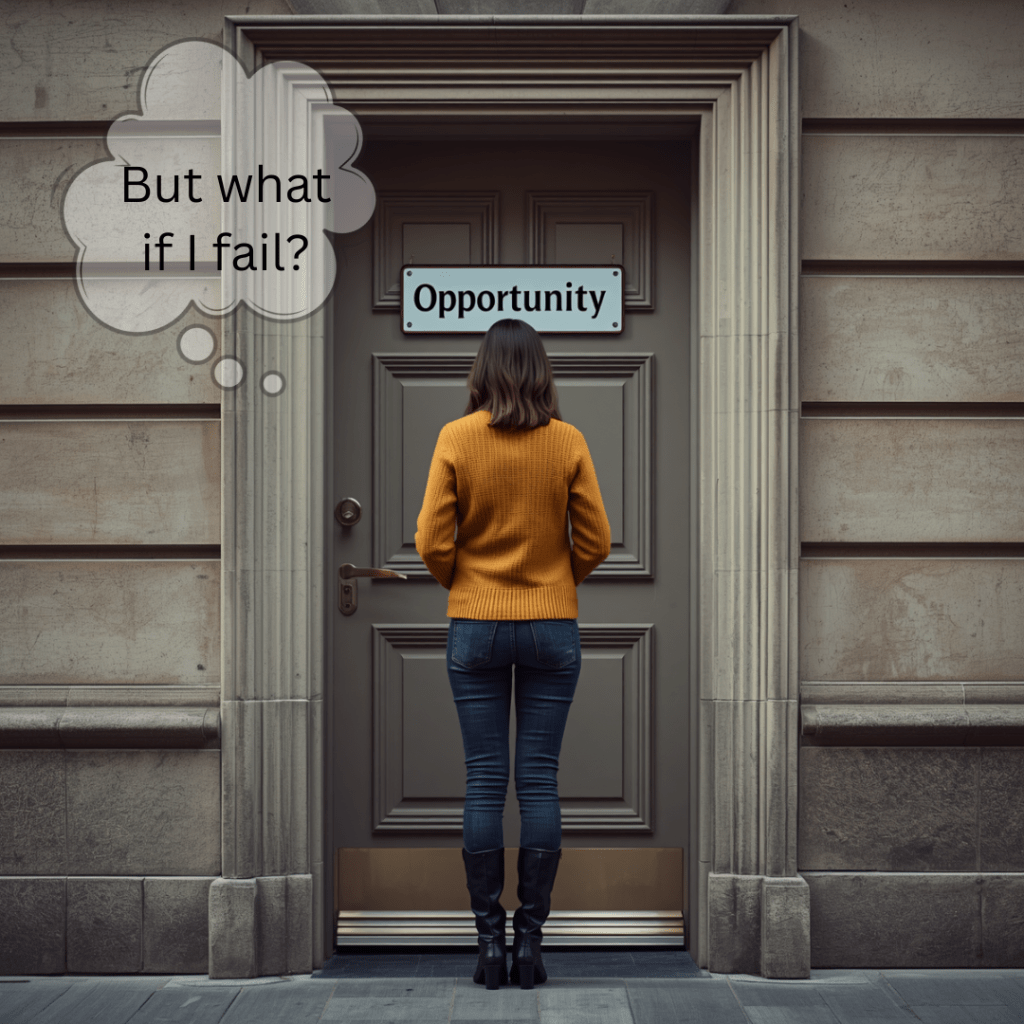
Maybe you’ve avoided investing because it feels too complicated. Maybe you’ve stayed in a job that doesn’t value you because asking for more felt uncomfortable. Maybe you’ve put off creating a budget because you’re convinced you’ll fail at it anyway.

Those thoughts may seem harmless in the moment, but over time they become expensive.

Every opportunity you don’t pursue, every raise you don’t ask for, every financial decision you avoid because you’re afraid of getting it wrong carries a cost.

What’s interesting is that imposter syndrome doesn’t always make us do less. Sometimes it makes us do more.

It convinces us that one more course, one more certification, one more book, or one more podcast episode will finally make us “ready.” We spend money trying to earn permission to believe in ourselves.

Knowledge is valuable. Growth is important. But there comes a point where learning becomes hiding.

You don’t need another certificate to prove your worth. You need to trust the knowledge and experience you already have and be willing to take the next step.

Imposter syndrome can even show up in the way we spend money. Sometimes we buy things to look successful because we’re hoping they’ll make us feel successful. We convince ourselves that if we drive the right car, wear the right clothes, or have the right house, maybe we’ll finally feel like we belong.

The problem is that confidence can’t be purchased.

It has to be built.

Here’s what I want you to know.

If you’ve struggled with imposter syndrome, it doesn’t mean you’re weak. It doesn’t mean you’re incapable. In fact, many highly capable people wrestle with these thoughts every day. The difference is learning not to let those thoughts make your decisions for you.

You don’t have to know everything before you take control of your finances.

You don’t have to be perfect before you start investing.

You don’t have to understand every financial term before asking questions.

You don’t have to wait until you feel completely confident before making a positive change.

Confidence doesn’t usually come first.

Action does.

Every small financial decision you make is a vote for the person you’re becoming. Every time you choose to learn instead of avoid, ask instead of assume, or move forward instead of standing still, you’re building evidence that you’re more capable than your inner critic wants you to believe.

I’ve worked with people from all walks of life. People who were rebuilding after divorce. People navigating retirement. People starting over after losing a spouse, changing careers, or facing unexpected life changes. One thing I’ve learned is that the biggest obstacle is rarely a lack of intelligence.

It’s a lack of belief.

The beautiful thing about belief is that it can change.

You don’t have to stay stuck in the story you’ve been telling yourself. You can write a new one.

Maybe today that new story starts with asking for help.

Maybe it starts with believing that you’re capable of learning something new, no matter your age or your past.

Your financial future isn’t determined by whether you’ve made mistakes. We all have.

It’s determined by what you choose to do next.

So if imposter syndrome has been making your financial decisions for you, maybe it’s time to politely show it the door.

You don’t need to have all the answers.

You just need to take the next right step.

Because the goal isn’t to become fearless.

The goal is to stop letting fear decide your future.

And I believe you’re far more capable than you’ve given yourself credit for.

Your Future Doesn’t Have to Look Like Your Past

One of the biggest myths people believe is that once they have made a decision, they have to stick with it forever.

They stay in habits that aren’t working. They keep following advice that doesn’t fit their life anymore. They continue making money choices based on who they were ten years ago instead of who they are today.

The truth is, change is a normal part of life. We grow. Our circumstances change. Our priorities shift. What worked in one point in our lives may not work in the next.

Yet so many people feel guilty about changing direction.

I see it all the time with clients. Someone gets divorced and suddenly their entire financial picture changes. Someone changes careers and needs a completely different strategy. Someone gets married, becomes a caregiver, retires, or starts over after a setback. Life happens.

The problem isn’t the change itself. The problem is believing that changing course means you failed.

It doesn’t.

Sometimes the healthiest decision you can make is admitting that what you’ve been doing isn’t working anymore.

That takes courage.

Many people stay stuck because the familiar feels safer than the unknown. Even when they are stressed, overwhelmed, or frustrated with their finances, they keep doing the same things because at least they know what to expect.

But growth rarely happens inside our comfort zones.

If you want different results, you have to be willing to make different choices.

That may mean creating a budget for the first time. It may mean finally facing debt instead of avoiding it. It may mean asking for help, learning new skills, changing careers, or making adjustments to long-held financial habits.

None of those things mean you’ve failed.

They mean you’re growing.

So how do you give yourself permission to change?

Start by accepting that financial change is a natural part of life. Just like seasons change, your financial life will have seasons too. There will be times of abundance and times of challenge. Times of building and times of rebuilding.

Every season has something to teach us.

You also need to let go of the beliefs that are keeping you stuck.

Maybe you’ve told yourself you’re “bad with money.”

Maybe you’ve convinced yourself it’s too late to fix things.

Maybe you believe everyone else has it figured out while you’re struggling to keep up.

Those stories are expensive. They cost you opportunities, confidence, and progress.

Give yourself permission to release them.

Have compassion for yourself as well. Every person has made money mistakes. Every person has taken a wrong turn somewhere. The goal isn’t to change overnight. The goal is to make progress.

The people who eventually build financial stability are not the people who never make mistakes. They are the people who learn from them and keep moving forward.

It also helps to surround yourself with people who encourage growth. Find mentors, coaches, trusted friends, or communities that support your goals. Sometimes we borrow confidence from others until we develop our own.

Most importantly, trust that you can learn what you need to learn.

Many people come to me feeling completely lost. They don’t know where to start. They don’t know what their next financial move should be. They feel overwhelmed by all the information online. That’s okay.

You don’t have to have every answer today.

You only need enough courage to take the next step.

There are several reasons why giving yourself permission to change your financial life matters.

First, financial authenticity creates peace. When your money decisions reflect your actual values and goals instead of someone else’s expectations, life feels lighter. You stop chasing what everyone else is doing and start building a financial life that fits you.

Second, you deserve financial confidence. You deserve to wake up without constant anxiety about money. You deserve a plan that supports your life and your goals. You deserve to feel hopeful about your future.

Third, growth requires action. No one builds financial security by staying exactly where they are. Growth happens when we learn new things, make adjustments, and remain open to new possibilities.

Fourth, life is too short to spend years stuck in financial stress when solutions are available. That doesn’t mean change happens overnight. It means deciding that your future is worth investing in.

Finally, you have more power than you think.

You may not control the economy. You may not control interest rates, inflation, or unexpected life events.

But you do control your next decision.

You control whether you learn or avoid.

You control whether you ask for help or continue struggling alone.

You control whether you stay stuck or start moving forward.

Small decisions repeated consistently can completely change the trajectory of your financial life.

Celebrate every win along the way. Celebrate the credit card balance that finally starts going down, not just once it’s paid off. Celebrate the emergency fund that reaches its first milestone. Celebrate the month you stick to your spending plan. Celebrate the lessons learned from past mistakes.

Those victories matter.

If God has been nudging you toward change, don’t ignore it. Sometimes faith looks like taking the next step before you can see the entire path.

As it says in Isaiah 43:19, “See, I am doing a new thing! Now it springs up; do you not perceive it?”

New beginnings are possible. New habits are possible. A new financial future is possible.

Give yourself permission to change. Give yourself permission to grow. Give yourself permission to build a financial life that supports the life you want to live.

It won’t always be easy, but it will be worth it.

And that first step you take today may be the very thing that changes everything tomorrow.

When “Being Nice” Is Draining You

Have you ever caught yourself saying yes when every part of you wanted to say no?

Maybe a friend asks to borrow money and you already know your bank account is tight. Maybe someone needs a favor and your schedule is already packed. Still, the word “yes” slips out before you can stop it. Later, you feel the pressure: emotionally, financially, or both.

Many people live this way without realizing what’s really happening. The issue is not generosity. The issue is boundaries.

Boundaries are the quiet lines we draw around our time, energy, and resources. They define what we are comfortable with and what crosses the line. When those lines are unclear, people tend to take more than we intended to give because the limits were never made clear.

Without boundaries, life can start to feel exhausting. You give your time away until you are drained. You spend money trying to help others or to keep the peace. You stretch yourself so thin that your own needs slowly move to the bottom of the list.

In relationships, a lack of boundaries can lead to emotional burnout. You become the person everyone leans on, the one who always shows up, the one who never says no. It might even feel good at first. Being helpful and dependable brings a sense of connection. Yet over time, the constant giving begins to wear on you.

Money often gets pulled into the same pattern.

Think about how many financial decisions are tied to other people. Splitting dinners you didn’t want to go to. Buying gifts you couldn’t afford. Lending money you hope will be paid back someday. Saying yes to these moments can feel easier than facing the discomfort of saying no.

The result is a slow leak in both your energy and your finances.

Learning to set boundaries changes that.

The first step is noticing where you feel drained. Pay attention to the moments that leave you feeling resentful, tired, or financially stressed. Those feelings are signals. They often point to a place where your limits are being crossed.

Then comes one of the hardest skills many people ever learn: saying no.

For people who are used to being the helper, the fixer, or the reliable one, saying no can feel uncomfortable. It may even bring a wave of guilt. Yet saying no does not make someone selfish. It simply means they are aware of their limits.

A calm, simple response can be enough. “I can’t commit to that right now.” No long explanation is required. No apology for protecting your time.

Once boundaries are spoken, they have to be held.

Some people will be surprised when the person who always said yes begins to say no. A little pushback is normal. Staying consistent is what teaches others that the boundary is real. Over time, people adjust.

Money boundaries follow the same idea.

Many financial problems are not just about numbers. They come from pressure, guilt, or the desire to keep everyone happy. When there are no financial limits, it becomes easy to spend in ways that do not match your goals.

Knowing what your money needs to do for your life changes that. When you have a clear plan for your income – covering bills, building savings, and allowing space for enjoyment – it becomes easier to recognize what falls outside those limits. Decisions begin to feel clearer.

There will still be moments when someone asks for financial help or expects you to spend money in ways that don’t work for you. In those moments, honesty is powerful. Saying you are not in a place to give right now protects your financial stability. It also keeps you from sacrificing your future just to avoid an awkward conversation.

Money shared with a partner or family member benefits from the same kind of clarity. Talking openly about spending habits, goals, and priorities keeps misunderstandings from growing. When everyone understands the limits, there is less tension and fewer surprises.

Through all of this, one truth becomes clear: boundaries are a form of self-respect.

When you honor your limits, stress begins to ease. Relationships become more balanced. You start making financial decisions that reflect your priorities instead of reacting to everyone else’s expectations.

Boundaries do not shut people out. They simply create a healthier space for connection. They allow you to give from a place of choice instead of obligation.

Your time matters. Your energy matters. Your financial future matters.

And you get to decide what is acceptable in your life.

The real question is simple.

Where is the first place you are ready to draw the line?

What If Your Spending Is Hiding in Plain Sight?

Have you ever looked around your home and thought, How did I end up with so much stuff?

But then another thought sneaks in.

Closets are full. Drawers barely close. The garage has boxes you forgot were even there. You start thinking maybe it’s time to downsize, declutter, or finally take a carload of things to donate.

Where did it all come from?

You don’t remember going on some massive shopping spree. You’re not walking around with twenty shopping bags every weekend. In fact, you probably think of yourself as a reasonable spender.

And yet, the evidence is sitting all around you.

The extra kitchen gadgets. The clothes with tags still on them. The random things from Amazon that seemed like a good idea at the time. The home décor you liked in the moment but never quite found a place for.

None of it felt like a big deal when you bought it.

That’s the interesting part about spending. Most people don’t get into trouble because of one huge decision. It’s the smaller purchases that slide into everyday life so easily you barely notice them.

A few clicks here.
A quick stop there.
Something small because it’s on sale.
Something else because it solves a tiny inconvenience.

Individually, each purchase feels harmless.

Collectively, they start filling your house.

I see this pattern often when I talk with people about money. They make good incomes. They’re responsible in many areas of life. But when we start looking at their finances together, one question keeps coming up.

Where is all the money going?

The answer usually isn’t dramatic. There’s no secret gambling habit or wild luxury lifestyle hiding in the background. It’s usually something much more ordinary.

Unnoticed spending.

The kind that blends into daily life so well that it never raises a red flag in your mind. Until one day you’re standing in your living room wondering why every shelf, cabinet, and closet feels a little crowded.

Your home quietly tells the story your bank account has been telling all along.

Most people have never been taught how to really observe their spending patterns. Money leaves the account in small pieces, and life moves quickly enough that we rarely pause long enough to connect the dots.

But when people start paying attention, they often realize the problem was never their income. It was awareness.

Once you begin noticing where money is flowing, you start making different choices without forcing yourself into some strict, miserable budget. You simply become more intentional.

You pause before the impulse purchase.

You recognize the difference between something you truly want and something that just caught your attention for a moment.

And strangely enough, the house starts feeling a little lighter too because things stop quietly accumulating without your permission.

So if you’ve ever looked around your home and wondered how everything multiplied when you weren’t paying attention, you’re not the only one.

Sometimes the clutter in our spaces is simply a reflection of the places in our finances where we stopped looking.

The good news is that once you start paying attention again, both can change a lot faster than most people expect.

If any of this sounds familiar, it might be time to take a closer look at what’s really happening with your money.

Most people don’t have a spending problem because they lack discipline. They simply haven’t had someone help them slow down, look at the patterns, and connect the dots.

That’s exactly what I do.

I work with people who make good money but still find themselves wondering where it all goes. Together, we look at your habits, your spending patterns, and the small decisions that quietly shape your finances. Once you start seeing things clearly, the changes become much easier than most people expect.

If you’re curious about what your own patterns might reveal, I’d love to help.

Reach out and let’s start the conversation.

Let’s chat

The Gap Between Working Hard and Getting Ahead Financially

Have you ever wondered why some people your age seem to be further ahead financially, even though they don’t appear to make more money than you?

Maybe you’ve had that moment where you hear what someone else earns and think, “Wait… that’s about what I make.”

And yet their life looks different.

They seem to travel more. They seem less stressed about money. They talk about investments or savings in a way that feels out of reach.

Meanwhile, you’re working hard, making a solid income, paying your bills, and still wondering where it all goes.

That question can sit in the back of your mind for a long time.

Sometimes in a jealous way. Sometimes just in a curious way.

How did they get there and why does it feel like you’re running just as hard but not covering the same ground?

One of the things I’ve noticed after working with a lot of people around money is that the difference is rarely income. Most of the time, it’s spending habits that formed quietly over the years.

Not always reckless spending. Just patterns.

The coffee that turns into a daily routine. The quick online purchases that barely register. The upgrades that feel small in the moment but stack up month after month. The little conveniences that slowly become permanent parts of the budget.

None of these feel like a big deal on their own.

That’s the tricky part.

Most people who feel stuck financially are not irresponsible with money. They are simply unaware of how their spending has grown around their lifestyle. It happens gradually, almost invisibly.

Income rises a little. Spending rises with it. Life gets busier. Convenience spending creeps in. Stress shows up. Buying something feels like relief for a moment.

Before long, the money that could have been building something bigger has quietly been redirected into everyday life.

Again, nothing dramatic. Just patterns.

Then years pass and people start asking themselves questions like:

“Why don’t I have more saved?” “Why does it feel like I should be further along by now?” “Where did all that money actually go?”

These are honest questions.

And they usually lead to one powerful realization.

The issue was never earning money. The issue was not noticing how it was leaving.

When people finally slow down enough to really look at their spending habits, they often feel a mix of surprise and relief. Surprise at how much money was quietly slipping away. Relief because the situation suddenly makes sense.

And when something makes sense, it can change.

This is why awareness matters so much with money. Not guilt. Not shame. Just awareness.

Because once someone can see their patterns clearly, they can start deciding which ones are actually helping them move forward and which ones are quietly holding them in place.

Sometimes, the distance between where someone is and where they want to be financially is not a massive gap.

Sometimes it’s simply the accumulation of small decisions repeated over time.

The encouraging part is that small decisions can also turn things around.

Not overnight. Not through extreme sacrifice. Just through a little more awareness and intention than before.

Many people are closer to financial progress than they think.

They just haven’t seen the patterns yet.

The One Money Question Most Couples Never Ask Each Other

A couple I know got engaged a few years ago.

They were sitting at the kitchen table one evening doing what responsible adults are supposed to do before getting married. They were talking about their future.

They talked about where they might live.
They talked about whether they wanted kids.
They talked about the possibility of buying a house someday.

Eventually, the conversation drifted to money.

It actually went pretty well.

They compared incomes. They talked about student loans.
They laughed about who was the “spender” and who was the “saver.”

By the end of the conversation, they both felt relieved. They had done the mature thing. They had the hard talk about money before marriage.

And yet, not long after the wedding, they were standing in their kitchen having a surprisingly intense argument… about a grocery receipt.

It wasn’t a big financial disaster.

It wasn’t a job loss. Nobody bought a car without asking the other person.

It was about groceries. Yes, groceries.

That might sound ridiculous, but it’s also incredibly common.

Around 70% of couples report arguing about money at some point in their relationship. Money shows up in more arguments than chores, parenting, or even intimacy.  One study found that couples argue about money roughly 58 times a year. That’s more than once a week.

Which raises a fair question.

If most couples talk about money before marriage, why does it still become one of the biggest sources of conflict afterward?

Part of the answer is that most of those early conversations are about numbers.

Numbers feel logical. Safe. Easy to compare.

“How much do you make?”
“How much debt do you have?”
“What’s your credit score?”

Those questions sound responsible, and they are helpful. But they only scratch the surface of how people actually experience money.

Money carries a long history with it.

One person may have grown up in a house where money was always tight. Bills were stressful. Unexpected expenses caused panic. Saving money meant safety.

Another person may have grown up where money flowed more easily. Needs were met without much discussion. Spending didn’t feel dangerous. Money was simply part of living.

Put those two people in the same household and something interesting happens.

The saver feels calm when money is being stored away.
The spender feels calm when life is being enjoyed.

Neither person believes they’re being unreasonable. In fact, both feel like they’re being responsible. And both of them are right.

That’s how a normal purchase turns into a surprisingly heated discussion.

Someone asks, “Do we really need that right now?”

The other person hears something different entirely. “You’re irresponsible.”

The conversation that follows rarely stays about the purchase. Soon it’s about priorities, respect, and control. Sometimes the argument wanders so far away from the original topic that neither person remembers what started it.

If you want a funny picture of this dynamic, one of the best examples shows up in an episode of my favorite show, The Big Bang Theory.

There’s a scene where they’re sitting around playing a truth-telling drinking game. During the game, Leonard admits he has a secret bank account with more than $6,400 in it.

Penny, his wife, is not thrilled. She’s upset that he hid the account from her.

Leonard finally explains why he never told her. He says he didn’t trust her with the money and assumed she would spend it.

Penny fires back with one of the most honest money quotes in sitcom history:

“Of course I would! What good is it if you can’t spend it?”

It’s played for laughs, but that moment captures something real.

Two people. Two completely different views of money.

One sees savings as protection. The other sees money as something meant to be used and enjoyed.

Neither person thinks they’re wrong.

They’re just operating from different financial instincts.

Even scripture acknowledges this connection between money and the heart. Jesus said in Matthew 6:21, “For where your treasure is, there your heart will be also.”

Money points toward what we value. Security. Comfort. Generosity. Freedom. Peace of mind.

When two people place those values in a different order, tension shows up.

Debt tends to turn the volume up on that tension. About 41% of couples who carry consumer debt say money is the issue they argue about the most. Debt adds pressure that sits in the background of everyday decisions. A dinner out can suddenly feel irresponsible. A small purchase can feel like proof that someone isn’t taking the situation seriously.

It’s a lot of weight for ordinary decisions to carry.

And yet the original premarital conversation about money probably didn’t explore any of that.

It covered the numbers. It may have covered goals. It probably didn’t cover the personal stories behind those habits.

The question most couples ask before marriage is simple: “How much?”

The question that goes deeper and is rarely ever asked: “What does money mean to you?”

For some people, money represents safety. For others, it represents freedom. For some, it’s the ability to care for family. While for others it simply means having options.

Those meanings shape the way people spend, save, worry, and plan.

Without realizing it, two people may be trying to solve two completely different problems with the same paycheck.

One person is trying to create security. The other is trying to create a life they can enjoy.

When you step back and look at it that way, the weekly money argument starts to make a little more sense.

It’s rarely about the grocery receipt. Or the Amazon package. Or the vacation budget.

Those things are just the moment where two financial stories collide.

The encouraging part is that with guidance, most couples eventually start to understand this. Over time they learn the history behind each other’s habits. They learn why certain financial decisions trigger anxiety for one person and excitement for another.

The conversation slowly shifts from accusation to curiosity.

And that shift can make a huge difference. Because money itself isn’t the real enemy in most relationships.

Silence and assumptions are.

When the deeper conversations about money never happen, the arguments keep repeating themselves in slightly different forms.

But when those conversations finally do happen, something interesting occurs. The numbers don’t always change right away. The bank balance might look exactly the same, but the tension around the numbers starts to fade.

Understanding has a way of doing that.

It turns a weekly argument into a shared problem to solve.

And that’s a much better place to be.