
What Affordability Really Means After Divorce

There’s a moment after divorce or a major life reset when things finally settle down and everything gets quiet.

The paperwork is signed.
The adrenaline fades.
And you’re standing in your kitchen at 9:30 p.m., eating cereal for dinner, wondering how this became your life.

That’s usually when the question shows up:

Can I buy a home or keep the one I’m in on my own?

Not to prove anything.
Not to “win” the divorce.
Not to impress anyone who doesn’t pay your bills.

Just to build something steady again.

If that’s where you are, let me say this gently: buying a home after divorce is different. Not impossible. Just different. And God’s not surprised you’re here.

I know this season well. I’ve lived it. And I’ve watched God meet people right in the middle of it, sometimes with provision, sometimes with redirection, and occasionally with a sense of humor that feels almost rude at first.

Buying on one income changes everything.

There’s no “we’ll figure it out later.”
No second paycheck as a safety net in the background.
No shared “oops” fund when the water heater decides to retire early.

It can feel scary… and oddly freeing.

You stop asking:
“What can we qualify for?”

And start asking:
“What can I afford and still sleep at night?”

That question is wisdom.

After divorce, many people go one of two ways:

They either tell themselves,
“I guess I don’t get to want much anymore.”

Or they swing hard in the other direction, like,
“I’ve been through enough. I deserve this house.”

Both reactions make sense. Neither one makes great financial decisions.

Budgeting on one income isn’t God telling you to live small forever. It’s Him inviting you into stability.

It’s knowing:

  • What your income supports without constant stress
  • How much margin you need to feel safe
  • What makes your nervous system calm, not clenched

Here’s where people get tripped up.

They focus on:
“Can I make the payment?”

But forget:

  • Repairs don’t care that you’re newly single
  • Utility bills don’t accept emotional coupons
  • Maintenance doesn’t show mercy just because you’re tired

Owning a home should not require prayer every time the fridge makes a noise.

Your home should support your life, not consume it.

God is a provider. But, He’s not asking you to ignore math.

Emotional buying is very real after divorce

Let’s be honest.

After loss, people shop with feelings.

They buy the house that quietly says:
“I’m okay.”
“I made it.”
“I didn’t lose everything.”

Or the house that whispers:
“I shouldn’t want much.”
“I’ll stay small.”
“I don’t trust good things anymore.”

Neither extreme is sinful. Both are human. But finding stable middle ground is best.

Your house doesn’t need to heal your heart. God does that work. Your house just needs to be a safe place to land.

One of the most freeing thoughts rebuilding buyers can have is this:

“My home doesn’t have to be perfect. It just has to work.”

Work for your income.
Work for your peace.
Work for the life God is rebuilding, not the one you’re grieving.

Sometimes that means:

  • Less square footage
  • A longer timeline
  • A simpler layout
  • A different plan than the one you had before

And sometimes it means letting yourself want something nice again without guilt. God is not offended by your desire for beauty or comfort.

Why I Specialize in This Season

I work with divorced, newly single, and rebuilding homebuyers because I understand the layers.

The financial reset.
The emotional exhaustion.
The quiet prayers that sound like, “Please don’t let me mess this up.”

Buying a home after divorce isn’t just a transaction. It’s a moment of direction.

And when done thoughtfully, with wisdom, numbers, prayer, and a little grace for yourself, it can be one of the most stabilizing decisions you make.

Not because it fixes everything.
But because it gives you a place to breathe while God continues to rebuild the rest.

And yes, you might still eat cereal for dinner sometimes.

That’s okay too.
Is Owning a Home a Blessing—or a Burden?

Somewhere along the line, we were told that buying a home is the big “American Dream.” You know, fresh-cut grass, neighbors waving from the driveway, and a dog that finally has a yard to dig in. But as a financial educator and someone who spent years in real estate and mortgage, I want to slow us down for a second and ask: Is this dream really your dream right now or is it someone else’s?

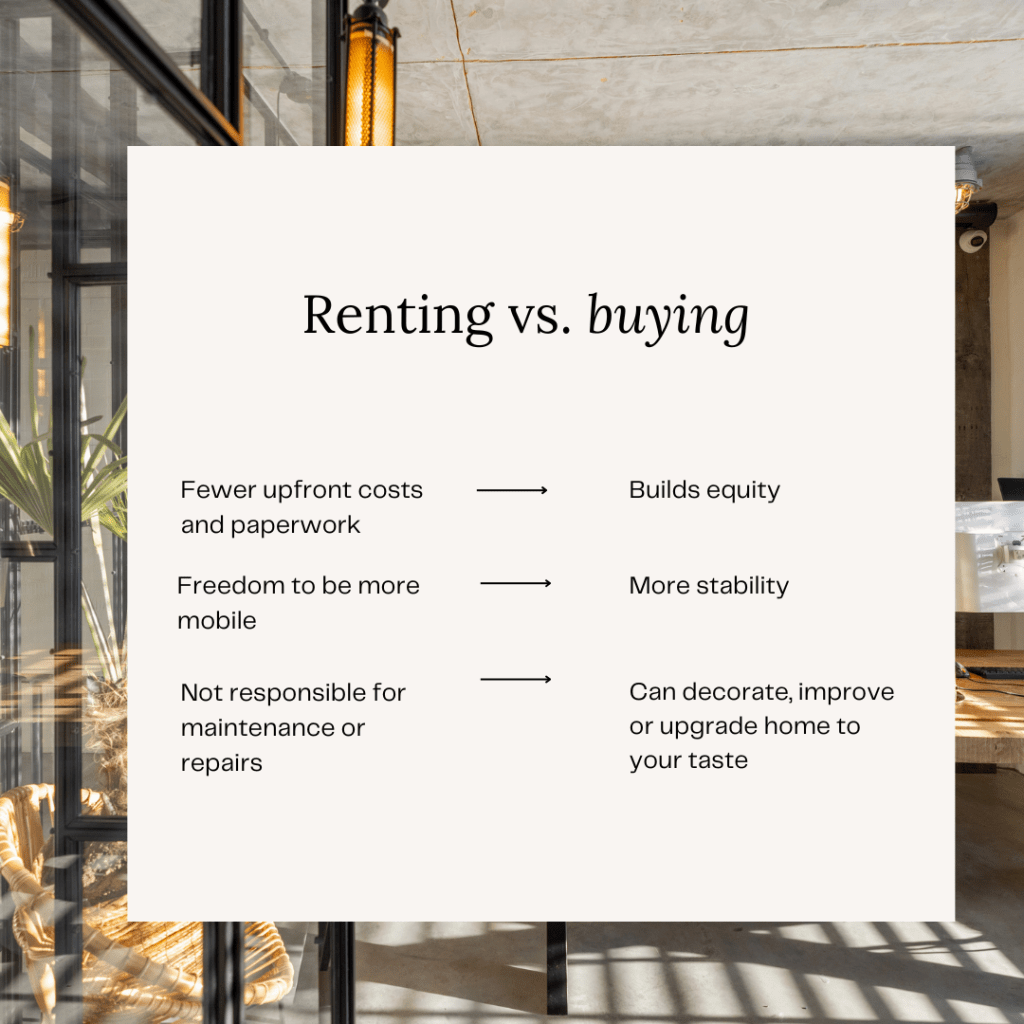
Homeownership can be a beautiful blessing. It can give you stability, equity, a sense of accomplishment, and a place to build memories. But before you start shopping for throw pillows and paint colors, let’s talk about what it really takes to be ready.

More Than a Mortgage

Buying a home is not just about affording the monthly payment. It’s about understanding the whole picture. Property taxes, insurance, maintenance, HOA fees, and yes, that water heater that always seems to break at the worst possible time.

It’s like Luke 14:28 reminds us: “For which of you, intending to build a tower, does not sit down first and count the cost?” God isn’t trying to scare us with that scripture, He’s reminding us that wisdom is in preparation.

Questions to Ask Yourself Before Buying

Instead of asking, “Can I buy a house?” try asking:

  • Do I have a healthy emergency fund for the unexpected?
  • Is my income steady enough to handle both the expected and the surprises?
  • Will buying this home bring peace to my life or pressure?
  • Am I looking at this house as an investment in my future, or as a way to prove something to others?

Sometimes the most powerful prayer you can pray in this process is, “Lord, is this right for me?”

The Beauty of Renting

Here’s where I like to shift the narrative: renting isn’t a “failure.” Renting gives you flexibility, space to change paths without being tied to a mortgage. It allows you to focus on building your foundation, whether that’s paying off debt, growing savings, or preparing for the home that will truly fit your life later on.

My Personal Take

There have been seasons when buying a home was the right move for me, and seasons when renting gave me the freedom I needed. The truth is, neither one makes you more “grown up” or more successful. What matters is whether your choice lines up with your values and with God’s plan for your life.

A Final Word

Whether you buy or rent, your worth isn’t tied to your mortgage statement. Proverbs 24:3 says, “By wisdom a house is built, and by understanding it is established.” The wisdom comes first—the house comes second.

So if you’re thinking about buying, pray about it, run the numbers, count the costs, and make sure it fits not just your budget, but your calling. And when the time is right, you’ll step into it with peace, not pressure.

And if you do end up with that yard, may God bless you with the kind of joy that makes it more than just a piece of land, it becomes a piece of your story.

Breaking Money Myths: The Truth About Your Finances

Money is a tricky subject. We all use it, stress about it, and try to make more of it—but let’s be honest, most of us are winging it. And thanks to a mix of well-meaning relatives, the social media guru selling you a course for only $7.99, and that one friend who swears by crypto but still owes you $50, financial myths spread like wildfire.

It’s time to put an end to the nonsense. Let’s bust some of the biggest money myths out there so you can make smarter decisions and keep more cash in your pocket (where it belongs).

Myth #1: “Debt Is the Root of All Evil”

Look, no one wakes up thinking, “Wow, I’d love to be drowning in debt today!” But not all debt is bad. There’s “good debt” and “bad debt”—and knowing the difference is key.

  • Good debt: Student loans, mortgages, business loans—these can help you build a better future (as long as you don’t go overboard).
  • Bad debt: High-interest credit cards, payday loans, and financing a boat you can’t afford just to impress your neighbors.

Debt isn’t the enemy—it’s how you use it that matters. Just don’t let it use you. Keeping it to a minimum is key.

Myth #2: “You Need a Huge Salary to Get Rich”

If that were true, why do so many celebrities go bankrupt? (Looking at you, lottery winners and former NFL players.) The truth is, wealth is built on smart habits, not just a fat paycheck.

  • People with modest incomes can still build wealth by budgeting, saving, and investing wisely.
  • Many millionaires started small and got rich by being disciplined, not by earning six figures from day one.

More money can help, sure—but it won’t fix bad money habits.

Myth #3: “Renting Is Just Throwing Money Away”

Ah, the old “if you rent, you’re just paying your landlord’s mortgage!” argument. While buying a home can be great, it’s not always the best financial move.

  • Renting gives you flexibility—perfect if you move often or don’t want to be tied down by a mortgage.
  • Owning a home comes with hidden costs: repairs, property taxes, and those surprise plumbing disasters that seem to happen at the worst possible moment.

The key? Do what works for you. Not everyone needs to be a homeowner, and that’s okay.

Myth #4: “Investing Is Only for Rich People”

If you think investing is just for Wall Street hotshots, think again. These days, you can start investing with as little as $5.

  • Apps and online platforms make it easy to invest in small amounts.
  • The earlier you start, the more you benefit from the magic of compound interest (a.k.a. free money over time).

Waiting until you’re “rich enough” to invest is like waiting until you’re in shape to go to the gym. Just start.

Myth #5: “Pay Off Your Mortgage ASAP—No Exceptions!”

Sure, being debt-free sounds amazing, but rushing to pay off a low-interest mortgage isn’t always the smartest move.

  • If your mortgage has a low rate, extra money might be better spent investing where you can earn a higher return.
  • Having cash in hand (aka liquidity) is often more useful than locking it all into your home equity.

It’s all about balance. If it makes you sleep better at night, go ahead and pay extra—but don’t assume it’s the only path to financial freedom.

Myth #6: “More Money = No More Money Problems”

Ah, if only. The truth is, making more money won’t magically solve financial issues if you don’t know how to manage it.

  • Plenty of high earners still live paycheck to paycheck because they overspend.
  • Learning how to budget, save, and invest is the real secret to financial security—no matter how much you make.

More money can help, but if your spending habits are out of control, you’ll always feel broke.

Myth #7: “Credit Cards Are Pure Evil”

Credit cards can be a disaster if misused—but they can also be a great financial tool.

  • They help build your credit score (which you’ll need for major purchases like a house or car).
  • Many offer perks like cashback, travel rewards, and fraud protection (cash doesn’t do that!).
  • The trick? Pay off your balance in full each month—no exceptions.

Credit cards aren’t the villain here—bad spending habits are.

Final Thoughts: Take Charge of Your Money (and Ignore the Myths)

The biggest financial mistake you can make? Believing everything you hear. Money myths can hold you back, but breaking free from them puts you in control of your financial future.

The truth is, financial success isn’t about luck, being born rich, or suddenly stumbling upon a million-dollar idea (though that would be nice). It’s about knowledge, discipline, and making smart choices every day.

So, what money myths have you believed? It’s time to rethink them, take charge, and start making your money work for you!