What Are You Still Leaning On?

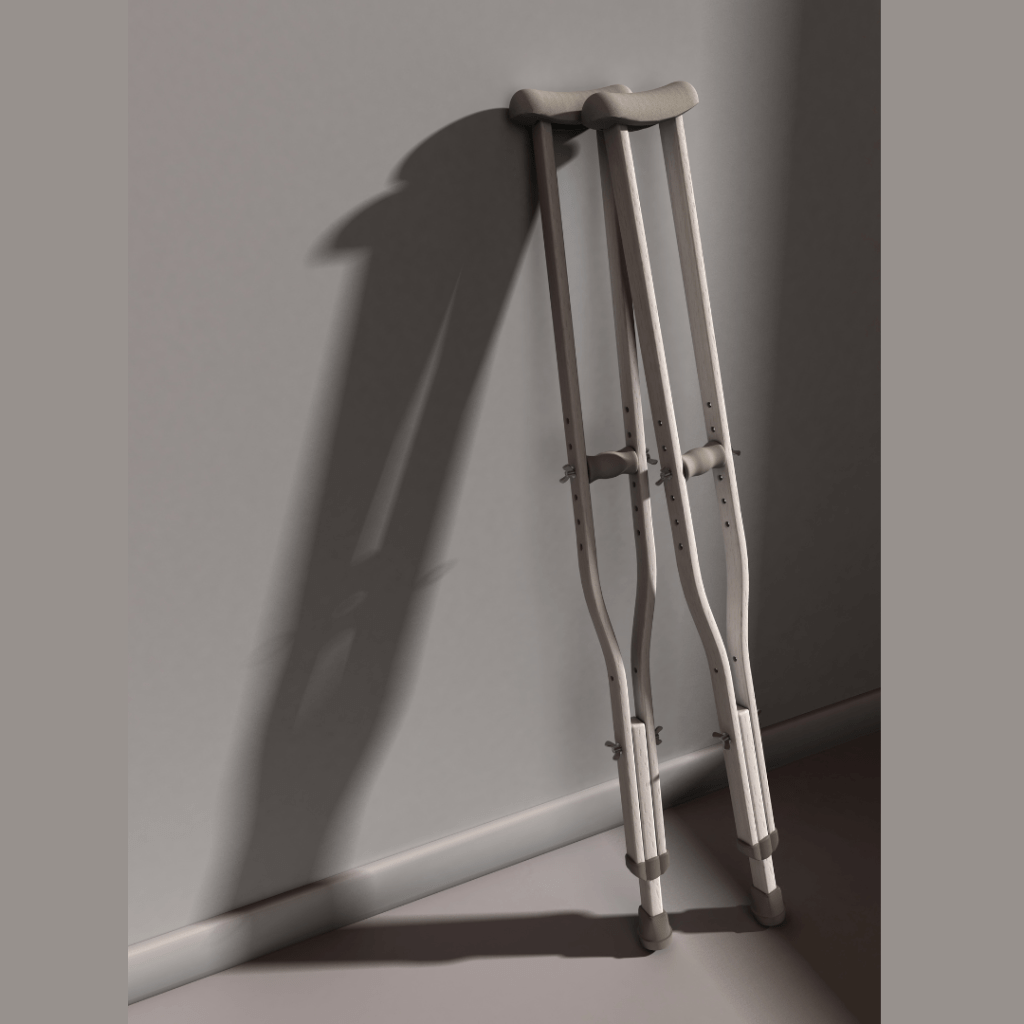
Have you ever watched someone walk on crutches?

At first, they serve an important purpose. They provide support while an injury heals. They keep us from putting too much weight on something that’s still fragile. But eventually, there comes a day when the doctor says it’s time to let them go. Time to trust the healing. Time to begin putting weight on that leg again.

I think life works the same way.

We all have crutches.

Some are obvious. Others are so woven into our daily lives that we don’t even realize we’re leaning on them anymore. They often start as something we truly need. They help us survive a difficult time, protect us after we’ve been hurt, or simply help us make it through another day. But what was once temporary can slowly become permanent if we’re not careful.

That’s when a crutch stops helping us heal and starts keeping us from growing.

I know this because I’ve had my own.

There were times after my divorce when fear was understandable. I was rebuilding my life, raising my children, trying to find work, and learning how to navigate a future that looked nothing like the one I had imagined. There were plenty of reasons to question whether I was capable of starting over.

Those feelings weren’t wrong.

But had I continued to let fear make every decision for me, I would have remained stuck in a chapter that God never intended to be my whole story.

The tricky thing about crutches is that they rarely look like excuses. More often, they sound perfectly reasonable.

We tell ourselves we’ll start the business when life settles down. We’ll work on our marriage after this busy season. We’ll finally get healthy when we have more time. We’ll become more involved at church when work isn’t so demanding. We’ll deal with our finances when we make a little more money.

Sometimes those reasons are legitimate. Life is hard, and there are seasons when simply getting through the day is enough.

But sometimes we have to ask ourselves a difficult question.

Is this obstacle still protecting me… or has it quietly become the reason I’m no longer growing?

That question has challenged me more than once because the truth is, familiar feels safe. Even when it keeps us stuck.

I see this happen every day in my work as a financial coach.

People often come to me convinced that money is the problem. They believe everything will finally fall into place once they earn a bigger paycheck, receive a promotion, or get out of debt. While those things can certainly make a difference, they’re often not the root of the problem.

I’ve watched people receive raises only to find themselves living paycheck to paycheck less than a year later. The income changed, but the habits didn’t. The emotional relationship with money didn’t. The beliefs they carried about themselves didn’t.

The crutch wasn’t their income.

It was believing that more income would solve a problem that actually required personal growth.

Money has an incredible way of revealing what’s happening beneath the surface.

Someone tells themselves they can’t save because they don’t make enough money. That may be true, but sometimes it’s easier to believe that than to examine the spending habits that drain their paycheck.

Someone else says they’ll start budgeting next month. Then next month becomes next year.

Others tell themselves they’ll invest someday, pay off debt someday, ask for the promotion someday, or finally chase the dream they’ve carried for years.

“Someday” can become one of the strongest crutches we ever lean on because it gives us permission to delay becoming the person we know we’re capable of being.

The truth is, our financial habits usually aren’t just about dollars and cents. They’re often connected to fear, confidence, identity, and past experiences.

If we soothe stress by shopping, more money usually means more shopping.

If we struggle to set healthy boundaries, we often find ourselves spending money trying to keep everyone else happy.

If we believe we’re “just bad with money,” we’ll unconsciously make decisions that reinforce that belief over and over again.

Our bank accounts don’t create those patterns.

They simply reveal them.

The same thing happens in every other area of our lives.

We stay in jobs that drain us because the unknown feels scarier than the familiar. We avoid difficult conversations because silence feels easier than conflict. We postpone taking care of our health because life is busy. We convince ourselves we’ll spend more time with God after things calm down, even though life rarely slows down on its own.

Our crutches may all look different, but they usually have one thing in common.

They keep us from taking the next step.

Please don’t misunderstand me. Some people are carrying incredibly heavy burdens. Grief, illness, divorce, job loss, caregiving, and unexpected hardships are real. This isn’t about pretending those struggles don’t exist or suggesting we should just “try harder.”

It’s about honestly asking whether the thing we’re leaning on today is still helping us heal or whether it’s quietly become the reason we’ve stopped moving forward.

One of the things I love most about Scripture is that God rarely gave people the entire plan before asking them to move. Noah built before the rain came. Abraham left home before he knew where he was going. Peter stepped out of the boat before he experienced the miracle.

Faith has never required certainty.

It has always required a willingness to take the next step.

Maybe your crutch is fear. Maybe it’s perfectionism. Maybe it’s believing you’ve missed your opportunity. Maybe it’s the story you’ve been telling yourself for years about why your finances will never change, your marriage will never improve, or your dreams are simply too far out of reach.

Whatever it is, I want to encourage you to ask yourself one simple question:

What would my life look like if I stopped leaning on this?

You don’t have to have everything figured out. And you don’t have to sprint toward the finish line.

You just have to be willing to take the next faithful step.

That might look like creating your first budget instead of avoiding your bank statements. It might mean applying for the job you’ve convinced yourself you’re not qualified for. It might mean having the difficult conversation you’ve been putting off, asking for help, going back to school, starting counseling, or simply believing that your past doesn’t have to define your future.

Small, faithful steps have a way of changing the direction of an entire life.

After all, the goal was never to spend our lives walking on crutches.

The goal was always to heal, grow stronger, and discover that with God’s help, we’re capable of standing, walking, and eventually helping someone else who’s still learning to take those first uncertain steps.

Hope in a Hard Economy

The headlines lately can make it feel like the financial world is one giant dumpster fire with a stock ticker attached to it.
Prices are high. Insurance is painful. Groceries somehow cost the same as a small vacation did ten years ago. One trip to the store for “just a few things” now requires a moment of silence in the parking lot before you drive home.

And yet… beneath all the noise and fear and endless doom-scrolling, there is still good news.

You may have to dig a little harder to find it these days, but it’s there.

People are becoming smarter with money. Less flashy. Not as performative. Wiser.

For years, so many people were taught that success looked like bigger houses, newer cars, maxed-out lifestyles, and pretending everything was fine while quietly panicking at 2 a.m. over credit card balances.

Now people are asking different questions.

“How do I create peace?”
“How do I sleep better?”
“How do I stop living one emergency away from disaster?”
“How do I build a life that actually feels stable?”

That change matters more than people realize.

There’s good news in the fact that people are finally talking honestly about money. The shame around financial struggle is starting to crack open. More people are admitting they’re stressed. More families are having real conversations. More adults are learning things they should have been taught years ago about budgeting, debt, savings, boundaries, and financial survival.

And that honesty may be one of the healthiest financial changes we’ve seen in a long time.

I think part of what we are seeing is people being pulled back toward what actually matters. Scripture reminds us in Matthew 6:21, “For where your treasure is, there your heart will be also.” A lot of people are realizing they do not want their entire peace, identity, or emotional stability tied to stuff, debt, appearances, or trying to keep up with everyone else.

There’s also good news in resilience.

I watch people every day who are rebuilding after divorce, layoffs, caregiving responsibilities, inflation, medical bills, and life throwing absolute chaos at them. And somehow, they still keep going.

There’s good news in people picking up side jobs instead of giving up. In families learning to work together instead of silently drowning. In women starting over financially in their 40s and 50s and discovering they are far more capable than they ever believed. In people deciding that peace is more important than appearances.

There’s good news in the fact that many people are finally building emergency savings for the first time. Even if it starts with twenty dollars. Even if it grows slowly. Stability is still stability.

And while the economy still has challenges, not everything is collapsing the way social media sometimes makes it sound. People are still finding jobs. Businesses are still opening. People are still paying off debt. People are still buying homes. People are still reinventing themselves every single day.

Human beings are incredibly adaptive.

We learn.
We adjust.
We survive hard seasons.
We rebuild.

And honestly, faith has a way of helping people survive hard times they never thought they would make it through. Isaiah 41:10 says, “Fear not, for I am with you… I will strengthen you, yes, I will help you.” Sometimes people do not need another lecture about money. Sometimes they need hope strong enough to help them take the next step forward.

Sometimes financial healing does not look dramatic. Sometimes it looks like finally opening the bills instead of avoiding them. Sometimes it looks like cooking at home more often. Sometimes it looks like saying no to things you used to say yes to. Sometimes it looks like asking for help. Sometimes it looks like choosing peace over pride.

I also think there’s something beautiful happening right now where many people are realizing that their worth has absolutely nothing to do with their bank account balance.

Money stress can make people feel ashamed, stuck, or defeated. But struggling financially does not mean you are failing at life. Sometimes it simply means you are living through an expensive, difficult chapter in a very complicated world. And chapters change.

And maybe that is where faith matters most. God never promised people a life without storms, but He did promise they would not walk through them alone.

That’s the good news.

This season is not forever.
This pressure is not forever.
This rebuilding is not forever.

Galatians 6:9 says, “Let us not grow weary in doing good, for at the proper time we will reap a harvest if we do not give up.” Sometimes rebuilding takes longer than we hoped. Sometimes healing takes patience. But small faithful steps still matter.

And while we should absolutely be honest about the hard realities people are facing, we also need reminders that hope still exists too.

There are still good people.
Still second chances.
Still opportunities.
Still open doors.
Still ways forward.

Sometimes the good news is not that life suddenly became easy.

Sometimes the good news is simply this:

That even in difficult times, people are learning they are stronger, wiser, and more resilient than they ever knew before.

When Peace Feels Wrong and Stability Feels Boring

Let’s talk about something uncomfortable.

Not credit scores.
Not retirement accounts.
Not budgeting.

Let’s talk about the part of you that might be addicted to chaos.

I know, I know! The word addicted feels dramatic all on its own. But hang with me.

You might not be chasing drama on purpose. You’re not starting fights or stirring up messes. But if you’re constantly dealing with emergencies, living paycheck to paycheck (even when you make decent money), or finding yourself stuck in the same stressful financial patterns, there might be something deeper going on.

And it’s not just about dollars. It’s about what your nervous system has learned to expect.

Trauma and Drama: The Financial Loop

If you grew up in a home where money was always tight, unpredictable, or used as a weapon, your body may have learned to live in crisis mode.

And now, as an adult, crisis feels… normal. Familiar. Even safe.

So when things are calm, when your bills are paid, when your savings account is growing, you may unconsciously self-sabotage.

You buy something you don’t need.
You stop checking your bank account.
You help someone out financially (again) even though you don’t actually have the margin.

And boom, chaos is back. Crisis mode returns. And your nervous system can breathe a twisted sigh of relief: Ahhh, yes, back where we belong.

That’s what addiction looks like. Not because you’re weak, but because your body is just trying to survive in the only way it knows how.

Financial Drama Is a Distraction

Here’s the hard truth: staying stuck in trauma and drama keeps you from having to do the slow, sometimes boring work of building a stable life.

Creating a budget, sticking to it, setting long-term goals, saying no when it’s easier to say yes, these things don’t always feel exciting. They don’t give you that adrenaline rush that a financial emergency does.

But they do give you peace. And purpose. And the kind of freedom that doesn’t come from a tax refund or a side hustle. It comes from consistency.

God Didn’t Design You to Live in Constant Survival

Let’s get spiritual for a second. Because this isn’t just psychological or financial, it’s also deeply spiritual.

God doesn’t call us to chaos.
He doesn’t say, “I came so they could barely scrape by.”
He says, “I came so they may have life, and have it more abundantly.” (John 10:10)

Abundance doesn’t mean designer bags or Instagram vacations. It means enough. It means peace in your decisions. It means margin. It means getting out of survival mode and into stewardship.

If your nervous system is addicted to drama, it’s going to fight you every time you try to rest, save, or say “no.”

But that’s not the voice of God. That’s the voice of your past trying to hold your future hostage.

How to Break the Cycle

Here’s where we start:

1. Tell the truth.
Admit when you’re creating chaos out of habit. Admit when calm feels scary. That’s not weakness, that’s wisdom.

2. Pause before reacting.
Before making a big purchase, saying yes to helping someone, or ignoring your bills, take a beat. Ask: “Am I solving a real problem, or am I chasing that drama high again?”

3. Create routines that feel safe.
Budgeting, tracking expenses, and planning your financial week, these aren’t chores. They’re anchors. They help your nervous system learn what safety feels like.

4. Invite God into your money.
Ask Him to break your patterns. To heal your heart. To help you see money as a tool, not a trap.

5. Get help.
You’re not meant to do this alone. Whether it’s a coach (hi, that’s me), a therapist, or a trusted accountability partner, bring people into your healing.

You need to understand, you are not lazy, and you’re not bad with money. You’re not broken.

You’re likely exhausted. And your brain has confused chaos with comfort.

But you can change that.
You can heal.
And you can build a financial life that doesn’t just look good, but actually feels good.

Drama doesn’t have to be your default. Peace can be your new normal.

The Untreated Truth

You can’t fix a leaky faucet by pretending the kitchen floor is just naturally damp. And you can’t heal what you won’t name. That’s where most of us get stuck. We feel the anxiety, the frustration, the pit in our stomach that shows up at 2 AM, but we wave it off. “Oh, I’m fine. I’m just a little tired.”

Sure. And I’m an Olympic figure skater. In heels.

The truth is, naming what’s going on is terrifying because it makes it real. Saying, “I’m scared about this new marriage,” or “I feel lost after this divorce,” or “Starting my business has me completely overwhelmed,” feels like putting a neon sign over our head that flashes: I DON’T HAVE IT ALL TOGETHER.

But guess what? You don’t have it all together. None of us do. And the sooner you admit it, the sooner you can actually do something about it. Pretending everything is fine is like duct taping your check engine light and hoping for the best. Spoiler alert: that engine is still going to blow. Probably on the highway. Probably when you’re already late.

Life changes—whether you’re standing at the altar, staring at a positive pregnancy test, sitting across from a divorce attorney, or trying to figure out if LLC or S-corp makes you sound more impressive—will stir up every single unhealed, unnamed thing inside you. And money? Oh, money loves to poke those tender spots.

If you grew up thinking money was tight, or you watched your parents fight about it, or you felt like you never quite got it right yourself, guess what happens when you’re about to combine finances with a spouse, or figure out maternity leave, or split assets, or launch your dream business? All that old junk comes flying out like confetti from a busted balloon. And if you don’t name it, you’ll just keep reacting to it. You’ll pick fights over Target runs or blow up your budget because “you deserve it,” when really, you’re just trying to quiet that panicked little voice inside that you’re too scared to acknowledge.

When you name it—”I’m terrified I’ll mess up our finances like my parents did”—you take its power away. You can work with something you name. You can build a plan around it. You can create habits that make space for both your fear and your goals. You can even call in help—a coach, a therapist, a very honest best friend who doesn’t let you get away with your usual nonsense.

But you can’t fix what you’re pretending isn’t there.

So go ahead. Say it out loud. Whisper it if you have to. Write it down where no one sees it. Name the thing. The fear, the hurt, the story you keep dragging around. Because once you name it, you can finally start healing it. And believe me, that feels way better than pretending your kitchen floor is just… naturally damp.

The Addiction to Trauma and Drama

In our chaotic lives, it’s easy to get caught up in a cycle of trauma and drama. While these experiences are tough to handle, there’s another side to the story: we can actually become addicted to them. This addiction can affect our lives in big ways, often leading to compulsive behaviors and spending. Understanding why this happens is key to breaking free and taking back control of our lives.

Why Trauma and Drama Hook Us

Trauma and drama trigger strong emotional responses. Whether it’s a bad breakup, a stressful job, or a family argument, these situations can consume us. Our brains release stress hormones like cortisol and adrenaline, which make us feel more alert and emotional. Over time, this heightened state can become addictive.

Just like our brains can get hooked on substances like alcohol or drugs, they can also get addicted to the chemical rush from trauma and drama. The emotional ups and downs provide a sense of excitement and urgency. Even though these feelings are distressing, they can become a familiar and weirdly comforting pattern.

The Cycle of Compulsive Living

When we’re addicted to trauma and drama, we often live compulsively. This means we might seek out or even create situations that keep the cycle going. For example, someone addicted to drama might end up in one turbulent relationship after another or always be at odds with coworkers. These familiar situations can be comforting, even if they’re harmful.

Compulsive living can also show up in more subtle ways. We might get addicted to the rush of meeting tight deadlines, constantly pushing ourselves to the brink of burnout. Or we might always worry about potential problems, turning our fears into reality.

Compulsive Spending as a Coping Mechanism

One common way this addiction shows up is through compulsive spending. When we’re stuck in the trauma-drama cycle, we often turn to shopping to cope with our emotions. Buying things can give us a temporary escape and a sense of control and pleasure.

But this relief doesn’t last long. The joy of a new purchase quickly fades, leaving us wanting more. This leads to a vicious cycle of spending beyond our means, piling up debt, and feeling even more stressed. Compulsive spending can create new drama and trauma, adding financial stress to our emotional burden.

Breaking the Cycle

To break free from the addiction to trauma and drama, we need self-awareness and a commitment to change. Here are some steps to help regain control:

1. **Recognize the Pattern**: The first step is to admit that you might be addicted to the emotional highs and lows. Look at your life and identify any behaviors that keep these patterns going.

2. **Seek Professional Help**: Therapy can be very helpful in dealing with underlying issues and finding healthier coping mechanisms. A therapist can help you understand the root causes of your addiction and provide strategies for managing it.

3. **Develop Healthy Coping Strategies**: Instead of turning to compulsive spending or creating drama, find healthier ways to deal with stress and emotions. Exercise, meditation, journaling, or spending time with friends and family can be good alternatives.

4. **Set Boundaries**: Learn to set boundaries with yourself and others. This might mean saying no to situations that trigger drama or distancing yourself from toxic relationships.

5. **Practice Mindfulness**: Mindfulness can help you stay present and avoid getting swept up in emotions. Techniques like deep breathing, meditation, and grounding exercises can be very effective.

6. **Focus on Long-Term Goals**: Shift your focus from short-term relief to long-term well-being. Set financial and personal goals that promote stability and growth, and work toward them gradually.

The addiction to trauma and drama is a complex issue that can seriously impact our lives, leading to compulsive living and spending. By recognizing the patterns, seeking help, and developing healthier coping strategies, we can break free from this cycle and live more balanced, fulfilling lives. The journey to recovery may be tough, but it’s worth the effort for the peace and stability it brings.

Mental Health For May

In an increasingly fast-paced and interconnected world, the concept of healing often takes a back seat to the demands of daily life. However, the importance of healing, both physically and mentally, cannot be overstated. Healing is not merely a recovery from illness or injury; it is a holistic process that encompasses the mind, body, and soul, creating overall well-being and resilience. The process of healing is essential for restoring balance, well-being, and enabling individuals to lead fulfilling lives.

Physical healing is probably the most apparent form of recovery, often necessitated by injuries, illnesses, or surgeries. The body’s remarkable ability to repair itself is a testament to its resilience.

And while physical healing is vital, mental and emotional healing is equally important. Mental health issues such as anxiety, depression, and stress can have profound effects on an individual’s overall health. Healing the mind involves addressing these issues through various methods, including therapy, medication, mindfulness practices, and social support. Emotional healing, on the other hand, often requires acknowledging and processing past traumas and grief. This can be facilitated through counseling, expressive arts, and building healthy relationships.

The stigma around mental health has decreased in recent years, allowing more people to seek help without fear of judgment. This shift is crucial because mental health profoundly impacts physical health. Chronic stress, for example, can lead to cardiovascular problems, weakened immune function, and other health issues. By prioritizing mental and emotional healing, individuals can improve their overall quality of life.

Emotional healing addresses the scars left by traumatic experiences, grief, and stress. It is a journey that requires time, patience, and often the guidance of a mental health professional. Emotional wounds can manifest in various ways, including anxiety, depression, or unhealthy coping mechanisms. Healing these wounds involves acknowledging and processing painful emotions, embracing forgiveness, and building resilience.

The importance of emotional healing lies in its ability to free individuals from the burdens of the past, allowing them to engage fully with the present and look forward to the future. Emotional healing creates better relationships, improves mental health, and enhances overall quality of life. Practices such as mindfulness, therapy, practicing spirituality, and support groups are instrumental in this process, providing safe spaces for individuals to explore and heal their emotions.

Psychological healing goes hand-in-hand with emotional healing but delves deeper into the cognitive processes that shape our understanding and interaction with the world. It involves restructuring negative thought patterns, overcoming limiting beliefs, and developing a more positive and realistic outlook on life. Psychological healing is essential for those dealing with chronic stress, anxiety disorders, or the aftermath of traumatic experiences.

Therapeutic techniques such as cognitive-behavioral therapy (CBT), meditation, and journaling are effective tools in the psychological healing process. These methods help individuals gain insight into their thoughts and behaviors, promoting a healthier and more balanced mental state. The importance of psychological healing lies in its ability to empower individuals to break free from the constraints of their past and build a more fulfilling life.

Healing is not a one-time event but a continuous journey. Life inevitably brings challenges and hardships, and the ability to heal from these experiences is crucial for long-term well-being. Embracing healing as an ongoing process encourages individuals to be proactive about their health and seek help when needed.

In today’s continually changing world, taking the time to heal is more important than ever. It is a reminder that well-being is not merely the absence of illness but a dynamic state of balance and harmony. By prioritizing healing, we honor our bodies, minds, and spirits, paving the way for a healthier and more meaningful life.