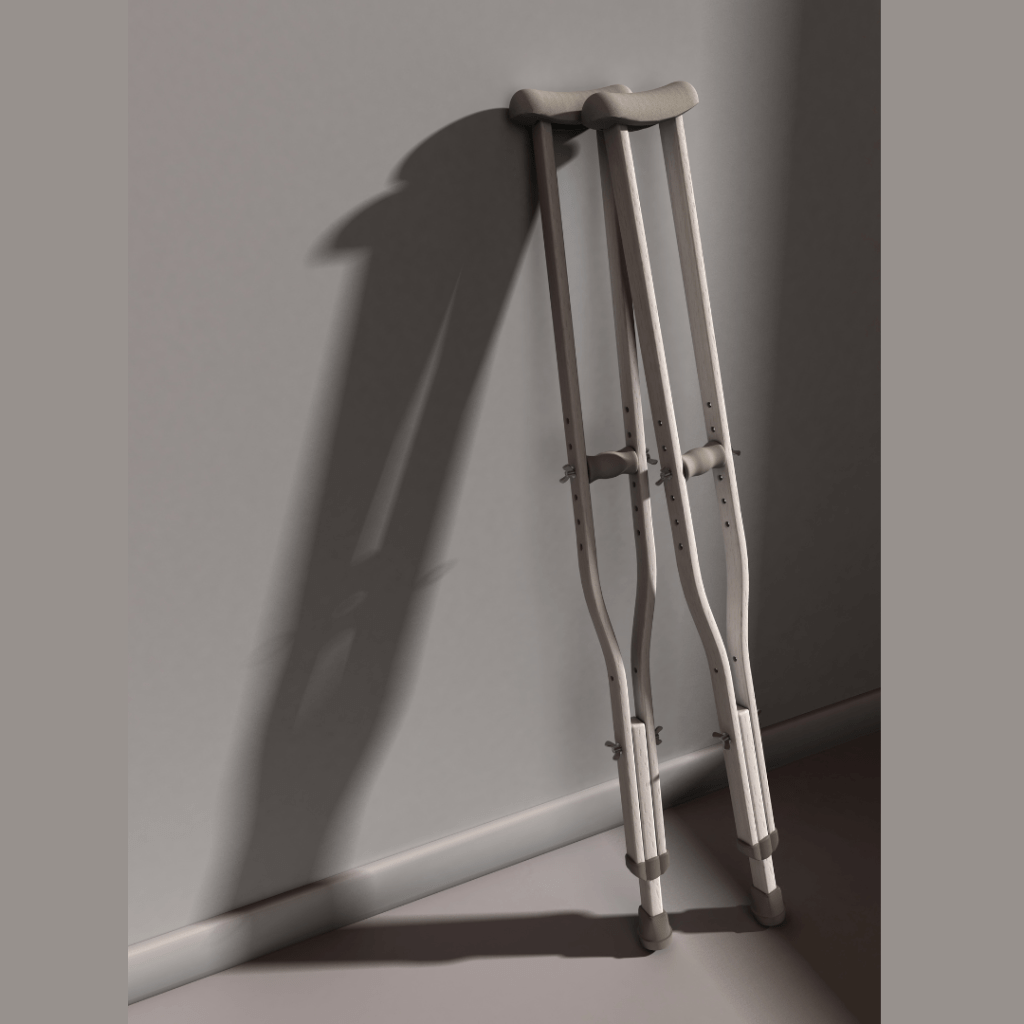
What Are You Still Leaning On?

Have you ever watched someone walk on crutches?

At first, they serve an important purpose. They provide support while an injury heals. They keep us from putting too much weight on something that’s still fragile. But eventually, there comes a day when the doctor says it’s time to let them go. Time to trust the healing. Time to begin putting weight on that leg again.

I think life works the same way.

We all have crutches.

Some are obvious. Others are so woven into our daily lives that we don’t even realize we’re leaning on them anymore. They often start as something we truly need. They help us survive a difficult time, protect us after we’ve been hurt, or simply help us make it through another day. But what was once temporary can slowly become permanent if we’re not careful.

That’s when a crutch stops helping us heal and starts keeping us from growing.

I know this because I’ve had my own.

There were times after my divorce when fear was understandable. I was rebuilding my life, raising my children, trying to find work, and learning how to navigate a future that looked nothing like the one I had imagined. There were plenty of reasons to question whether I was capable of starting over.

Those feelings weren’t wrong.

But had I continued to let fear make every decision for me, I would have remained stuck in a chapter that God never intended to be my whole story.

The tricky thing about crutches is that they rarely look like excuses. More often, they sound perfectly reasonable.

We tell ourselves we’ll start the business when life settles down. We’ll work on our marriage after this busy season. We’ll finally get healthy when we have more time. We’ll become more involved at church when work isn’t so demanding. We’ll deal with our finances when we make a little more money.

Sometimes those reasons are legitimate. Life is hard, and there are seasons when simply getting through the day is enough.

But sometimes we have to ask ourselves a difficult question.

Is this obstacle still protecting me… or has it quietly become the reason I’m no longer growing?

That question has challenged me more than once because the truth is, familiar feels safe. Even when it keeps us stuck.

I see this happen every day in my work as a financial coach.

People often come to me convinced that money is the problem. They believe everything will finally fall into place once they earn a bigger paycheck, receive a promotion, or get out of debt. While those things can certainly make a difference, they’re often not the root of the problem.

I’ve watched people receive raises only to find themselves living paycheck to paycheck less than a year later. The income changed, but the habits didn’t. The emotional relationship with money didn’t. The beliefs they carried about themselves didn’t.

The crutch wasn’t their income.

It was believing that more income would solve a problem that actually required personal growth.

Money has an incredible way of revealing what’s happening beneath the surface.

Someone tells themselves they can’t save because they don’t make enough money. That may be true, but sometimes it’s easier to believe that than to examine the spending habits that drain their paycheck.

Someone else says they’ll start budgeting next month. Then next month becomes next year.

Others tell themselves they’ll invest someday, pay off debt someday, ask for the promotion someday, or finally chase the dream they’ve carried for years.

“Someday” can become one of the strongest crutches we ever lean on because it gives us permission to delay becoming the person we know we’re capable of being.

The truth is, our financial habits usually aren’t just about dollars and cents. They’re often connected to fear, confidence, identity, and past experiences.

If we soothe stress by shopping, more money usually means more shopping.

If we struggle to set healthy boundaries, we often find ourselves spending money trying to keep everyone else happy.

If we believe we’re “just bad with money,” we’ll unconsciously make decisions that reinforce that belief over and over again.

Our bank accounts don’t create those patterns.

They simply reveal them.

The same thing happens in every other area of our lives.

We stay in jobs that drain us because the unknown feels scarier than the familiar. We avoid difficult conversations because silence feels easier than conflict. We postpone taking care of our health because life is busy. We convince ourselves we’ll spend more time with God after things calm down, even though life rarely slows down on its own.

Our crutches may all look different, but they usually have one thing in common.

They keep us from taking the next step.

Please don’t misunderstand me. Some people are carrying incredibly heavy burdens. Grief, illness, divorce, job loss, caregiving, and unexpected hardships are real. This isn’t about pretending those struggles don’t exist or suggesting we should just “try harder.”

It’s about honestly asking whether the thing we’re leaning on today is still helping us heal or whether it’s quietly become the reason we’ve stopped moving forward.

One of the things I love most about Scripture is that God rarely gave people the entire plan before asking them to move. Noah built before the rain came. Abraham left home before he knew where he was going. Peter stepped out of the boat before he experienced the miracle.

Faith has never required certainty.

It has always required a willingness to take the next step.

Maybe your crutch is fear. Maybe it’s perfectionism. Maybe it’s believing you’ve missed your opportunity. Maybe it’s the story you’ve been telling yourself for years about why your finances will never change, your marriage will never improve, or your dreams are simply too far out of reach.

Whatever it is, I want to encourage you to ask yourself one simple question:

What would my life look like if I stopped leaning on this?

You don’t have to have everything figured out. And you don’t have to sprint toward the finish line.

You just have to be willing to take the next faithful step.

That might look like creating your first budget instead of avoiding your bank statements. It might mean applying for the job you’ve convinced yourself you’re not qualified for. It might mean having the difficult conversation you’ve been putting off, asking for help, going back to school, starting counseling, or simply believing that your past doesn’t have to define your future.

Small, faithful steps have a way of changing the direction of an entire life.

After all, the goal was never to spend our lives walking on crutches.

The goal was always to heal, grow stronger, and discover that with God’s help, we’re capable of standing, walking, and eventually helping someone else who’s still learning to take those first uncertain steps.
Living In Fear

Living in fear often means constantly feeling anxious, worried, and scared. It can come from many sources, like personal experiences, societal pressures, or even things happening around the world. This state of mind not only affects our mental health but also has serious impacts on our physical health and overall happiness. Understanding what it means to live in fear and finding ways to overcome it is crucial for living a happy and healthy life.

Fear is a natural response to danger. It prepares our body to either fight or run away (fight or flight). But when fear becomes a constant part of our lives, it can turn into a big problem. This can happen because of:

  • Past Traumas: Bad experiences, like abuse, accidents, or violent events, can leave a lasting impact, making us afraid of similar situations in the future.
  • Ongoing Stress: Constant stress from work, relationships, or money problems can create a lingering sense of fear.
  • Mental Health Issues: Conditions like anxiety, PTSD, and depression can cause irrational fears and make us more sensitive to threats.
  • World Events: News about crime, terrorism, pandemics, and natural disasters can make us generally fearful of the world.

Living in fear affects both our mind and body:

  • Mental Health: Chronic fear can lead to anxiety disorders, depression, and other mental health problems. It makes it hard to concentrate, make decisions, and remember things.
  • Physical Health: Long-term fear can cause physical problems like headaches, muscle tension, digestive issues, and a weakened immune system. It can also contribute to heart disease and other long-term health issues.
  • Behavioral Changes: Fear can change our behavior, making us avoid certain situations or places, withdraw from social activities, and struggle with everyday tasks.

Dealing with chronic fear involves several steps:

1. **Recognize and Understand**: The first step is to identify what’s causing the fear. Understanding why certain things make us scared helps us tackle the root of the problem.

2. **Get Professional Help**: Therapy, especially cognitive-behavioral therapy (CBT), is very effective for treating chronic fear and anxiety. In severe cases, medication might be necessary.

3. **Practice Mindfulness and Relaxation**: Techniques like meditation, prayer, deep breathing, and yoga can help manage stress and reduce fear.

4. **Live a Healthy Lifestyle**: Regular exercise, a balanced diet, limiting social media, and getting enough sleep strengthen the body and mind, making them more resilient to fear.

5. **Build a Support System**: Having a strong network of family and friends provides emotional support and makes us feel safer.

6. **Learn About Fear**: Educating ourselves about fear and its effects can empower us to confront and manage our fears more effectively.

Living in fear is exhausting and affects every part of our life. It traps us in a cycle of anxiety and stress, preventing us from truly enjoying life. By recognizing fear, seeking help, and adopting healthy coping mechanisms, we can break free from fear’s grip and live a more peaceful and productive life. Understanding and addressing fear is not only important for our own well-being but also for creating a more compassionate and resilient society.

Challenging Your Fears

There’s going to be part of you that will always be fearful. That’s natural. Fear itself is natural and normal. Even professional entertainers and speakers have fear when they get in front of an audience (we usually call it being nervous but it’s still a type of fear.). So, to think we will get rid of our fears completely isn’t realistic. But we can overcome them.

There are a lot of ways to learn to deal with your fear but first, you have to identify it. It sounds simple enough. But it’s not just saying “I’m afraid of public speaking” that will help you to learn to control that fear. You need to identify and acknowledge the root cause. Reflect on your thoughts and emotions to pinpoint the specific fears holding you back. Whether it’s fear of failure, rejection, or uncertainty, recognizing these fears is crucial for addressing them effectively. Usually, it’s not a fear of public speaking as much as the fear of failing, being embarrassed, or even ridiculed. Say for example your fear is one of rejection but you see it as a fear of public speaking because you worry that those you’re speaking to will reject your ideas. But until you get to the root and realize it’s not the fear of public speaking, but the fear of rejection, that fear will manifest itself in numerous other ways. It could keep you from meeting new people, applying for a new job or promotion, or any other circumstance where the fear of rejection could come into play. But once you get to the root cause of the actual fear, then you can work on overcoming it.

Here are a few practices that can help.

Face Your Fears: Avoidance only reinforces fear. Instead of retreating from challenges, confront them head-on. Start with small, manageable steps, gradually exposing yourself to situations that trigger anxiety. With each successful encounter, your confidence will grow, diminishing the power of fear.

Challenge Negative Beliefs:Fear often stems from distorted thinking and irrational beliefs. Challenge these negative perceptions by questioning their validity and seeking evidence to the contrary. Replace self-limiting beliefs with affirmations and positive self-talk, fostering a more optimistic and empowering mindset. Do you realize that our fears are not usually based on fact; they are based on feeling. A study by the University of Michigan revealed: 60 percent of our fears are totally unwarranted, meaning the things we fear never come to pass. 20 percent of our fears are based in the past, which means they are out of our control. 10 percent of our fears are so petty that they can make no difference at all. Of the other 10 percent, only 4 to 5 percent are real and justifiable fears.

Set Realistic Goals: Break down daunting tasks into smaller, achievable goals. Celebrate each milestone along the way, acknowledging your progress and resilience. By setting realistic expectations, you can build momentum towards overcoming your fears.

Grow Your Resilience: Embrace setbacks and failures as opportunities for growth and learning. View challenges as stepping stones towards personal development, rather than insurmountable obstacles. Cultivate resilience by adopting a growth mindset, embracing change, and reframing setbacks as valuable lessons.

Visualize Success: Harness the power of visualization to mentally rehearse success. Picture yourself overcoming obstacles with confidence and grace, imagining the positive outcomes that wait on the other side. Visualization can instill a sense of belief and determination, fueling your journey toward fearlessness.

The best things, the things you really want, are on the other side of fear. You have to pay a price to get the good things. Look at your fear and know that conquering it will make you a better, stronger person.

“You gain strength, courage, and confidence by every experience in which you really stop to look fear in the face. You are able to say to yourself, ‘I lived through his horror. I can take the next thing that comes along.’ The danger lies in refusing to face the fear, in not daring to come to grips with it. “ John C Maxwell.

If you have fears that you want to move on from, schedule a call with me, and let’s build a system of overcoming them! https://tulincu.com/