What Affordability Really Means After Divorce

There’s a moment after divorce or a major life reset when things finally settle down and everything gets quiet.

The paperwork is signed.
The adrenaline fades.
And you’re standing in your kitchen at 9:30 p.m., eating cereal for dinner, wondering how this became your life.

That’s usually when the question shows up:

Can I buy a home or keep the one I’m in on my own?

Not to prove anything.
Not to “win” the divorce.
Not to impress anyone who doesn’t pay your bills.

Just to build something steady again.

If that’s where you are, let me say this gently: buying a home after divorce is different. Not impossible. Just different. And God’s not surprised you’re here.

I know this season well. I’ve lived it. And I’ve watched God meet people right in the middle of it, sometimes with provision, sometimes with redirection, and occasionally with a sense of humor that feels almost rude at first.

Buying on one income changes everything.

There’s no “we’ll figure it out later.”
No second paycheck as a safety net in the background.
No shared “oops” fund when the water heater decides to retire early.

It can feel scary… and oddly freeing.

You stop asking:
“What can we qualify for?”

And start asking:
“What can I afford and still sleep at night?”

That question is wisdom.

After divorce, many people go one of two ways:

They either tell themselves,
“I guess I don’t get to want much anymore.”

Or they swing hard in the other direction, like,
“I’ve been through enough. I deserve this house.”

Both reactions make sense. Neither one makes great financial decisions.

Budgeting on one income isn’t God telling you to live small forever. It’s Him inviting you into stability.

It’s knowing:

  • What your income supports without constant stress
  • How much margin you need to feel safe
  • What makes your nervous system calm, not clenched

Here’s where people get tripped up.

They focus on:
“Can I make the payment?”

But forget:

  • Repairs don’t care that you’re newly single
  • Utility bills don’t accept emotional coupons
  • Maintenance doesn’t show mercy just because you’re tired

Owning a home should not require prayer every time the fridge makes a noise.

Your home should support your life, not consume it.

God is a provider. But, He’s not asking you to ignore math.

Emotional buying is very real after divorce

Let’s be honest.

After loss, people shop with feelings.

They buy the house that quietly says:
“I’m okay.”
“I made it.”
“I didn’t lose everything.”

Or the house that whispers:
“I shouldn’t want much.”
“I’ll stay small.”
“I don’t trust good things anymore.”

Neither extreme is sinful. Both are human. But finding stable middle ground is best.

Your house doesn’t need to heal your heart. God does that work. Your house just needs to be a safe place to land.

One of the most freeing thoughts rebuilding buyers can have is this:

“My home doesn’t have to be perfect. It just has to work.”

Work for your income.
Work for your peace.
Work for the life God is rebuilding, not the one you’re grieving.

Sometimes that means:

  • Less square footage
  • A longer timeline
  • A simpler layout
  • A different plan than the one you had before

And sometimes it means letting yourself want something nice again without guilt. God is not offended by your desire for beauty or comfort.

Why I Specialize in This Season

I work with divorced, newly single, and rebuilding homebuyers because I understand the layers.

The financial reset.
The emotional exhaustion.
The quiet prayers that sound like, “Please don’t let me mess this up.”

Buying a home after divorce isn’t just a transaction. It’s a moment of direction.

And when done thoughtfully, with wisdom, numbers, prayer, and a little grace for yourself, it can be one of the most stabilizing decisions you make.

Not because it fixes everything.
But because it gives you a place to breathe while God continues to rebuild the rest.

And yes, you might still eat cereal for dinner sometimes.

That’s okay too.

You Didn’t Struggle For Nothing

Some of the challenges this year felt more like “Lord, are You sure I’m built for this?” moments than “I’m so thankful” moments.
This year might’ve handed you a few struggles you didn’t see coming.
Bills, surprises, decisions, mistakes, lessons — the whole package.

Even so… you’re here. And that says something.

I won’t pretend the tough moments were pleasant. Nobody sits there saying, “Wow, this financial setback is really blessing my spirit today.”
But those same moments changed you in ways comfort never could.

Because it grows you.

As much as we don’t like it, the hard seasons teach us more about money and ourselves than the easy ones ever will.
Nobody learns discipline when the paycheck is overflowing.
No character is built when the bills are light.
And nobody cries out to God for guidance when everything is smooth and easy.

It’s in the struggle that we learn things we wouldn’t have learned any other way.

Being thankful for the lessons doesn’t mean you enjoyed the struggle.

It just means you refused to let it break you.

Maybe this year forced you to take budgeting seriously.
Maybe a financial surprise pushed you to rethink your priorities.
Maybe you had to let go of something you weren’t ready to release.
Or maybe you finally realized you were tired of repeating the same cycle repeatedly.

Whatever your story is, every challenge added something to you: strength, clarity, or courage.

James 1:2–4 says to “count it all joy” when we face trials because those trials shape endurance.
Endurance isn’t pretty, but it will carry you financially further than any “perfect plan” ever will.

The hard stuff teaches:

1. Discipline over impulse

When money is tight, you learn the difference between needs, wants, and “maybe I’ll just walk away before I talk myself into this.”

2. Patience while you wait for better

Waiting for progress teaches you to stop comparing your life to everyone else’s highlight reel.

3. Courage to face your numbers even when they scare you

You learned to open the banking app and check that balance more regularly.
(Yes, your heart raced, but you did it.)

4. Wisdom that keeps you from repeating old mistakes

Nothing will make you wiser than a financial lesson that slapped you once.
You don’t need it slapping you twice.

There’s nothing like a hard-hitting mistake to make you say, “Oh, I’m never doing that again.”

5. Gratitude for the progress you have made

Small wins count.
Tiny steps count.
And survival counts too.

Maybe you didn’t hit every goal, but you’re not where you used to be.
Small steps still move you forward.

As Thanksgiving gets close, take a moment to be thankful, if not for the struggle itself, maybe for the strength it produced.

You’re more aware of your habits.
Your boundaries are clearer.
Your goals make more sense.
And the person you’re becoming is stronger than the person who started this year.

Sometimes God lets us walk through the hard places so we can finally see what we’re capable of and so we stop thinking about money the same old way. Sometimes the struggle is what finally pushes us into real financial change – the kind that lasts, not the kind that fades after three weeks of motivation.

So if this year stretched you… good! Be thankful you’re not who you used to be.
Be thankful for what you learned.
Be thankful that the next version of your life is being built on solid ground.

Be thankful you’re heading into the new year with sharper skills, better habits, and a whole new level of confidence.

Let the credit go to God for carrying you, and let the credit card stay in your wallet while you build on everything you gained.

That’s something to be thankful for.

And if you feel like you’re not quite there yet but would like to be, start the new year strong by scheduling a call with me. It’s free! It’s never too late to get on the right path.

Schedule Here

Are You Throwing the Big Fish Back?

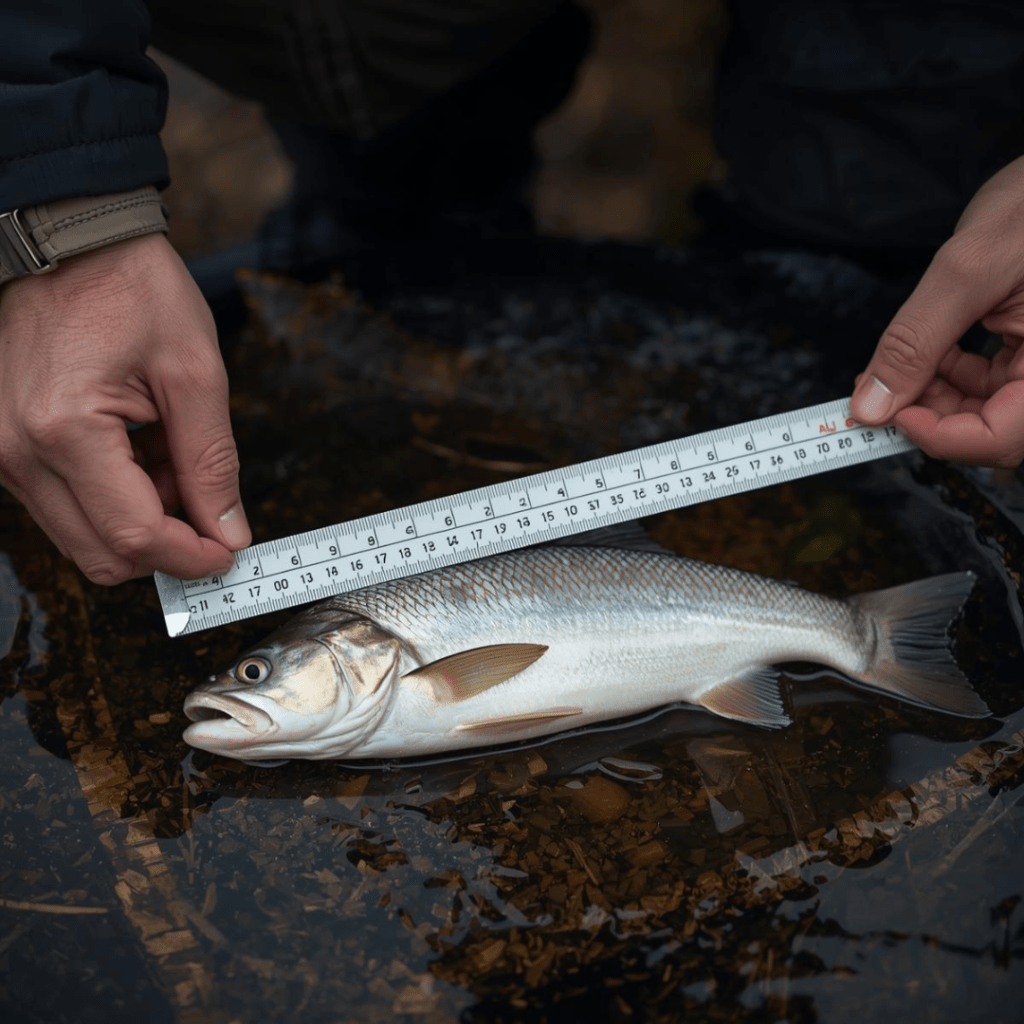
You’ve probably heard the story about a man fishing by the river. He was catching more fish than anyone else, so people started gathering to see what he was doing differently. But when they watched closely, they got confused. Every time he caught a fish, he pulled out a tape measure. If the fish was smaller than eight inches, he kept it. If it was bigger, he tossed it back into the water.

Someone finally asked him, “Why in the world are you throwing back the big ones?”
The man replied, “Because my frying pan is only eight inches wide.”

Now, most of us would laugh at that, right? But a lot of us are doing the exact same thing with our finances.

We pray for financial blessings. We talk about wanting to save more, earn more, or get out of debt. Yet when opportunity knocks, we throw it right back because it doesn’t fit the size of our current “frying pan.”

Maybe you’ve said things like:

  • “I could never make that much money.”
  • “I’ll always be bad with budgeting.”
  • “People like me don’t get ahead financially.”
  • “I don’t deserve more.”

That’s not reality. That’s our own limiting belief.

You might be asking God to bless your finances, but He’s waiting for you to expand your capacity to receive it. It reminds me of Matthew 25:29, where Jesus says:

“For whoever has will be given more, and they will have an abundance. Whoever does not have, even what they have will be taken from them.”

That verse isn’t saying God plays favorites; it’s about stewardship. When we handle what we have well, more comes. But when we let fear or disbelief call the shots, we end up tossing big opportunities back because they don’t fit our comfort zone.

And let’s be honest, sometimes it’s not even about lack of opportunity — it’s about our habits. You can’t pray for financial peace and then let Amazon talk you into buying a 3 a.m. “emergency candle holder” because it was on sale.

If that stings a little, I get it. I’ve been there too. We’ve all made financial decisions that made us shake our heads later. But awareness is the first step.

Ask yourself:

  • What’s really keeping me from saving more or paying off debt?
  • When did I start believing I wasn’t “good with money”?
  • Who told me I couldn’t have more?

Those thoughts didn’t appear out of nowhere. They came from experiences, family patterns, and sometimes fear. But Romans 12:2 reminds us, “Be transformed by the renewing of your mind.” That includes how you think about money.

When you change your beliefs, your behavior follows. Replace “I’ll never get ahead” with “I’m learning how to build stability.” Replace “I can’t afford it” with “How can I plan for it?”

The truth is, God can bless you with bigger fish, but you’ve got to be ready to receive them.

So maybe it’s time to stop throwing back the blessings because they don’t fit your current situation. Stretch your faith, adjust your mindset, and grab yourself a bigger frying pan.

Because when you do, you’ll realize the abundance you’ve been praying for has been swimming right in front of you the whole time.

When Money Decisions Feel Like a Game of Whack-a-Mole

Ever feel like every time you handle one money issue, three more pop up like a bad round of Whack-a-Mole? You finally pay off one credit card, and boom; the car needs tires, your kid’s field trip fee is due, and someone forgot about that “automatic renewal” you swore you canceled last year.

It’s exhausting.

And if you’ve ever stood in the grocery aisle staring at forty-seven kinds of peanut butter, wondering if “organic,” “crunchy,” or the one with the yellow lid is the “right” choice, you know the feeling. Now multiply that by a mortgage, retirement plans, student loans, and maybe a business decision or two. That’s financial decision paralysis.

We live in a time that’s overflowing with options; apps that track your spending, influencers promising overnight wealth, and “exclusive” credit card offers that show up like uninvited party guests. It’s no wonder people freeze. We’re not just afraid of picking wrong. We’re afraid of failing, of wasting money, of being judged.

And so, we do nothing.
The problem with that is that doing nothing is a decision. And often, it’s the most expensive one.

Why We Freeze Up

It’s not really about money. It’s about fear.
Fear of making the wrong move. Fear of regret. Fear that one bad choice will mess everything up.

We’ve been taught to chase the perfect plan, have the perfect budget, the perfect investment, the perfect system when we all know there’s no such thing. Personal finance isn’t one-size-fits-all. It’s personal.

God never asked us to be perfect planners. He asked us to be faithful stewards. That means doing the best we can with what we have and trusting Him with the rest. He’s not grading us on flawless execution. He’s looking for obedience, wisdom, and a little faith in the middle of the mess.

The Cost of Doing Nothing

Avoiding financial decisions feels safe in the moment, but it’s like putting your money in time-out and hoping it grows while it’s sitting there. Spoiler alert: it doesn’t.

When you avoid rolling over that old 401(k) or skip setting up a spending plan because it’s overwhelming, that’s progress on pause. And that pause has a price.

Then there’s the stress. That constant mental weight of “I should probably deal with that…” Stress steals your sleep, your joy, and your peace. But remember, God never meant for you to carry all that alone. He said, “Cast your cares on Me,” not “juggle them until you drop.”

How to Break Free from the Freeze

So how do you stop spinning in circles and start moving forward?

  1. Shrink the decision.
    Stop asking, “What’s the perfect plan for retirement?” and start asking, “Can I move 2% more into savings this month?” Small moves create big momentum.
  2. Set boundaries.
    You don’t need every podcast, influencer, and newsletter in your head. Mute the noise. Choose trusted sources, and protect your peace.
  3. Pray before you pay.
    God may not drop your investment strategy into your DMs, but prayer slows the panic. It shifts your heart from fear to faith.
  4. Pick something.
    Almost any forward step beats standing still. Even if you have to adjust later, you’re learning and growing.
  5. Ask for help.
    God wired us for community. Sometimes the breakthrough comes after talking it out with someone who’s not tangled up in your emotions; a friend, a mentor, or yes… a coach.

If you’ve been stuck in that place of financial overwhelm, just pause and breathe for a second. You’re human and you’ve had a lot on your plate.

God’s not looking at your credit score; He’s looking at your heart. He’s not waiting for you to have it all figured out. He’s just waiting for you to take one faithful step forward.

So pick one thing. Just one. Maybe it’s setting up automatic savings. Maybe it’s finally opening that envelope that’s been sitting on your counter giving you the side-eye. Or maybe it’s reaching out for a little guidance and support.

Progress doesn’t come from having all the answers today. It comes from small steps, a little faith, and a good sense of humor when life gets messy.

And listen… if you still can’t decide between crunchy or creamy peanut butter? Buy both. God gives us room for a little grace — and a little variety.

The Addiction No One Talks About

I saw this quote recently, and I swear it leapt off the screen and side-eyed me:
“If you don’t think you’re addicted to something, try fasting from it.”

Well… that felt a little personal.

Because my first thought was, Oh, I could give up anything if I had to.
And then I imagined going a week without coffee, Amazon, or that little thrill I get when I see “Your order has shipped.”
Suddenly, I realized, yeah, maybe I am a little addicted.

Financial Fasting Hits Different

Now, before you think I’m suggesting a wilderness fast with no water and locusts, calm down. I’m talking about a financial fast; no unnecessary spending for a set time.

No takeout. No “just one quick Target run.” No late-night scrolling on Etsy, convincing yourself you need another candle that smells like “Peaceful Rainforest Serenity.”

If you want to know what’s got a grip on you, try saying no to it for seven days.
The first day, you’ll feel strong. Day two, you’ll justify everything. By day three, you’ll be eyeing your debit card like it’s the last donut in the box.

The moment you tell yourself no, you start to see what’s really driving the yes. But that’s where the learning happens.

What God Showed Me

When I went through my divorce, I didn’t just lose a marriage; I lost my sense of safety. And without realizing it, I tried to buy that feeling back. New clothes, dinners out, little treats “to cheer myself up.”

And I remember God nudging me one day: “You’re trying to fill an emotional hole with financial band-aids.”

Ouch again.

Because He was right. What I really needed was peace. Not another Amazon box on my porch.

Money wasn’t my problem. My need for comfort was.
And only God could really meet that need.

The Real Addiction

It’s not always the spending we’re hooked on.
It’s the feeling it gives us. The comfort, control, or distraction.
And when those feelings fade, we’re right back where we started, wallet lighter and heart still hungry.

That’s why fasting, financial or otherwise, can be such a powerful reset. It’s not about deprivation. It’s about revelation.

When we stop feeding the habit, we start hearing from God in the quiet.
And He has this funny way of showing us what we’ve been running from… and what we actually need.

Let’s Dig a Little Deeper

Here’s where the life coach in me steps in:
If you find yourself overspending, ask what need you’re really trying to meet.

Are you buying to feel seen?
To escape stress?
To reward yourself because no one else is clapping for your effort?
Or maybe, you’re trying to create a sense of control in a life that feels unpredictable.

When you can name the feeling behind the behavior, you start to break the pattern.
And when you bring that awareness to God, He can actually heal the part of you that’s reaching for something temporary to soothe something deeper.

Try It

Pick one thing to fast from financially. It might be DoorDash, Amazon, Starbucks, or online browsing when you’re bored.

Every time the urge hits, stop and ask:

  • What am I feeling right now?
  • What am I hoping this purchase will fix?
  • Is there another way I can meet that need, spiritually, emotionally, or practically?

Then invite God into that space.
Pray. Take a walk. Journal. Call a friend.
You’ll start to see what’s been running your money (and maybe your peace) without your permission.

Sometimes the problem isn’t that we don’t have enough money.
It’s that we’re spending to fill a void only God and a little self-honesty can heal.

And when you fast from what controls you, you finally make room for what frees you.

And hey, if you make it all seven days without an Amazon relapse, reward yourself with… well, prayer. Or maybe a walk. But not another candle, okay? (And no—adding just one thing to your Amazon cart “for later” doesn’t count as fasting. Nice try.)

What If I Mess It Up?  

Let’s talk about the panic that sets in when life throws you a curveball… and money starts lurking in the background like a nosy neighbor peeking through the blinds whispering, “You gonna handle this or…?”

Whether it’s a divorce, a new job, a layoff, a baby, an empty nest, or just waking up one day feeling like someone replaced your life with a new script and forgot to give you the next page, it’s wild how fast everything can change. And when it does, money decisions feel like fragile bomb wires you’re terrified to cut.

Suddenly, every question feels loaded:

  • Should I move?
  • Can I afford this new direction?
  • Do I cash out the retirement fund or just cry and scroll Zillow? (my former go-to)
  • What does “rebalance your portfolio” even mean, and why does it sound violent?

Why We Freeze (Even Smart People)

You can be incredibly capable and still find yourself absolutely paralyzed when it’s time to decide what to do with your money in a big life transition. Why?

Because money feels finite. It feels like whatever decision you make has to be the right one, or you’ll ruin everything.

You’re not clueless. Your life just outgrew the old plan.

We fear failure. Fear regret. Fear of making it worse. Fear of disappointing people. Fear of having to explain it to your ex, your mom, your financial advisor, or even just your cat, who seems unusually judgmental lately.

And so, instead of deciding, you start Googling things like:

  • “Is ‘hope’ a legit financial strategy?”
  • “Would a grown adult ask their mom to pick their health plan?”
  • “Is there a budget app that comes with a therapist?

You start cleaning the kitchen. You watch YouTube videos about minimalism. You open your spending plan, then immediately close it and make a snack. Decision fatigue sets in before you’ve even made a decision.

And then you realize you’re not stuck. You’re scared. And that’s okay.

Change, even the kind you asked for, is still a form of loss. You’re grieving the old version of you, the familiar routines, the financial plan that may have worked for that past season.

What you need isn’t a perfect plan. It’s a kind voice (yours or borrowed) that says:

“You don’t have to get it all right today. You just have to start.”

And if you’re a person of faith, here’s the reminder you might’ve needed: You don’t have to carry the weight of every decision on your own. God isn’t sitting back waiting for you to figure it out. He’s ready to walk with you through it. Ask Him. Even if your prayer is just, “God, I don’t know what I’m doing, but I don’t want to do it alone.”

Money decisions are rarely one-and-done. They’re more like a recipe you can tweak along the way. Maybe you start with one small thing:

  • Cancel a subscription.
  • Ask someone you trust a question.
  • Look at your account balances without bracing for emotional impact.
  • Say out loud, “I want to feel safe with money again.”

Funny Thing About Fear…

Fear tries to convince you that making the wrong money decision is the end of the world. But let me tell you what usually ends up happening is you either:

  1. Make a good decision and feel amazing.
  2. Make a so-so decision and learn from it.
  3. Or…make a weird choice, fix it later, and now you’ve got a story that starts with “Okay, don’t judge me, but…”

And guess what? All of those paths still lead forward. And not one of them catches God off guard, even if you’re surprised by the outcome.

So, What Now?

If you’re in the middle of a life change and terrified to touch your finances, just breathe. You don’t need to build Rome (or your retirement plan) in a day.

Start by admitting you’re scared to choose. That honesty alone will take some of the power out of the fear. Then, get curious. Ask:

  • What do I need to feel a little more secure right now?
  • Is there someone who can help me think through this without pressure?
  • What’s one small money win I could try this week?

And pray. Even about your budget. Even about what’s in your cart. Even about whether to downsize or stay put. There’s no shame in asking God to lead you in the practical stuff.

Courage isn’t about being fearless. It’s about showing up scared and doing something anyway. Even if that “something” is just opening your banking app without closing one eye and whispering a prayer first.

You’ve got this. Life changed, but you’re still here. And the future version of you is quietly cheering you on from the other side of this decision.

Also… your cat forgives you. Probably.