
Utilizing Your Strengths & Weaknesses In Relationships

Knowing your strengths and weaknesses in your career is important but how does knowing them affect your relationships?

Understanding your strengths and weaknesses allows you to have a clear sense of who you are. Recognizing your strengths helps you to use them to contribute positively to any relationship. Similarly, being aware of your weaknesses allows you to address them constructively and minimize their impact on the relationship.

When partners have a good understanding of their own strengths and weaknesses, as well as their partner’s, it creates a stronger foundation. It helps to avoid misunderstandings and promotes a supportive environment where both individuals can thrive. When both partners are aware of each other’s strengths and weaknesses, they can better understand each other’s behaviors, reactions, and contributions. This understanding promotes empathy, patience, and acceptance in the relationship. In a healthy relationship, partners support each other’s personal growth and goals. Knowing your strengths helps you contribute to the relationship in meaningful ways, while recognizing your weaknesses allows your partner to offer support where you may need it most.

Transparency about strengths and weaknesses builds trust in a relationship. When both partners are honest about their vulnerabilities, it nurtures a sense of security and intimacy. Trust is a crucial foundation for a strong and lasting connection. When you are open and honest about your strengths and weaknesses, it builds trust in the relationship. Concealing or denying these aspects can lead to misunderstandings and erode trust over time.

Awareness of your weaknesses can prevent potential conflicts or help resolve them more effectively. Open communication about areas where you might struggle allows for proactive problem-solving and collaborative efforts to overcome challenges. Awareness of your weaknesses allows you to be more open to feedback and constructive criticism. It also helps you approach conflicts with humility and a willingness to work on areas that may need improvement. This self-awareness can contribute to more effective conflict resolution and a healthier relationship overall. Recognizing your strengths and weaknesses can facilitate conflict resolution by helping you understand your role in disagreements and how to address them constructively. It allows for more effective problem-solving and compromise which contributes to both your personal and professional life.

Understanding your limitations helps you set realistic expectations for yourself and your partner. Unrealistic expectations can lead to disappointment and frustration, whereas a more grounded understanding of each other’s strengths and weaknesses promotes empathy and acceptance. Knowing your strengths allows you to contribute positively to the relationship. Similarly, understanding your weaknesses helps you recognize areas where you may need support or where your partner’s strengths can complement yours. This collaborative approach strengthens the overall dynamic of the relationship.

And the big one… Being aware of your strengths and weaknesses enables better communication in your relationships. You can express your needs, boundaries, and expectations more clearly. This, in turn, creates open and honest communication within the relationship. Being aware of your strengths enables you to effectively communicate what you bring to the relationship. It also helps you express your needs, expectations, and boundaries more clearly. On the other hand, understanding your weaknesses allows you to communicate areas where you may need support or where your partner’s strengths can complement yours.

Relationships, no matter what kind, benefit when you really know yourself. It helps you with personal development, grow communication within the relationship, and build trust with others. It’s easy to talk about where we shine but it’s harder to admit where we might need some work. Admitting to our weaknesses doesn’t make us weak. It makes us courageous.
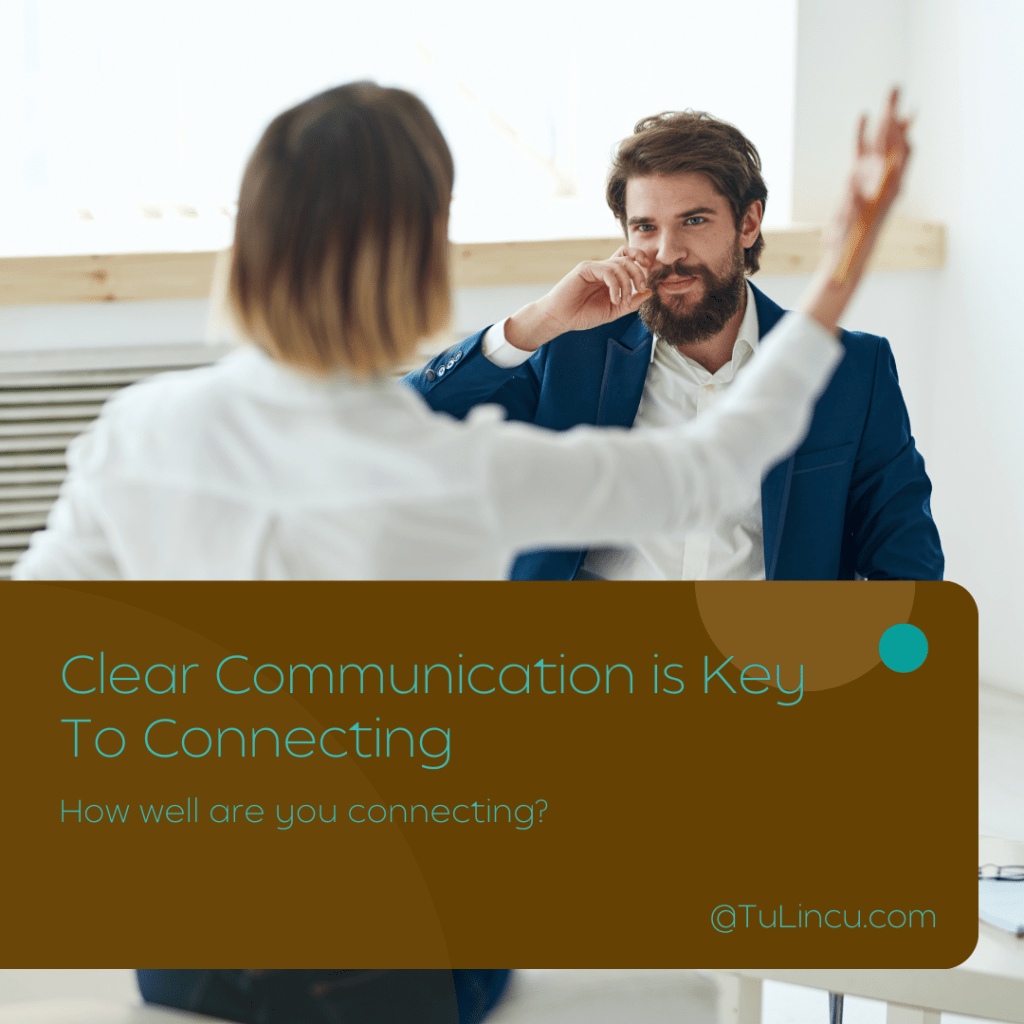
Communicate To Connect

In a world where information bombards us from every angle, the art of communication has taken center stage. Every day, entangled in the relentless flood of advertisements, texts, emails, calls, and conversations, we find ourselves inundated with over 35,000 messages in an incessant attempt to grab our attention.

Communication is an omnipresent force in our lives. Whether we are aware of it or not, we are constantly engaged in the act of conveying messages. It’s not just about the words we speak or type; it’s a culmination of body language, facial expressions, emotion, and the nuanced art of expression that is all a part of expressing ourselves.

In this era of hyper-connectivity, you might assume that genuine connections are flourishing. But reality often tells a different story. While communication is a surplus, true connection remains elusive for many. It’s a contradictory situation where the quantity of messages doesn’t translate into quality connections.

In this communication chaos, the essence of genuine connection is often lost. We send messages without truly understanding or empathizing with the recipients. It’s as if we’re speaking into a void, with the hope that our words will resonate, but more often than not they are drowned out by the noise of countless other messages.

The key to effective communication lies not just in the act of conveying information but in the ability to connect with others on a deeper level. It involves active listening, genuine understanding, and a willingness to connect words and emotions. Communication, at its core, is a two-way street where both the sender and receiver play integral roles.

Often overlooked in the digital realm, body language and facial expressions remain powerful tools in conveying unspoken messages. A smile, a nod, or even the subtlest change in expression can speak volumes, going beyond the limitations of words. In a world dominated by screens, preserving the authenticity of human expression is paramount. We are so used to electronic exchange that we have become emotionless when face-to-face.

To truly connect, it’s essential to break free from the superficiality of the constant communication barrage. Instead of simply transmitting messages, we must strive to build bridges between hearts and minds. It requires patience, empathy, and a genuine desire to understand and be understood.

In a society where everyone is vying for attention, the ability to genuinely connect becomes a rare and precious skill. A skill that goes beyond the mere exchange of information; it includes shared understanding and mutual respect. As we deal with the numerous messages we receive every day, let’s not forget the power of true connection in the overwhelm of communication.

And if you’re interested….Coming in January I will be offering a free lunch & learn on communicating with connection (More details to come). Until then, take advantage of my December offer of having me host a free round (online or in person) of The Leadership Game! Go to https://tulincu.com/ to schedule now!

Finding Balance in a Chaotic World

As the holiday season approaches, it’s all too common to find ourselves caught up in the intricate web of our own little worlds. The hustle and bustle of this time of year can easily cause stress, distraction, and a sense of overwhelming busyness. I am not exempt from getting trapped in the whirlwind of seasonal demands, and I’m sure a lot of you can relate.

The holiday season is meant to be a time of joy, reflection, and connection, yet it often transforms into a frantic race against the clock. As the to-do lists pile up, it becomes increasingly challenging to maintain a sense of balance. The pressure to meet societal expectations, coupled with personal needs, can create a perfect storm of stress and distraction.

I confess that I have fallen victim to the trap of being consumed by it all this time of year. The constant demands of work, social and family obligations, and the ever-growing checklist of tasks to accomplish can make it difficult to pause and appreciate the true essence of the season. It becomes easy to lose sight of what truly matters in the whirlwind of chaos.

Knowing all the things we should do, but find ourselves unable to due to circumstances beyond our control, only adds another layer to the mix. Limited time, financial constraints, or unforeseen challenges can create a sense of helplessness, making it even more challenging to strike a balance between what we want to achieve and what is realistically possible.

So, how do we navigate this intricate balance of responsibilities and desires without succumbing to the stress and distractions that threaten to pull us under?

Firstly, it’s crucial to acknowledge our own limitations. We are only human, and it’s okay to recognize that we can’t do it all. Setting realistic expectations for ourselves and others allows us to prioritize and focus on what truly matters.

Next, finding moments of mindfulness within the chaos can be a powerful remedy. Taking a few minutes each day to step back, breathe, and reflect can provide clarity and a renewed sense of purpose. Whether it’s through meditation, a brief walk, counted breathing, or simply sitting in quietness, these moments of stillness can help ground us in the present.

Additionally, embracing a sense of gratitude can shift our perspective. Instead of dwelling on what we can’t do, let’s focus on what we can. Expressing thankfulness for the small joys and accomplishments, no matter how minor, can create a positive mindset that helps us more easily conquer the challenges we face.

Ultimately, the holiday season is a time to celebrate the spirit of giving, compassion, and connection. By finding a balance between our aspirations and the reality of our circumstances, we can navigate this season with a sense of purpose and fulfillment. Let’s not allow the rush of our own little worlds to obscure the beauty of the season and the joy that comes from being present in the moment.