
What If You Didn’t Wait Until January

Even if you’re not someone who officially makes New Year’s resolutions, there’s something about the end of the year that gets us thinking.

Maybe you’ve caught yourself thinking about things you’d like to change. You’d like to take better care of yourself. Get more organized. Spend less. Save more. Finally get a handle on your finances.

Maybe this is the year you promise yourself things are going to be different. You’ll start fresh in January. You’ll get serious about your money. You’ll stop wondering where your paycheck went before the next one arrives. You’ll make a plan and stick to it.

And maybe you really will.

But here’s a thought. What if you didn’t have to wait until January 1st to start feeling better about your finances?

What if you could begin making changes now, so that when the new year arrives, you’re not starting from scratch and you’re already moving in the direction you want to go.

Think about what that could feel like.

Let’s talk about the holidays for a minute.

For some of us, the holidays bring excitement, family traditions, and memories we look forward to making.

They can also bring a fair amount of financial stress.

There’s the gifts to buy, the extra groceries, the family gatherings, the travel, the school activities, the decorations, and all those little extras that somehow add up to a whole lot of money.

You want to make Christmas special. You want to give your family a wonderful holiday. You want to say yes when the kids or grandkids want to do something fun. And wouldn’t it be nice to look at your bank account in January and not wonder how things got so out of hand?

Most of us have been there before. You tell yourself you’ll keep spending under control this year. You have great intentions. You might even have a budget. But then something comes up (like it usually does). You see the perfect gift. Someone invites you to an event. You decide to splurge a little because it’s Christmas, after all. And before you know it, you’re spending more than you planned.

The credit card balance creeps up. The savings account takes a hit. And somewhere in the back of your mind, you’re already worrying about how you’re going to make everything work once the holidays are over.

That’s a lot to carry while you’re supposed to be enjoying the season.

Now, imagine approaching the holidays a little differently. Imagine knowing how much you can comfortably spend, having a plan for the expenses you know are coming, and being able to make decisions without that constant mental calculation of Can I afford this? What happens if I buy that? Will I regret this later?

You may still have some financial decisions to make because life doesn’t suddenly become predictable just because we have a plan. But wouldn’t it be nice to feel more in control of those decisions?

You don’t have to overhaul your entire financial life before Christmas.

I’m not suggesting you need to spend the next few weeks creating a strict budget, cutting every extra expense, and becoming a completely different person before the holidays arrive. That’s a lot of pressure to put on yourself.

Instead, what if you started with a few small things? Take an honest look at where your money is going. Figure out what you can comfortably spend on the holidays. Think about the expenses coming in January that might get overlooked when you’re caught up in the excitement of December.

And pay attention to the things that tend to throw you off course. Maybe it’s the last-minute shopping. Maybe it’s feeling guilty when you can’t give someone what you’d like to give them. Maybe shopping is one of the ways you reward yourself after a stressful week.

Understanding what’s happening is just as important as figuring out the numbers. Most of us know we should save more or spend less. But sometimes there’s more going on beneath the surface, and a budget alone doesn’t address it. The goal is to understand your patterns and begin making choices that support the life you want to live one decision at a time.

Now, imagine walking into January differently.

Instead of waking up on January 1st with a list of resolutions and the same financial worries you’ve been carrying for months (or years), imagine already having a little momentum.

Think about how it would feel if you’ve already started paying attention to your spending, made some decisions about your priorities, and have a better idea of what’s happening with your money and what needs to change.

Maybe you’ve even discovered that a few small adjustments make a bigger difference than you expected. And you didn’t have to wait for a particular date on the calendar to give yourself permission to do it.

You can start right where you are, with the money you have, the circumstances you’re facing, and the next decision in front of you.

And maybe the biggest difference you’ll notice isn’t even the number in your bank account. Maybe it’s the relief of not feeling quite so anxious when you think about money. The confidence that comes from knowing what’s happening with your finances. The ability to enjoy the holidays without carrying so much worry into every purchase.

Wouldn’t it be wonderful to enter the new year with a little more clarity, a little more confidence, and a little more peace?

You don’t have to wait until January to begin creating that. You can give yourself that head start today. And you deserve to enjoy the holidays while you’re doing it.

Let me ask you something.

If you could change just one thing about your financial life before the new year arrives, what would it be?

Would it be feeling less anxious about money? Knowing where your money goes? Getting through the holidays without adding to your debt? Or finally feeling like you’re making progress toward something that matters to you?

I’d love to hear what’s on your mind.
What Are You Putting Off?

Procrastination is one of those things we all know about, and most of us have probably been guilty of it at one time or another. I know I have. There are things in life that I know need to be done, but somehow, I can find ten other things that suddenly seem much more important. Sometimes it is something as simple as cleaning out a closet or making a phone call. Other times, it is something that carries a little more weight, like making a difficult decision, having a conversation we have been avoiding, or finally dealing with something that has been hanging over our heads.

The funny thing about procrastination is that we usually know exactly what we are doing. We tell ourselves we will get to it tomorrow. Tomorrow comes, and we decide we will do it next week. Before we know it, weeks or even months have passed, and the thing we have been avoiding is still sitting there.

I have been thinking about how often we do this with our money.

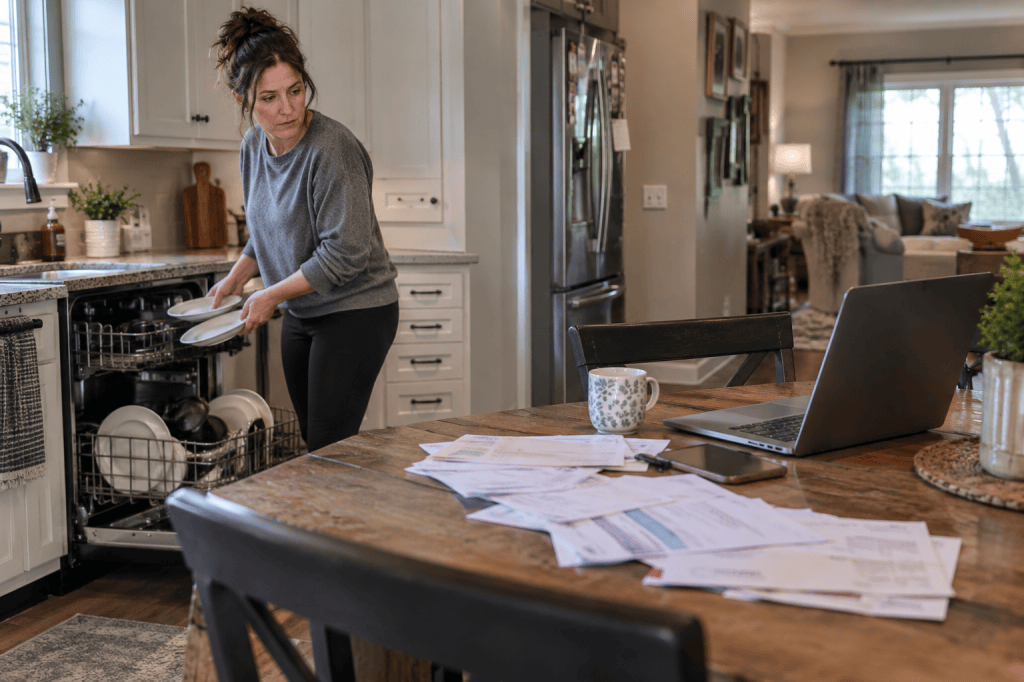
Maybe you know you need to sit down and really look at where your money is going each month, but you keep putting it off. You may already have a pretty good idea that you are spending more than you want to, but you don’t want to see the actual numbers. Maybe you have credit card balances that have been bothering you for a while, but opening the statements makes you uncomfortable. Perhaps you have been telling yourself that you will start saving when things settle down, or that you will figure out a budget after the next paycheck.

And somehow, the next paycheck keeps coming.

This is where I think procrastination gets interesting. Sometimes we aren’t actually avoiding the task. We are avoiding the feeling we think will come with doing the task.

Looking at your finances may bring up anxiety. It may bring guilt or frustration. You may be disappointed in yourself because you thought you would be further along by now. You may be afraid of what you will discover once you start adding everything up. Or maybe you simply don’t know where to start, so it feels easier to do nothing than to sit down and try to figure it all out.

So we avoid it.

And for a little while, that feels better.

We don’t have to think about the credit card balance. We don’t have to make a decision. We don’t have to admit that the way we are spending money isn’t really working anymore. We can go on with our day and pretend that we will deal with it later.

The problem is that later usually comes.

And whatever we were avoiding is still waiting for us.

Sometimes it has even grown.

The balance is a little higher. Another bill has been added. Another month has gone by without saving. Another purchase has been made that we really didn’t need. Another paycheck has disappeared without us feeling like we have much to show for it.

Then we wonder why money feels so stressful.

I don’t think the answer is always that we need more discipline or a better budget. Sometimes we need to understand what is happening underneath the behavior.

What are we actually avoiding?

That is a much more interesting question.

Maybe looking at your money brings up feelings you don’t particularly want to deal with. Maybe spending has become a way to make yourself feel better, and getting serious about your finances means you might have to find another way to get that feeling.

Maybe you are afraid that if you really look at everything, you will have to make some changes. And change can be uncomfortable, even when we know the change is good for us.

I have experienced enough changes in my own life to know that sometimes we hold onto things simply because they are familiar. Even when familiar isn’t working particularly well.

Money can be the same way.

We can get into patterns of spending, saving, avoiding, ignoring and starting over. We promise ourselves that this month will be different, and then life happens. Something unexpected comes up. We get tired. We have a stressful week. We buy something because we deserve it. We tell ourselves we’ll make up for it next month.

Then next month looks a lot like the one before it.

If that sounds familiar, I don’t think the answer is to beat yourself up over it. Shame rarely creates the kind of lasting change we are looking for. I think the better place to start is with curiosity.

Instead of asking, “Why can’t I get this together?” ask yourself, “What am I avoiding?”

What happens inside you when you think about looking at your bank account? What do you feel when you think about paying off debt? What are you hoping a purchase will make you feel? What decision have you been putting off because you aren’t sure what the right answer is?

Those questions can tell us a lot because sometimes the behavior we see on the outside is only part of the story.

And this is especially true when life has changed.

Divorce, an empty nest, a career change, the loss of a spouse, a new marriage, starting over in a completely different season of life — these things can change much more than our circumstances. They can change how we see ourselves, what we need, what we want and even what we believe will make us happy.

Sometimes our spending changes right along with us.

We buy things because we are trying to create comfort. We spend because we are trying to feel successful. We shop because we are bored or lonely or exhausted. We spend because our old life no longer feels like our life, and we are trying to figure out what the new one is supposed to look like.

Then we wonder why the money isn’t working.

Maybe the first step isn’t another budget.

Maybe it is slowing down long enough to ask ourselves some better questions.

What am I putting off?

What am I afraid I will find if I finally deal with it?

What am I hoping my money will give me that money can’t actually provide?

And perhaps most importantly, what would change if I stopped waiting for the perfect time to deal with it?

You don’t have to fix everything at once. You don’t even have to know exactly what the finished picture looks like.

You just have to be willing to stop avoiding the first thing.

Because sometimes the biggest change in our finances begins with something much smaller than a new budget or a bigger paycheck.

Sometimes it begins with finally being willing to look.