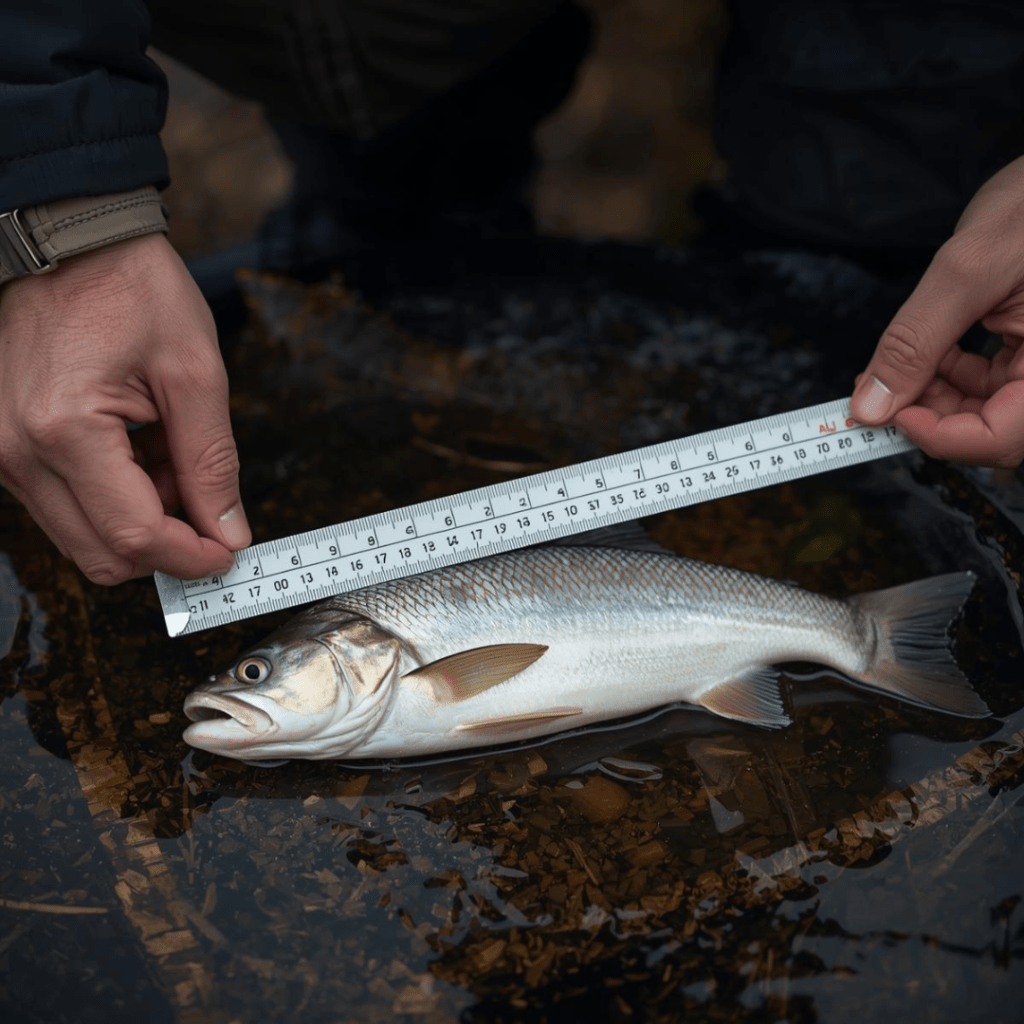
Are You Throwing the Big Fish Back?

You’ve probably heard the story about a man fishing by the river. He was catching more fish than anyone else, so people started gathering to see what he was doing differently. But when they watched closely, they got confused. Every time he caught a fish, he pulled out a tape measure. If the fish was smaller than eight inches, he kept it. If it was bigger, he tossed it back into the water.

Someone finally asked him, “Why in the world are you throwing back the big ones?”
The man replied, “Because my frying pan is only eight inches wide.”

Now, most of us would laugh at that, right? But a lot of us are doing the exact same thing with our finances.

We pray for financial blessings. We talk about wanting to save more, earn more, or get out of debt. Yet when opportunity knocks, we throw it right back because it doesn’t fit the size of our current “frying pan.”

Maybe you’ve said things like:

  • “I could never make that much money.”
  • “I’ll always be bad with budgeting.”
  • “People like me don’t get ahead financially.”
  • “I don’t deserve more.”

That’s not reality. That’s our own limiting belief.

You might be asking God to bless your finances, but He’s waiting for you to expand your capacity to receive it. It reminds me of Matthew 25:29, where Jesus says:

“For whoever has will be given more, and they will have an abundance. Whoever does not have, even what they have will be taken from them.”

That verse isn’t saying God plays favorites; it’s about stewardship. When we handle what we have well, more comes. But when we let fear or disbelief call the shots, we end up tossing big opportunities back because they don’t fit our comfort zone.

And let’s be honest, sometimes it’s not even about lack of opportunity — it’s about our habits. You can’t pray for financial peace and then let Amazon talk you into buying a 3 a.m. “emergency candle holder” because it was on sale.

If that stings a little, I get it. I’ve been there too. We’ve all made financial decisions that made us shake our heads later. But awareness is the first step.

Ask yourself:

  • What’s really keeping me from saving more or paying off debt?
  • When did I start believing I wasn’t “good with money”?
  • Who told me I couldn’t have more?

Those thoughts didn’t appear out of nowhere. They came from experiences, family patterns, and sometimes fear. But Romans 12:2 reminds us, “Be transformed by the renewing of your mind.” That includes how you think about money.

When you change your beliefs, your behavior follows. Replace “I’ll never get ahead” with “I’m learning how to build stability.” Replace “I can’t afford it” with “How can I plan for it?”

The truth is, God can bless you with bigger fish, but you’ve got to be ready to receive them.

So maybe it’s time to stop throwing back the blessings because they don’t fit your current situation. Stretch your faith, adjust your mindset, and grab yourself a bigger frying pan.

Because when you do, you’ll realize the abundance you’ve been praying for has been swimming right in front of you the whole time.

When Money Decisions Feel Like a Game of Whack-a-Mole

Ever feel like every time you handle one money issue, three more pop up like a bad round of Whack-a-Mole? You finally pay off one credit card, and boom; the car needs tires, your kid’s field trip fee is due, and someone forgot about that “automatic renewal” you swore you canceled last year.

It’s exhausting.

And if you’ve ever stood in the grocery aisle staring at forty-seven kinds of peanut butter, wondering if “organic,” “crunchy,” or the one with the yellow lid is the “right” choice, you know the feeling. Now multiply that by a mortgage, retirement plans, student loans, and maybe a business decision or two. That’s financial decision paralysis.

We live in a time that’s overflowing with options; apps that track your spending, influencers promising overnight wealth, and “exclusive” credit card offers that show up like uninvited party guests. It’s no wonder people freeze. We’re not just afraid of picking wrong. We’re afraid of failing, of wasting money, of being judged.

And so, we do nothing.
The problem with that is that doing nothing is a decision. And often, it’s the most expensive one.

Why We Freeze Up

It’s not really about money. It’s about fear.
Fear of making the wrong move. Fear of regret. Fear that one bad choice will mess everything up.

We’ve been taught to chase the perfect plan, have the perfect budget, the perfect investment, the perfect system when we all know there’s no such thing. Personal finance isn’t one-size-fits-all. It’s personal.

God never asked us to be perfect planners. He asked us to be faithful stewards. That means doing the best we can with what we have and trusting Him with the rest. He’s not grading us on flawless execution. He’s looking for obedience, wisdom, and a little faith in the middle of the mess.

The Cost of Doing Nothing

Avoiding financial decisions feels safe in the moment, but it’s like putting your money in time-out and hoping it grows while it’s sitting there. Spoiler alert: it doesn’t.

When you avoid rolling over that old 401(k) or skip setting up a spending plan because it’s overwhelming, that’s progress on pause. And that pause has a price.

Then there’s the stress. That constant mental weight of “I should probably deal with that…” Stress steals your sleep, your joy, and your peace. But remember, God never meant for you to carry all that alone. He said, “Cast your cares on Me,” not “juggle them until you drop.”

How to Break Free from the Freeze

So how do you stop spinning in circles and start moving forward?

  1. Shrink the decision.
    Stop asking, “What’s the perfect plan for retirement?” and start asking, “Can I move 2% more into savings this month?” Small moves create big momentum.
  2. Set boundaries.
    You don’t need every podcast, influencer, and newsletter in your head. Mute the noise. Choose trusted sources, and protect your peace.
  3. Pray before you pay.
    God may not drop your investment strategy into your DMs, but prayer slows the panic. It shifts your heart from fear to faith.
  4. Pick something.
    Almost any forward step beats standing still. Even if you have to adjust later, you’re learning and growing.
  5. Ask for help.
    God wired us for community. Sometimes the breakthrough comes after talking it out with someone who’s not tangled up in your emotions; a friend, a mentor, or yes… a coach.

If you’ve been stuck in that place of financial overwhelm, just pause and breathe for a second. You’re human and you’ve had a lot on your plate.

God’s not looking at your credit score; He’s looking at your heart. He’s not waiting for you to have it all figured out. He’s just waiting for you to take one faithful step forward.

So pick one thing. Just one. Maybe it’s setting up automatic savings. Maybe it’s finally opening that envelope that’s been sitting on your counter giving you the side-eye. Or maybe it’s reaching out for a little guidance and support.

Progress doesn’t come from having all the answers today. It comes from small steps, a little faith, and a good sense of humor when life gets messy.

And listen… if you still can’t decide between crunchy or creamy peanut butter? Buy both. God gives us room for a little grace — and a little variety.

The Addiction No One Talks About

I saw this quote recently, and I swear it leapt off the screen and side-eyed me:
“If you don’t think you’re addicted to something, try fasting from it.”

Well… that felt a little personal.

Because my first thought was, Oh, I could give up anything if I had to.
And then I imagined going a week without coffee, Amazon, or that little thrill I get when I see “Your order has shipped.”
Suddenly, I realized, yeah, maybe I am a little addicted.

Financial Fasting Hits Different

Now, before you think I’m suggesting a wilderness fast with no water and locusts, calm down. I’m talking about a financial fast; no unnecessary spending for a set time.

No takeout. No “just one quick Target run.” No late-night scrolling on Etsy, convincing yourself you need another candle that smells like “Peaceful Rainforest Serenity.”

If you want to know what’s got a grip on you, try saying no to it for seven days.
The first day, you’ll feel strong. Day two, you’ll justify everything. By day three, you’ll be eyeing your debit card like it’s the last donut in the box.

The moment you tell yourself no, you start to see what’s really driving the yes. But that’s where the learning happens.

What God Showed Me

When I went through my divorce, I didn’t just lose a marriage; I lost my sense of safety. And without realizing it, I tried to buy that feeling back. New clothes, dinners out, little treats “to cheer myself up.”

And I remember God nudging me one day: “You’re trying to fill an emotional hole with financial band-aids.”

Ouch again.

Because He was right. What I really needed was peace. Not another Amazon box on my porch.

Money wasn’t my problem. My need for comfort was.
And only God could really meet that need.

The Real Addiction

It’s not always the spending we’re hooked on.
It’s the feeling it gives us. The comfort, control, or distraction.
And when those feelings fade, we’re right back where we started, wallet lighter and heart still hungry.

That’s why fasting, financial or otherwise, can be such a powerful reset. It’s not about deprivation. It’s about revelation.

When we stop feeding the habit, we start hearing from God in the quiet.
And He has this funny way of showing us what we’ve been running from… and what we actually need.

Let’s Dig a Little Deeper

Here’s where the life coach in me steps in:
If you find yourself overspending, ask what need you’re really trying to meet.

Are you buying to feel seen?
To escape stress?
To reward yourself because no one else is clapping for your effort?
Or maybe, you’re trying to create a sense of control in a life that feels unpredictable.

When you can name the feeling behind the behavior, you start to break the pattern.
And when you bring that awareness to God, He can actually heal the part of you that’s reaching for something temporary to soothe something deeper.

Try It

Pick one thing to fast from financially. It might be DoorDash, Amazon, Starbucks, or online browsing when you’re bored.

Every time the urge hits, stop and ask:

  • What am I feeling right now?
  • What am I hoping this purchase will fix?
  • Is there another way I can meet that need, spiritually, emotionally, or practically?

Then invite God into that space.
Pray. Take a walk. Journal. Call a friend.
You’ll start to see what’s been running your money (and maybe your peace) without your permission.

Sometimes the problem isn’t that we don’t have enough money.
It’s that we’re spending to fill a void only God and a little self-honesty can heal.

And when you fast from what controls you, you finally make room for what frees you.

And hey, if you make it all seven days without an Amazon relapse, reward yourself with… well, prayer. Or maybe a walk. But not another candle, okay? (And no—adding just one thing to your Amazon cart “for later” doesn’t count as fasting. Nice try.)

What Are You Willing To Sacrifice?

In our quest of our dreams and goals, there’s a paradox we often confront: neglecting sacrifices may lead to our goals becoming the sacrifice. The saying, “If you don’t sacrifice for what you want, what you want becomes the sacrifice,” captures a deep truth about chasing our dreams.

At its heart, this idea suggests that without being ready to let go of certain comforts, habits, or smaller goals, the very thing we’re reaching for might slip away. It emphasizes the need to invest time, energy, and sometimes make tough decisions to secure what we truly desire.

Think about an aspiring artist who dreams of mastering their craft but hesitates to give up leisure time for dedicated practice. In this case, the leisure time itself becomes the sacrifice standing between the artist and their artistic mastery.

Similarly, in personal growth and career, avoiding stepping out of one’s comfort zone may turn the fear of discomfort into the obstacle blocking desired progress.

Relationships are not immune to this conundrum. Failing to invest time, patience, and compromise in a partnership might result in the relationship itself being sacrificed, leaving a longing for the bond that was neglected.

One of the most significant sacrifices in pursuing our desires is time. Time is limited, and every moment spent on a goal is a moment not spent elsewhere. Whether it’s time with loved ones, hobbies, or self-care, ambitious individuals often find themselves juggling to meet the demands of their aspirations.

It’s essential to realize that sacrifice doesn’t always mean giving up something inherently valuable. It often involves choosing between immediate gratification and long-term fulfillment. Sacrifice requires a conscious decision to forego immediate pleasures or comfort zones for something more meaningful or aligned with our deeper dreams.

Moreover, sacrifices aren’t always tangible; they can involve intangible aspects like pride, ego, or the fear of failure. Sometimes, letting go of these internal barriers is the sacrifice needed for success.

As our desires evolve, so do the sacrifices required. What we were willing to give up early on may differ from later stages. This evolution highlights the dynamic relationship between desire and sacrifice, requiring adaptability and resilience.

In the pursuit of our dreams, the concept that “if you don’t sacrifice for what you want, what you want becomes the sacrifice” is a poignant reminder of the intricate balance between desire and the compromises it demands. The unseen sacrifices, whether in the form of time, relationships, or personal comfort, shape the narrative of our lives. They are the stepping stones of our journey, and by embracing them, we uncover the depth and richness of our human experience. Ultimately, it is through these sacrifices that we not only attain our goals but also discover the true essence of what we value most in life.

If you are struggling to find balance, need motivation or even help in clarifying your goals, schedule a free discovery call with me at https://tulincu.com/.