Does Money Really Make You Happy?

You’ve probably heard the saying, “Money can’t buy happiness.” But let’s be honest—have you ever seen someone frowning on a jet ski? Or looking miserable while sipping an umbrellaed drink on a beach in Bali?

Now, before we all start maxing out our credit cards in pursuit of bliss, let’s get real. Can money actually make us happy, or is it just a really good illusion?

There is a case for money = happiness.

There’s no denying that money makes life easier. It pays the bills, keeps the lights on, and puts food on the table. And let’s not forget about the joy of buying something without having to nervously check your bank balance first. That’s peace of mind right there!

Studies even show that financial security leads to less stress and more life satisfaction. Having enough money means fewer sleepless nights worrying about car repairs, rent, or surprise medical bills (because somehow, even breathing feels expensive these days).

Also, money can buy experiences—like trips, concerts, and spontaneous weekend getaways. And those experiences tend to bring us lasting happiness, especially when shared with people we love. Research suggests that experiences often create stronger and longer-lasting joy than material possessions. That’s because we adapt to “stuff” quickly, but memories of that amazing vacation or that hilarious night out with friends? Those stick with us.

But there’s also a case where money ≠ happiness

Now, here’s where things get tricky. Once your basic needs are met and you’re comfortable, more money doesn’t necessarily mean more happiness. Think about it: billionaire or not, everyone still has bad days, arguments, and moments of self-doubt (yes, even that influencer with the perfect life on Instagram).

Chasing money as the only source of happiness can lead to stress, burnout, and an endless cycle of “just a little more and then I’ll be happy.” In fact, too much focus on money can backfire. The relentless pursuit of wealth can come at a cost—long work hours, high stress, and less time for family, hobbies, or self-care. There’s a reason why some of the richest people in the world still struggle with loneliness, anxiety, or burnout.

There’s also something called the “hedonic treadmill.” This means that as people earn more, they get used to their new financial status and start wanting even more. That fancy car that once made you ecstatic? Give it a year, and it’s just your regular ride. Meanwhile, your happiness levels return to where they started.

Spoiler alert: that finish line keeps moving.

So, What’s the Answer?

Like most things in life, balance is key. Money can absolutely contribute to happiness, but it’s not a magic happiness button. It gives you freedom and options, but the real joy comes from how you use it. Investing in relationships, health, and meaningful experiences? That’s where the good stuff is.

Instead of just chasing wealth, focus on how you can use your money to improve your well-being. Spend on things that genuinely add value to your life, whether that’s learning a new skill, traveling, or supporting causes that matter to you.

So, the next time someone says, “Money can’t buy happiness,” just smile and say, “Maybe not, but it sure can make life a whole lot more comfortable.” And then treat yourself—just because you can.

#MoneyAndHappiness #FinancialFreedom #MindsetMatters #WealthWisely #HappinessOverStuff #BalanceIsKey #SmartSpending #LifeLessons #PersonalFinance #EnjoyTheJourney

Finding Financial Purpose: It’s More Than Just Paying the Bills

Let’s be real—most of us didn’t grow up dreaming about creating a killer budget or getting excited over a high-yield savings account. If you did, congratulations! You were probably the kid in Monopoly who owned all the railroads and charged rent with a smirk. But for the rest of us, money often feels like a necessary evil—something we need to survive rather than a tool to build the life we truly want.

But what if your finances had a bigger purpose than just covering rent, utilities, and an occasional coffee splurge? (No judgment—lattes are practically a life necessity.) What if you could find a deeper, more meaningful reason behind the way you earn, spend, save, and invest? That, my friend, is your financial purpose.

Think about it—most of life’s big decisions involve money. Want to travel the world? You’ll need a financial plan. Dream of quitting your soul-sucking job to start a passion project? Yep, that takes money too. Even seemingly simple things, like having the freedom to say “yes” to dinner with friends or “no” to yet another tempting online sale, come down to having control over your finances. Your financial purpose gives you a reason to be intentional with your money. It’s what helps you push past the temptation of impulse buys and keep your eye on the bigger picture. Without it, managing your finances can feel like running on a hamster wheel—working hard but not really getting anywhere.

To find your financial purpose, start by getting real about what you want. Forget about what society says you should do with your money. Do you actually want a big house, or would you rather have the freedom to travel? Is early retirement your goal, or do you see yourself working forever because you genuinely love what you do? Your financial purpose starts with what you want out of life.

Look at how you currently spend money. Your bank statements tell a story—what does yours say? Are you spending on things that align with your values, or are you funding Amazon’s next big expansion? Tracking your expenses can help you see if your spending habits are leading you toward or away from your financial purpose.

Think beyond just saving. Saving money is great, but it’s not the end goal. What are you saving for? Whether it’s security, adventure, giving back, or building generational wealth, knowing your “why” will make it easier to stay motivated. Once you have an idea of what you want and why, it’s time to create a plan that aligns with it. This could mean setting up an investment strategy, prioritizing debt payoff, or even just putting a cap on how many subscription services you actually use. Do you really need five different streaming platforms?

Give yourself permission to enjoy money. Finding your financial purpose isn’t about hoarding every dollar or feeling guilty for spending. It’s about using money as a tool to create a life that feels fulfilling. So yes, buy the occasional fancy coffee or take that trip—just do it with intention.

Your financial purpose is about more than numbers—it’s about creating a life that excites you. It’s about making decisions that lead to financial freedom, not just financial survival. So take a step back, figure out what really matters to you, and start putting your money toward a future that actually makes you want to check your bank account. And if that future includes a beachside villa, well, let’s start planning now!

#FinancialFreedom #MoneyMindset #WealthBuilding #BudgetingTips #SmartInvesting #FinancialGoals #MoneyMatters #DebtFreeJourney #SavingMoney #PersonalFinance

Burnout: The Sneaky Thief of Ambition (and Sanity)

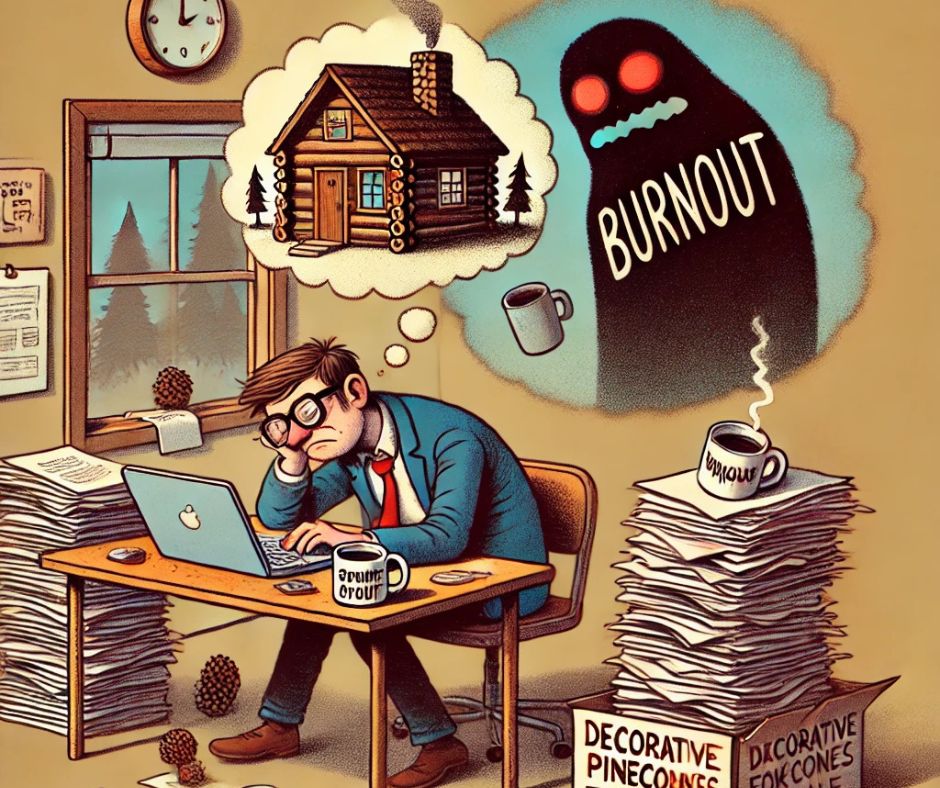
Burnout doesn’t knock politely before it arrives. It doesn’t give you a heads-up or send a friendly “Hey, you might be overdoing it” text. No, burnout is that unwanted guest who moves in overnight, eats all your mental energy, and leaves you questioning every life choice you’ve ever made. One day, you’re on top of things, crossing off tasks like a productivity machine, the next, you’re staring at an email, wondering if you actually need this job or if you could just move to a remote cabin and make a living selling decorative pinecones.

At its core, burnout is the direct result of giving too much for too long without enough return—whether that’s money, appreciation, or personal fulfillment. Work is often the main culprit, but let’s be honest, burnout doesn’t discriminate. It can creep into every corner of life: relationships, family obligations, and even that side hustle you started because “multiple income streams are the key to financial freedom.” Turns out, multiple income streams also come with multiple stress levels.

Financial burnout is its own beast. When every dollar feels like it has a name and an assigned job before it even hits your account, money becomes less of a tool and more of a relentless dictator. It’s hard to feel financially empowered when your paycheck plays an exhausting game of tag with your bills, never quite landing in your hands long enough to enjoy it. Money stress can make work feel even heavier—because when you feel trapped in a job purely for the paycheck, every minor inconvenience (like that one coworker who “just has a quick question” every five minutes) feels like a personal attack on your sanity.

Then there’s personal-life burnout. You know, the kind that sneaks in when you’ve been saying “yes” too much—to social obligations, to favors, to that friend who somehow only calls when they need something. At first, you think you’re just being a good person, but by the time burnout settles in, even the idea of texting someone back feels like a chore. And if your version of self-care has been scrolling on your phone for an hour, too drained to do anything else, then congratulations—you might just be crispy around the edges.

So what’s the way out? Rest, obviously. But not just the “sleep eight hours and you’ll be fine” kind of rest. Real recovery comes from doing things that refill your mental, emotional, and financial cup—without feeling guilty about it. It’s recognizing that money, while important, is only one part of the equation and that overworking yourself to the point of exhaustion won’t magically make you wealthier or happier. It’s allowing yourself to enjoy moments that don’t come with a productivity goal attached.

Burnout doesn’t just disappear on its own. If you ignore it, it festers, turning you into someone who sighs dramatically at minor inconveniences and wonders if your entire existence is just an endless loop of work, bills, and trying to figure out what to cook for dinner. But if you acknowledge it, set better boundaries, and prioritize yourself like your life depends on it (because it kind of does), you might just find your way back to enjoying the things that used to light you up.

And if all else fails, there’s always that decorative pinecone business.

The Power of Mind Over Money

If you’ve ever thought, “I’ll never get ahead financially” or “I’m just not good with money,” you might be putting up roadblocks where there could be open doors. Your financial future isn’t set in stone—it’s shaped by how you think and what you do. That’s where a growth mindset comes in.

A growth mindset is the belief that abilities and intelligence can be developed with effort, learning, and persistence. When applied to finances, it means realizing that financial literacy, smart money habits, and wealth-building strategies aren’t reserved for the lucky few—they’re skills that anyone can learn.

I know it’s easy to feel overwhelmed when facing financial hurdles. I’ve been there!  But a growth mindset helps you see these moments as stepping stones rather than roadblocks. If you’re struggling with debt, saving, or investing, try shifting your perspective. Instead of thinking, “I’m bad at managing money,” ask yourself, “How can I better manage my money?” Every challenge you face is a chance to build stronger financial skills.

We’ve all made financial missteps—whether it’s overspending, missing a payment, or making a risky investment. Instead of beating yourself up, take a step back and look at the lesson in the experience. Successful people don’t avoid mistakes; they learn from them. Each setback is an opportunity to refine your approach and make better decisions moving forward.

One simple word can change your entire financial outlook: yet. If you catch yourself saying, “I don’t understand investing” or “I can’t save money,” add yet to the end of that sentence. It turns a dead-end statement into an open path. Acknowledging that financial success is a journey keeps you motivated and patient with yourself.

It’s tempting to stick with what feels easy, but real financial progress comes from learning and stepping outside your comfort zone. Read books, listen to podcasts, take a financial course, or talk to a coach. The more you expose yourself to new financial concepts, the more confident and capable you’ll become. Knowledge is power—and in this case, it’s the power to take control of your financial future.

A growth mindset isn’t just about tackling big challenges; it’s also about recognizing progress. Did you save an extra $50 this month? That’s a win! Did you finally create a budget? Another win! Acknowledging and celebrating these small victories keeps you motivated and reinforces your belief that financial success is possible.

Changing the way you think about money starts with small steps. Reframe negative thoughts, seek out financial education, surround yourself with people who inspire you, and take consistent action. Whether it’s budgeting, saving, or investing, the key is to keep going.

By creating a growth mindset, you open the door to endless financial possibilities. Your starting point doesn’t define you—your willingness to learn, adapt, and persist does. Shift your mindset, take action, and watch your financial future transform!

Is Imposter Syndrome Hurting Your Finances? Here’s How to Beat It

Imposter syndrome—the nagging feeling that you’re not as competent or knowledgeable as others think—can creep into every aspect of life, including your finances. Whether you’re an entrepreneur, an employee, or managing your household budget, self-doubt can limit your financial growth and stability.

Imposter syndrome can mess with your money in surprising ways. If you’ve ever thought, I don’t deserve to make that much money or I’m not smart enough to invest, you’re not alone. Let’s talk about how it might be affecting you and, more importantly, how to break free from it.

If you run a business, freelance, or work in a field where you set your own rates, imposter syndrome might be making you lowball yourself. Thoughts like Who am I to charge that much? or What if they realize I’m not that good? can leave you working twice as hard for half the pay.

How to Fix It:

Do the research. Find out what others in your industry charge. Chances are, you’re selling yourself short.
Practice saying your rates confidently. If you don’t believe in your pricing, neither will your clients.

Focus on value, not time. You’re not just selling hours—you’re selling experience, skill, and results.

Think about this: If someone else with less experience is charging more than you, why shouldn’t you?

When was the last time you asked for a raise? If you’re like most people with imposter syndrome, the answer might be never. You may worry that asking for more money will expose you as a fraud or make your boss question your value. Meanwhile, your bills keep rising, but your paycheck stays the same.

How to Fix It:

Track your wins. Keep a list of your achievements, completed projects, and positive feedback.
Know your worth. Check sites like Glassdoor or Salary.com to see what people in your role are making.
Rehearse your ask. Practice with a friend or mentor until it feels natural.

 Your employer expects negotiations. The worst they can say is no—but they might just say yes!

Do you keep all your money in a savings account because investing feels too risky? Maybe you think, I don’t know enough about this, or What if I lose everything? While being cautious is good, avoiding investing altogether can keep you stuck in the paycheck-to-paycheck cycle.

How to Fix It:

Start small. You don’t need thousands to begin—many apps let you start with as little as $10.
Educate yourself. Read books, take courses, and follow financial experts (like me!) to build confidence.
Get guidance. A financial coach can help you create an investment strategy that feels safe and smart.

The best time to start investing was yesterday. The second-best time? Today.

Ever bought something just to look successful? Maybe you splurge on designer bags, fancy dinners, or the latest gadgets—not because you need them, but because deep down, you feel like you should have them to be taken seriously. This “imposter spending” can wreck your budget and keep you in debt.

How to Fix It:

Ask yourself: Why am I buying this? Is it something you truly want or just a way to impress others?
Shift your focus. True confidence comes from financial stability, not expensive things.
Set meaningful goals. Instead of keeping up with appearances, invest in your future.

 Real wealth isn’t about looking rich—it’s about financial freedom.

Have a great business idea but keep talking yourself out of it? Imposter syndrome can make you think, I’m not an expert or What if I fail? Meanwhile, others with less experience and confidence are out there making money.

How to Fix It:

Start before you’re ready. No one feels 100% prepared—successful people take the leap anyway.
Take small steps. You don’t have to go all in at once—start your side hustle part-time.
Surround yourself with support. Find a mentor, join a business group, or connect with others who’ve been where you are.

 The only way to fail is to never start.

Imposter syndrome can limit your financial success, but the good news is that it’s a mindset—one that you can change. By recognizing its impact and taking intentional steps to overcome it, you can build financial confidence and success. When you start believing in your worth, you’ll start earning, saving, and investing in a way that reflects it.

You deserve financial success. Don’t let self-doubt keep you from it.

Want help overcoming money blocks and building financial confidence? Let’s chat! Book a free insight session today.

How to Stop Being Your Own Worst Enemy

Let’s be real: managing finances can feel like trying to assemble IKEA furniture without the instructions—except instead of ending up with a wobbly bookshelf, you’re left wondering where all your money went. And more often than not, the culprit isn’t your boss for not giving you that raise or having a loan not approved by a financial institution. It’s you. Yes, you. Your decisions, habits, and that one voice in your head whispering, “Treat yourself,” are often the biggest hurdles standing between you and financial peace of mind.

Here’s a familiar story, but this time told in its entirety. Let me introduce you to Rachel. Rachel’s a 28-year-old with a decent-paying job and dreams of owning her own home someday. But Rachel has a little problem: she loves her morning coffee runs. Now, Rachel isn’t sipping your standard $2 cup of joe. Nope, she’s all about the venti caramel-whipped-foam-extra-shot-latte…that costs $7 a pop….minimum.

It’s harmless, right? Just $7. But here’s the thing: Rachel doesn’t just stop at coffee. There’s also the $12 avocado toast she grabs for breakfast a few times a week and the $25 takeout she gets for lunch because “packing lunch is so boring.” Multiply this routine over the course of a month, and Rachel’s suddenly $1,260 lighter in her wallet.

Now, let’s pause. Did Rachel’s latte-buying habit singlehandedly ruin her financial life? Not really. But this little daily indulgence, multiplied by her other “innocent” spending habits, meant Rachel wasn’t saving much. And every time she sat down to budget, she’d sigh and say, “Ugh, I don’t know why I’m always broke!”

Sound familiar?

We all have a little “Rachel” in us. Maybe your Achilles heel isn’t fancy coffee—it’s impulse online shopping (hello, late-night Amazon purchases), splurging on the newest gadgets, or refusing to say no to that monthly subscription box you don’t even open anymore. Whatever it is, it’s these small, seemingly harmless choices that can snowball into major financial stress.

Here’s the deal: the problem isn’t spending money. It’s spending money mindlessly. We sabotage ourselves by ignoring the big picture, brushing off small expenses, or avoiding honest conversations about our financial habits.

So why Do We Do This to Ourselves?

Money isn’t just numbers on a spreadsheet—it’s emotional. We spend when we’re stressed, bored, or trying to reward ourselves. And let’s face it: FOMO (fear of missing out) is real. We’d rather swipe our cards to keep up with the group dinner or splurge on a trendy item than face the (false) shame of saying, “I can’t afford it.”

But the truth is that financial self-sabotage is often rooted in avoiding discomfort. We’d rather indulge in short-term gratification than confront long-term responsibility. And honestly? It’s human.

Ready to stop being your own worst enemy? It’s easier than you think—with a little intention

  1. Track Every Penny (Yes, Every Penny): Think of tracking your expenses like investigating a mystery—where is your money sneaking off to? You might discover it’s those sneaky $3 app subscriptions or, like Rachel, an innocent coffee habit. Apps like Every Dollar, Mint or YNAB (You Need A Budget) can help turn this into a game.
  2. Create a “Fun Budget”: No, you don’t need to give up all your guilty pleasures. Budget a set amount for your indulgences—whether it’s coffee, streaming services, or treating yourself to something nice. When the fun fund runs out, that’s it for the month.
  3. Embrace the Art of “No”: Say no to impulse buys, unnecessary subscriptions, and (politely) those fancy dinners with friends if your budget doesn’t allow it. You can always suggest a potluck instead. Your future self will thank you.
  4. Focus on Your Goals: Get clear about what you’re working toward—a down payment, a vacation, or finally paying off that pesky credit card. Every time you’re tempted to make an unplanned purchase, remind yourself of the bigger picture.
  5. Laugh at Your Mistakes: So, you bought a yoga mat for $80 that you never used? Laugh about it, learn from it, and move on. Financial mistakes happen to everyone. What matters is how you bounce back.

After a bit of soul-searching (and a budgeting app), Rachel started making some changes. She swapped her daily latte for home-brewed coffee (with caramel syrup she bought for $5), packed her lunch most days, and started saving $700 a month. Six months later, she had a healthy emergency fund and was finally on track toward her dream of owning a home.

You, too, can write your own happy ending. Start small, stay consistent, and remember: you’re not alone in this. We’ve all been our own worst enemies at some point. The trick is to recognize it, laugh about it, and start treating your finances with the care they deserve.

And who knows? Maybe one day, you’ll look back and laugh about the time you spent $200 on a “limited-edition” air fryer.

Rewriting Your Money Story: Letting Go of Financial Fear

It’s no secret that our past experiences shape who we are. They influence how we view the world, the choices we make, and how we interact with money. While some lessons from the past can empower us, others can weigh us down, leaving us stuck in patterns that no longer serve us. If you’ve ever found yourself saying, “I can’t do this,” or “I’ll never be able to afford that,” even though you’re unhappy with your financial situation, you’re not alone. So many of us feel this way, and often, it’s because of the stories we carry from our past.

Think back to when you were a kid. What was money like in your household? Did your family worry about bills, argue over spending, or live paycheck to paycheck? Maybe you grew up hearing things like, “Money doesn’t grow on trees” or “We can’t afford that.” Or perhaps you watched someone close to you make risky financial decisions that didn’t end well. These early experiences stick with us, shaping how we think about money even decades later. It’s no wonder we sometimes hesitate to take risks or make changes—those old narratives can feel like they’re carved in stone.

Change is scary. Even when your financial situation isn’t great, the idea of doing something different can feel overwhelming. It’s like standing on the edge of a pool, knowing the water will be cold but not quite able to make the jump. What if you budget and fail? What if you invest and lose money? What if things get worse instead of better? These fears are real, and they can keep you stuck in the same cycle, even when you know deep down that something needs to change.

On top of that, there’s the weight of past mistakes. Maybe you’ve had credit card debt spiral out of control, or you took out a loan you couldn’t repay. Maybe you’ve tried to save or invest before, but it didn’t go as planned. The shame from these experiences can be suffocating, making it hard to believe you’re capable of doing things differently. But here’s the thing: mistakes don’t define you. They’re just stepping stones, opportunities to learn and grow, even if it doesn’t feel that way right now.

So, how do you move forward when your past feels like a ball and chain? Start by getting honest with yourself. Take a moment to think about where your beliefs about money come from. Were they handed down by your parents? Shaped by your own experiences? Understanding these roots can be eye-opening and give you the clarity you need to start breaking free.

Knowledge is another powerful tool. A lot of fear comes from not knowing where to start or feeling like finances are too complicated. But the truth is, you don’t have to be an expert to take control of your money. Start small. Watch videos, read articles, or talk to someone who knows the ropes. Every bit of knowledge you gain is a step toward confidence.

And remember, change doesn’t have to happen all at once. You don’t need to go from zero savings to fully funding your retirement overnight. Pick one thing—maybe it’s cutting back on unnecessary expenses or setting aside $10 a week—and stick with it. Each small win will build momentum, making the next step feel a little less daunting.

If you’re feeling stuck, don’t be afraid to lean on others. Whether it’s a financial coach, a friend who’s good with money, or an online community, having support can make a world of difference. You don’t have to go it alone.

Most importantly, be kind to yourself. It’s easy to beat yourself up over where you are financially, but self-criticism rarely helps. Instead, focus on progress, not perfection. Celebrate the steps you’re taking, no matter how small they might seem.

Your past might have shaped how you think about money, but it doesn’t have to control your future. With some reflection, patience, and the courage to take those first small steps, you can create a new story for yourself—one where you’re in charge of your financial future and fear no longer holds you back.

If you’re ready to take that step, schedule an insight session with me and set your financial future on the right path. schedule here

Know Your ‘Why’: The Secret to Financial Peace

What drives you? Why do you get up each day and work as hard as you do? And when it comes to your financial goals, have you ever stopped to ask yourself why?

If your answer is “I want to be rich” or “I want to retire early,” you’re not alone. But let’s dig a little deeper. What does being rich actually mean to you? What does early retirement look like in your life? If you’re unsure, you may be chasing a dream that feels more like an obligation than a vision worth fighting for.


Here’s the truth: Money isn’t the end goal. It’s the means to live the life you want, to create security, opportunities, and freedom for yourself and those you care about. But to use money as a tool, you need to first define what you’re building.

Do you want to:

  • Buy your dream home by the lake?
  • Take a month-long vacation with your family every year?
  • Start a business that aligns with your passion?
  • Retire early so you can travel or volunteer more?

Each of these dreams carries emotion, purpose, and clarity. That’s the power of knowing your “why.” It makes your goals feel personal, not generic, and gives you the motivation to stick to the plan when the going gets tough.


When you have a clear purpose behind your financial goals, it:

  1. Keeps You Focused: Life throws curveballs. When you’re tempted to splurge on something unnecessary or feel discouraged, your “why” reminds you of the bigger picture.
  2. Makes Sacrifices Easier: Saving and investing require discipline. When you tie your financial habits to a meaningful purpose, it’s easier to say no to fleeting temptations and yes to long-term rewards.
  3. Builds Resilience: Challenges are inevitable. But if your goal is deeply tied to something you care about, you’ll find the strength to overcome setbacks and keep moving forward.
  4. Creates Fulfillment: Achieving financial goals rooted in purpose feels more rewarding than hitting arbitrary milestones. You’re not just crossing off a checklist—you’re building the life you’ve always dreamed of.


Don’t worry if your “why” shifts over time—that’s natural. The dreams you have in your 30s might differ from those in your 50s. The key is to consistently evaluate and realign your goals with what truly matters to you.

Take a moment to reflect on your current financial goals. Why do they matter to you? If they don’t light a fire in your soul, it might be time to redefine them.

Start with These Steps

  1. Visualize your dream life. What does it look like? Who’s with you? What are you doing?
  2. Write down your top three financial goals. For each, ask yourself why it’s important.
  3. Share your goals with someone you trust. Talking them through can bring clarity and accountability.
  4. Revisit your goals regularly to ensure they still align with your evolving vision.


Your financial goals should feel like a roadmap to a life filled with purpose, passion, and peace of mind—not just numbers in a bank account. When you know your “why,” you transform your financial journey into a meaningful adventure.

So, what’s your why? And how will it shape your financial future?

If you’re ready to uncover the purpose behind your goals and create a plan that works for you, I’m here to help. Let’s design a roadmap that turns your dreams into reality.

It’s Quitting Time

Did you know that the second Friday in January is known as “quitting day” because it is the most common day for people to abandon their New Year’s resolutions?

But did you also know that as important as it is to keep our promises to ourselves, it’s equally important to quit the things that no longer serve us?

Life is a series of seasons, each offering us opportunities to grow, learn, and transform. Yet, why do so many of us hold tightly to things that no longer nourish our minds, hearts, or souls? We’re told that quitting is for the weak—that success is a straight line fueled by perseverance. But what if the real power lies in knowing when to let go? Quitting isn’t failure; it’s a bold act of self-respect, acknowledging that your time and energy are too precious to waste on the wrong things.

But why is it so hard to let go? Why do we cling to jobs that drain us, relationships that hurt us, or habits that stifle us? Often, it’s fear—fear of the unknown, fear of judgment, fear of regret. The thought of quitting can feel like admitting defeat, as though walking away negates the effort you’ve put in. And then there’s the sunk-cost fallacy: the belief that because you’ve invested so much already, you have to keep going, even when it’s costing you more than it’s giving back.

But here’s the truth: Holding on too long creates a quiet erosion. It drains your energy, dims your spark, and keeps you tethered to a version of life that no longer fits. Letting go is not just an act of release; it’s an act of liberation.

So how do you know when it’s time to quit? Pause for a moment and ask yourself these questions:

  1. Is this fueling or draining me? If something consistently leaves you feeling depleted or resentful, it’s time to reevaluate its place in your life.
  2. Does this align with who I’ve become? Growth is natural, and what once served you might now feel like a cage. Are you holding on to an old version of yourself?
  3. Am I staying out of fear or obligation? Are guilt or external expectations keeping you in a situation you’ve outgrown?
  4. What does my intuition say? Deep down, you often already know the answer. Listen to that quiet, persistent voice.

The cost of holding on is often invisible until it’s unbearable. Staying too long in the wrong job, relationship, or routine doesn’t just waste your time—it steals your vitality. Imagine the mental clarity you could gain, the opportunities you could seize, the happiness you could cultivate, if you dared to let go. Quitting is not giving up; it’s making space for what’s next.

When you let go, you don’t just lose—you also gain. Here’s what happens when you choose to quit wisely:

  • Clarity: Without the weight of unnecessary burdens, you can see your path more clearly.
  • Freedom: Walking away from what no longer serves you is a radical act of self-care.
  • Renewal: Quitting creates fertile ground for new opportunities, relationships, and dreams to grow.

Letting go isn’t easy, but it can be transformative. Here are some steps to help you navigate this process:

  1. Name it. What are you holding on to, and why? Identifying the root of your attachment can be eye-opening.
  2. Visualize the outcome. Imagine your life without this weight. What doors could open? How would you feel?
  3. Start small. If letting go feels overwhelming, begin with something manageable. Build your confidence one step at a time.
  4. Seek support. Talk to people you trust who can provide perspective and encouragement.
  5. Celebrate your courage. Quitting is hard, and every step you take deserves recognition.

Letting go is not just about leaving something behind; it’s about making room for something better. When you release what no longer serves you, you reclaim your energy, purpose, and joy. You’re saying to yourself, “I deserve more than this,” and that’s a powerful declaration.

So, ask yourself: What am I holding onto that’s holding me back? What would my life look like if I had the courage to quit? In answering these questions, you may just find the freedom you’ve been seeking all along.

Finding Your Compass in a World Gone Wild

Let’s be honest: life’s gotten a bit… noisy. Between emails, endless to-do lists, and trying to remember if it’s trash day or recycling day, it’s no wonder we feel like hamsters on a wheel. We’re sprinting but not necessarily going anywhere.

But here’s the thing: the wheel doesn’t stop unless you do. So, let’s talk about hitting pause, stepping off, and reconnecting with what truly matters. Spoiler: it’s not your inbox or that new streaming show everyone’s talking about.

Take a second and ask yourself: Who am I outside of my responsibilities, my job title, and my Wi-Fi connection? It sounds deep, but it’s really about rediscovering what makes you tick. What lights you up? When was the last time you did something just because it made you happy?

Maybe it’s cooking, dancing like nobody’s watching (even if they are), or painting even though your best work looks like Picasso’s toddler phase. The point isn’t perfection; it’s joy. Reconnecting with these moments of bliss is step one to finding your way back to yourself.

Look around—who’s in your circle? Are they lifting you up or dragging you down? Life’s too short to spend time with people who drain your energy. (Yes, faceless keyboard warrior, I’m looking at you.)

Surround yourself with those who make your soul feel like it’s at an all-you-can-eat buffet of laughter, love, and support. These are your people—the ones who remind you of what matters when you forget.

This one’s a toughie, but hear me out: turn off your phone. No, seriously. The world won’t implode if you’re unreachable for an hour.

Go for a walk without headphones. Sit in the park and people-watch. (Bonus points if you guess their life stories.) Journal your thoughts. Meditate. Or just stare at the ceiling and let your mind wander. When you’re not constantly consuming, you create space to connect with yourself and your surroundings.

Here’s a wild concept: you don’t have to do everything. Not every party, project, or PTA meeting needs your RSVP. Saying “no” isn’t selfish; it’s strategic.

Every time you say “yes” to something that doesn’t align with your values, you’re saying “no” to something that does. Protect your time and energy like it’s the last slice of pizza—it’s precious.

At the core of reconnecting with what matters is figuring out your “why.” Why do you do what you do? What’s the point? It’s easy to get stuck in the day-to-day grind and forget the big picture.

Take some time to reflect on what gives your life meaning. Is it your family? Your creative passions? Making a difference in the world? Whatever it is, let it guide your decisions. It’s your internal compass in a world full of distractions.

Life’s a mess—you’re a mess—we’re all a mess. And that’s okay! Laugh at the chaos. Celebrate the little wins, like remembering to water your plants or finally folding that mountain of laundry. Humor keeps things light and reminds us not to take it all too seriously.

Reconnecting with what matters isn’t a one-time thing; it’s an ongoing practice. Some days you’ll nail it, and other days you’ll eat cereal for dinner and scroll Instagram for hours. (We’ve all been there.) The point is to keep coming back to what’s important.

So, take a deep breath, step off the hamster wheel, and start living a life that feels like yours!

And that’s exactly what I’ll be doing. I’m stepping off the hamster wheel to connect with family over the holidays. I’ll be back in the new year with fresh ideas and strategies to help us work toward our successes. I’ll also be spending time in the new year studying for a new license so I can help my clients even more!

Here’s to the holidays—a time for joy, fresh starts, chasing bigger dreams, and embracing the renewed hope that comes with new beginnings!!