What Affordability Really Means After Divorce

There’s a moment after divorce or a major life reset when things finally settle down and everything gets quiet.

The paperwork is signed.
The adrenaline fades.
And you’re standing in your kitchen at 9:30 p.m., eating cereal for dinner, wondering how this became your life.

That’s usually when the question shows up:

Can I buy a home or keep the one I’m in on my own?

Not to prove anything.
Not to “win” the divorce.
Not to impress anyone who doesn’t pay your bills.

Just to build something steady again.

If that’s where you are, let me say this gently: buying a home after divorce is different. Not impossible. Just different. And God’s not surprised you’re here.

I know this season well. I’ve lived it. And I’ve watched God meet people right in the middle of it, sometimes with provision, sometimes with redirection, and occasionally with a sense of humor that feels almost rude at first.

Buying on one income changes everything.

There’s no “we’ll figure it out later.”
No second paycheck as a safety net in the background.
No shared “oops” fund when the water heater decides to retire early.

It can feel scary… and oddly freeing.

You stop asking:
“What can we qualify for?”

And start asking:
“What can I afford and still sleep at night?”

That question is wisdom.

After divorce, many people go one of two ways:

They either tell themselves,
“I guess I don’t get to want much anymore.”

Or they swing hard in the other direction, like,
“I’ve been through enough. I deserve this house.”

Both reactions make sense. Neither one makes great financial decisions.

Budgeting on one income isn’t God telling you to live small forever. It’s Him inviting you into stability.

It’s knowing:

  • What your income supports without constant stress
  • How much margin you need to feel safe
  • What makes your nervous system calm, not clenched

Here’s where people get tripped up.

They focus on:
“Can I make the payment?”

But forget:

  • Repairs don’t care that you’re newly single
  • Utility bills don’t accept emotional coupons
  • Maintenance doesn’t show mercy just because you’re tired

Owning a home should not require prayer every time the fridge makes a noise.

Your home should support your life, not consume it.

God is a provider. But, He’s not asking you to ignore math.

Emotional buying is very real after divorce

Let’s be honest.

After loss, people shop with feelings.

They buy the house that quietly says:
“I’m okay.”
“I made it.”
“I didn’t lose everything.”

Or the house that whispers:
“I shouldn’t want much.”
“I’ll stay small.”
“I don’t trust good things anymore.”

Neither extreme is sinful. Both are human. But finding stable middle ground is best.

Your house doesn’t need to heal your heart. God does that work. Your house just needs to be a safe place to land.

One of the most freeing thoughts rebuilding buyers can have is this:

“My home doesn’t have to be perfect. It just has to work.”

Work for your income.
Work for your peace.
Work for the life God is rebuilding, not the one you’re grieving.

Sometimes that means:

  • Less square footage
  • A longer timeline
  • A simpler layout
  • A different plan than the one you had before

And sometimes it means letting yourself want something nice again without guilt. God is not offended by your desire for beauty or comfort.

Why I Specialize in This Season

I work with divorced, newly single, and rebuilding homebuyers because I understand the layers.

The financial reset.
The emotional exhaustion.
The quiet prayers that sound like, “Please don’t let me mess this up.”

Buying a home after divorce isn’t just a transaction. It’s a moment of direction.

And when done thoughtfully, with wisdom, numbers, prayer, and a little grace for yourself, it can be one of the most stabilizing decisions you make.

Not because it fixes everything.
But because it gives you a place to breathe while God continues to rebuild the rest.

And yes, you might still eat cereal for dinner sometimes.

That’s okay too.

From Piggy Banks to Paychecks: Why Kids Need Money Lessons Early

I still remember the first time my daughter asked me for money. She was maybe four years old, holding a crumpled dollar in her little hand like it was gold. She looked up at me with those big brown eyes and said, “Mommy, can I buy all the candy?”

That was my wake-up call.

Teaching kids about money is a lot like teaching them to ride a bike. You don’t just shove them on a two-wheeler, give a little push, and pray they figure it out before crashing into the mailbox. No, you start with training wheels. You run alongside them. You let them wobble, tip, and scrape a knee or two while you cheer them on.

Money works the same way.

Kids don’t come with a built-in money manual. They come with big dreams, sticky fingers, and an uncanny ability to find the toy aisle like it’s the Promised Land. But if we don’t start teaching them about money when they’re small, they’ll grow up learning about it the hard way, usually from the school of overdraft fees and credit card debt.

Money is one of those topics we sometimes whisper about, like it’s too big or too grown-up for kids to understand. But we need to remember, they’re watching us. They notice when we swipe a card at Target like it’s magic. They notice when we sigh at the kitchen table with the stack of bills. They notice when we drop a $20 in the offering plate on Sunday. They’re learning whether we say anything or not. Just like little seedlings, they soak it all in, even if they don’t have words for it yet.

And that’s why it matters to start early.

Give them chances to handle money. Instead of waiting until they’re teenagers and suddenly expect them to “get it,” why not start now? Give them little bits of responsibility early. A dollar to put in the offering plate. A piggy bank where they can watch their coins grow. Let them save for something they want instead of handing it to them right away. That’s watering the seed.

Now, I know what you’re thinking: “Yvonne, my kids can’t even keep their shoes on the right feet, and you want me to trust them with money?” Yep. Because learning about money when the stakes are small is exactly the point. Better they “waste” $5 on slime or Pokémon cards now than $500 on a credit card bill later.

God says in Proverbs 22:6, “Train up a child in the way he should go: and when he is old, he will not depart from it.” That doesn’t just mean teaching them to say “please” and “thank you.” It means showing them how to live wisely including how to use money in a way that honors Him.

When we start early, those lessons take root.

And if they mess it up? Well, isn’t that the safest time for them to learn while the “budget crisis” is just about a lost dollar and not about not being able to pay rent?

So, start the conversation. Make it fun. Let them make a few mistakes while the stakes are low. Teach them about giving, saving, and spending in that order. You’ll be planting seeds that will grow into wisdom later and maybe, just maybe, you’ll save yourself from being the family ATM when they’re 25.

Because at the end of the day, money isn’t just about numbers. It’s about values, choices, and trusting God with what we’ve been given. And those are lessons worth teaching as soon as their little hands can hold a dollar bill.

Is Owning a Home a Blessing—or a Burden?

Somewhere along the line, we were told that buying a home is the big “American Dream.” You know, fresh-cut grass, neighbors waving from the driveway, and a dog that finally has a yard to dig in. But as a financial educator and someone who spent years in real estate and mortgage, I want to slow us down for a second and ask: Is this dream really your dream right now or is it someone else’s?

Homeownership can be a beautiful blessing. It can give you stability, equity, a sense of accomplishment, and a place to build memories. But before you start shopping for throw pillows and paint colors, let’s talk about what it really takes to be ready.

More Than a Mortgage

Buying a home is not just about affording the monthly payment. It’s about understanding the whole picture. Property taxes, insurance, maintenance, HOA fees, and yes, that water heater that always seems to break at the worst possible time.

It’s like Luke 14:28 reminds us: “For which of you, intending to build a tower, does not sit down first and count the cost?” God isn’t trying to scare us with that scripture, He’s reminding us that wisdom is in preparation.

Questions to Ask Yourself Before Buying

Instead of asking, “Can I buy a house?” try asking:

  • Do I have a healthy emergency fund for the unexpected?
  • Is my income steady enough to handle both the expected and the surprises?
  • Will buying this home bring peace to my life or pressure?
  • Am I looking at this house as an investment in my future, or as a way to prove something to others?

Sometimes the most powerful prayer you can pray in this process is, “Lord, is this right for me?”

The Beauty of Renting

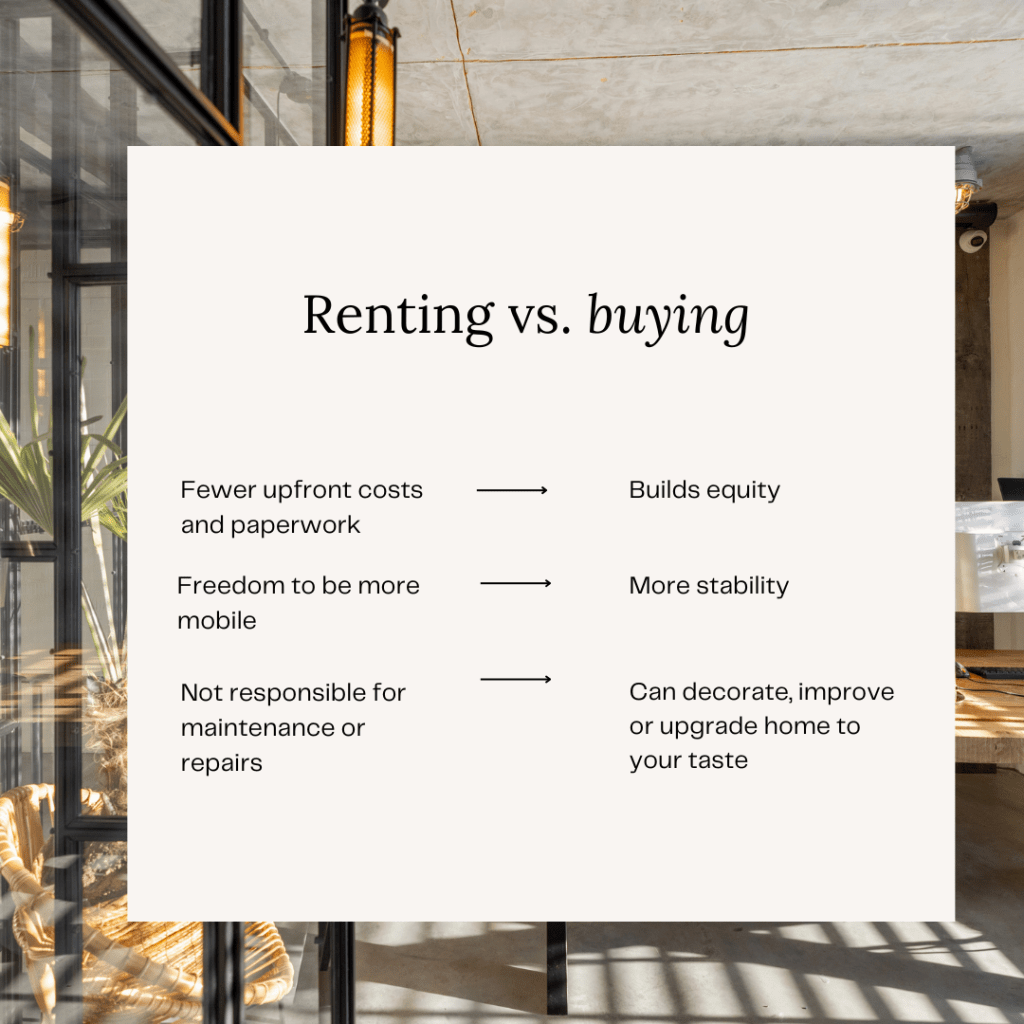
Here’s where I like to shift the narrative: renting isn’t a “failure.” Renting gives you flexibility, space to change paths without being tied to a mortgage. It allows you to focus on building your foundation, whether that’s paying off debt, growing savings, or preparing for the home that will truly fit your life later on.

My Personal Take

There have been seasons when buying a home was the right move for me, and seasons when renting gave me the freedom I needed. The truth is, neither one makes you more “grown up” or more successful. What matters is whether your choice lines up with your values and with God’s plan for your life.

A Final Word

Whether you buy or rent, your worth isn’t tied to your mortgage statement. Proverbs 24:3 says, “By wisdom a house is built, and by understanding it is established.” The wisdom comes first—the house comes second.

So if you’re thinking about buying, pray about it, run the numbers, count the costs, and make sure it fits not just your budget, but your calling. And when the time is right, you’ll step into it with peace, not pressure.

And if you do end up with that yard, may God bless you with the kind of joy that makes it more than just a piece of land, it becomes a piece of your story.

When Love and Money Collide: The Financial Realities of Being a Pet Parent

I just got home from vacation. It was a wonderful time with family and other loved ones. But this post isn’t about leaving for vacation. It’s about coming home.

As soon as I pulled into the driveway, all I wanted to do was throw my arms around my dogs. If you’re a pet parent, you know that feeling, coming home to wagging tails, happy barks, and that unmistakable sense that you were truly missed. I missed them just as much. That reunion was pure joy.

But life has a way of mixing joy with heartbreak. The very next day, my sister’s dog had to be put down because of an unforeseen complication from his long-term health condition. Watching her walk through that grief so suddenly was devastating. It also stirred up so many memories of my own journey with pets and the way they can impact not only our hearts but also our finances.

The Day Nordy Got Sick

Years ago, when I lived in Texas, I learned this lesson in the hardest way. Nordy, my sweet dog, was diagnosed with Giardia. What I thought would be a simple round of medicine turned into weeks of treatments and thousands of dollars in vet bills. I can still remember standing at the pay portal at the vet, ready to take him home, looking at the invoice totals that rivaled car payments, wondering how I was going to cover it all.

But when you look into the eyes of the dog who’s been by your side through so much, there’s no hesitation you find a way. And I did. Still, that season taught me how quickly pet care can go from routine to overwhelming.

Another Blow

Years later, tragedy struck again. Something happened at the groomer (I will likely never know the whole story), and Nordy eventually had to have both of his eyes removed. The grief of watching him go through surgeries and recoveries was almost unbearable. The bills stacked up again, and I had to face those familiar feelings of stress and worry.

And yet Nordy amazed me. Once he healed, he adjusted to life without sight in a way that inspired me more than words can explain. He showed resilience, adaptability, and courage. In a strange way, he taught me more about navigating life’s challenges than some people ever could.

The Hard Reality of Pet Care

Pets bring us unconditional love, laughter, and companionship. They become part of our family in every sense of the word. But being a pet parent also means stepping into financial and emotional responsibility that can sometimes be overwhelming.

It’s not just about the cost of food, toys, and yearly checkups. It’s the curveballs, emergencies, accidents, and long-term conditions that test your ability to say “yes” to care when your heart is begging you to do it, but your finances are whispering, “maybe you can’t.”

That’s where the true weight of pet ownership lies: in the moments where love collides with money. When you’re financially unprepared, the choices become heavier, the guilt grows stronger, and the grief cuts deeper.

Planning for the Ones Who Can’t Plan for Themselves

This is why financial planning isn’t just about retirement or paying off debt. It’s about preparing for all the pieces of your life that matter most, including the furry ones who greet you at the door.

Having an emergency fund, a budget that allows for unexpected costs, or even pet insurance can make all the difference between being able to move forward with treatment or being cornered into a heartbreaking decision. Preparation gives you freedom, the freedom to say yes without wondering how you’ll pay for it later.

As much as we wish it did, love alone doesn’t pay the vet bills. Preparation does. And when you prepare, you not only protect your finances, you protect your peace of mind in the moments you need it most.

Pets change us. They love us in ways that are pure and uncomplicated. They deserve our love back, both in cuddles and in the quiet, behind-the-scenes choices we make to be ready for whatever life throws their way.

The Middle

There’s a stretch of life that feels like a pressure cooker. You’re not just building your own future, you’re supporting everyone else’s too. The kids still need you. The parents now do, too. And somehow, you’re expected to keep the lights on, stay sane, and have a retirement plan in place.

Welcome to the middle.

This stage, often called the “sandwich generation”,  is where so many people find themselves emotionally stretched and financially scrambled. You’re the go-to person for school pickups, sports fees, emergency dental appointments, and also the one researching Medicare plans, managing doctor visits, and making sure your parents don’t fall for the latest scam call.

It’s a season of deep love, real responsibility, and if we’re being honest…a little chaos.

The Unspoken Toll

Let’s talk numbers for a second. It’s not just the emotional labor. It’s the money.

You might be covering part of your parents’ prescriptions, helping with their rent, or paying for in-home care. At the same time, your teenager just announced they want to tour colleges, each one with a tuition price tag that could fund a luxury car.

Add in your own rising property tax, food costs that feel like a prank, and the guilt of not saving enough for your own retirement, and yeah, it’s a lot.

And here’s the kicker: Most people in this spot don’t talk about it. They just quietly stretch their budgets, skip vacations, and push their own goals to the back burner.

The Myth of “Having It All Together”

There’s this subtle pressure to pretend you’re managing just fine. But behind closed doors, the budget spreadsheet isn’t adding up. You’ve dipped into savings. You’re making minimum payments. And sometimes, you wonder how long you can keep this up.

If this is you, let me say this clearly: “If it feels like you’re sinking, maybe it’s because you’ve taken on a load too heavy to carry alone.

What You Can Do (Even If It’s Not Perfect)

You may not be able to fix everything overnight, but there are a few things that can make this season more manageable:

  • Get brutally honest about your numbers. It’s tempting to avoid the hard look at the bank account. But clarity is a kindness to your future self.
  • Prioritize ruthlessly. You can’t give everyone everything. Choose what really matters right now; maybe it’s college savings over a new car, or saying no to a costly family event you can’t swing this year.
  • Ask for help. From your siblings, from your partner, from a financial coach. You don’t have to do this alone.
  • Talk to your kids and your parents. When transparency is shared with love and care, it builds trust, and sometimes it even sparks unexpected solutions, like scholarships or shared caregiving that come out of family brainstorming sessions.
  • Give yourself grace. This isn’t a season of perfect plans. It’s a season of surviving with heart.

This Is Temporary

It doesn’t always feel like it, but this season will change. Your parents won’t need the same level of care forever. Your kids won’t live at home forever (even if it really seems like they might). And eventually, you’ll come up for air.

But while you’re in the middle, remember this: You’re not alone, and you’re not doing it wrong. You’re just doing what strong, loving, resilient people have always done—figuring it out, one hard decision at a time.

And that, my friend, is something to be proud of.

Show Me Your Bank Statement and I’ll Show You What You Value

Let’s start with a question: When you think about being “good with money,” what pops into your head?

Saving more? Investing earlier? Maybe finally sticking to that not-yet-used budget that’s been silently judging you since January?

That’s all useful. But managing your money well isn’t just about math. It’s about meaning. If you’ve ever hit a financial goal and still felt a little… empty? Yeah, that’s your values trying to break through the noise.

Because if your money and your values aren’t on the same page, no amount of budgeting or earning will bring you real peace. Because the peace you’re looking for isn’t in your bank account.

Picture this: someone says they value peace and simplicity. But every weekend, they’re online shopping to cope with stress, signing up for side hustles they hate, and saying yes to every offer that comes with a paycheck no matter how soul-draining, all to pay for the shopping to “cope with the stress”.

That’s not peace. That’s burnout with a direct deposit.

We confuse “wants” with “values” all the time. Wanting something isn’t bad, it’s normal. But buying every want is like trying to build a stable life out of marshmallows. Fun for a minute. Messy later.

When you spend based on your values, your money decisions stop feeling like sacrifices and start feeling like freedom. You’re not depriving yourself. You’re choosing peace over pressure. Long-term joy over short-term dopamine.

But what are values, really?

Let’s pause. Because some people hear the word “values” and immediately think of something vague or preachy.

But values are just what matters most to you.

Not to your mom. Not to your best friend. Not to the influencer who “just can’t live without” her $40 matcha serum.

You might value creativity. Or rest. Or adventure. Or family. Or building a legacy. You don’t have to get it perfect, but you do have to get honest with yourself. Most of us don’t even stop to ask. We just chase the next thing because everyone else is doing it.

But clarity is powerful. When you really know what your values are, decision-making gets a lot easier. You stop asking, “Can I afford this?” and start asking, “Does this fit who I want to be or the life I want to live?”

Okay, you’re sold on the idea. Now what?

Here’s a simple (but not easy) process:

  1. Slow down and listen. What makes you feel alive? What makes you feel grounded? Write it down. Pay attention to when you feel content, not just excited.
  2. Notice your spending. Pull up your transactions from the last 30 days. What did you buy that actually felt worth it? What left you feeling “meh”? Your bank account is already telling your story. Read it. It’s like the saying goes, show me your bank statement and I’ll show you what you value.
  3. Ask the value question. Before you buy, ask: “Is this aligned with my values or just a passing want?” Even better, try, “Would future me thank me for this?”
  4. Plan with your values in mind. Make room in your budget for what matters most, even if that means spending more on it and less elsewhere. If community matters, maybe you host more dinners instead of buying more clothes. If freedom matters, maybe you say no to the second job and work on living within your means. (Ouch, I know that one stung)

Success feels different when it’s aligned.

Aligning your money with your values doesn’t always mean you’ll spend less. But it does mean you’ll spend smarter. With intention. With integrity. With the “I actually like how I’m living” kind of satisfaction.

And weirdly, that kind of peace attracts more success. Because you’re no longer wasting energy chasing stuff that doesn’t even matter to you. You get focused. You make decisions faster. You stop comparing your life to people who aren’t even aiming for what you want.

Most of us are trying to build a life that looks good on paper. But what if you built one that felt good instead?

More money won’t always fix your life. But money aligned with your values? That’s the good stuff. That’s where peace and success stop competing and start walking hand-in-hand.

So take your time. Learn what matters to you. Then let your money follow.

That’s the real flex.