Show Me Your Bank Account, and I’ll Show You Your Priorities

We all have a list in our heads.

Family. Faith. Freedom. Health. Peace. Security. Growth. Legacy.

If I asked you what matters most to you, you wouldn’t hesitate. You’d answer with confidence from the heart. And I would believe you.

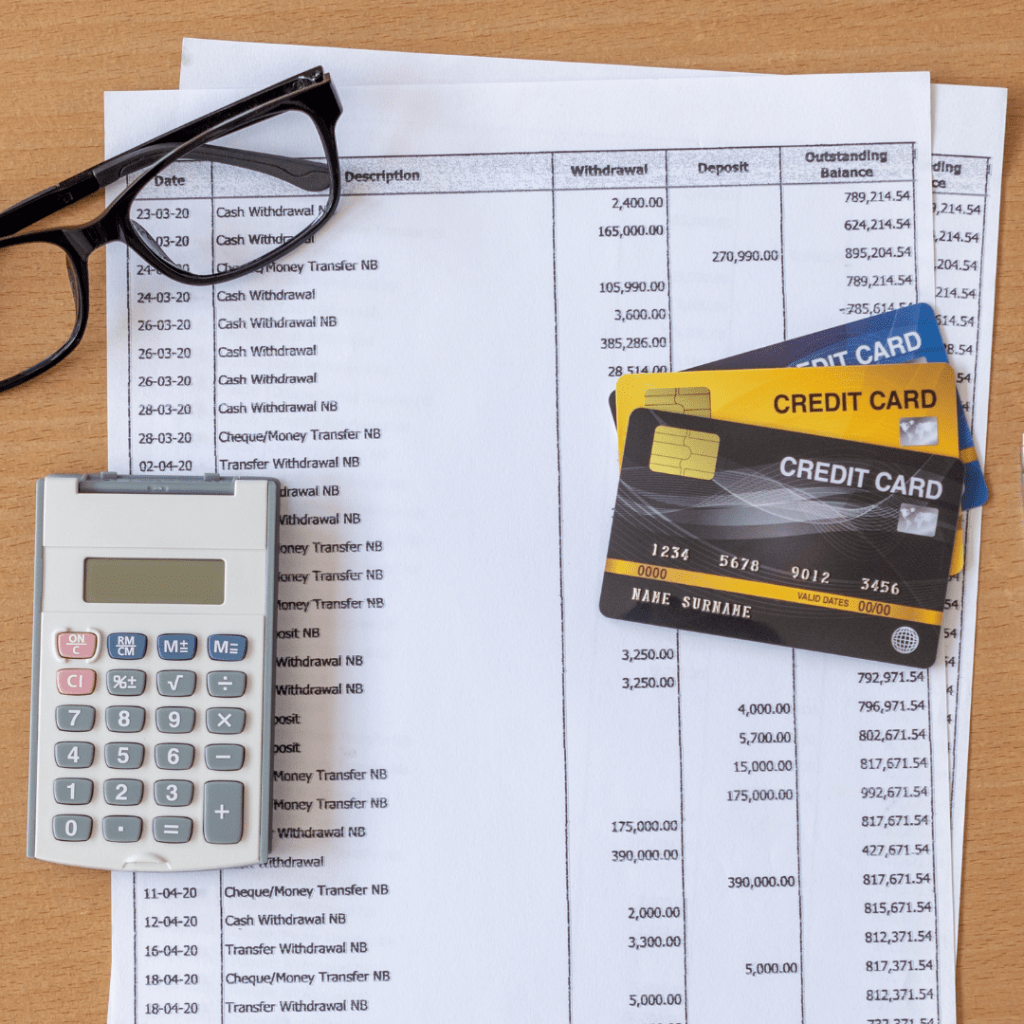
But if you slid your bank statement across the table…
I’d learn something else too.

Not because you’re lying.

But because money keeps a record of what we actually choose.

Your bank account isn’t trying to teach you a lesson.
It simply tells the truth.

And sometimes, that truth is uncomfortable.

The Gap Between Values and Behavior

Most people don’t struggle with values.
They struggle with alignment.

We say we value:

  • Financial peace, but live paycheck to paycheck..
  • Family time, but buy convenience instead.
  • Freedom, yet finance everything.
  • Health, but ignore our own care.
  • Growth, but we rarely invest in learning or getting help.

Again, this isn’t about shame.
It’s about awareness.

Because money follows behavior.
And behavior follows habits.
And habits often operate without permission from our values.

Your bank account is a mirror.

It reflects what felt urgent.
What felt comforting.
What felt necessary in the moment.

And what felt easier than sitting with discomfort.

Spending Is Emotional, Not Logical

We like to pretend we are rational with money.

We are not.

We spend when we are tired.
We spend when we are bored.
We spend when we are stressed.
We spend when we are trying to feel something.

Sometimes we spend to celebrate.
Sometimes we spend to numb.
Sometimes we spend to belong.
Sometimes we spend to escape.

Your bank statement doesn’t just show transactions.
It shows emotional patterns.

It shows where you run for relief.
It shows what makes you feel safe.
It shows what you use to cope.

And once you see that, you can’t unsee it.

The Story Money Is Telling About You

Imagine your bank account could talk.

It might say:

“I value convenience more than rest.”
“I value comfort more than margin.”
“I value appearances more than peace.”
“I value quick relief more than long-term stability.”
“I value survival over strategy.”

Or it might say:

“I value preparation.”
“I value choice.”
“I value future me.”
“I value flexibility.”
“I value alignment.”

Neither story makes you a good or bad person.

But one story gives you options.
The other quietly removes them.

Priorities Aren’t What You Claim — They’re What You Fund

If something truly matters to you, it shows up in one of three places:

  1. Your calendar
  2. Your energy
  3. Your money

When all three agree, life feels grounded.

When they don’t, life feels heavy.

You can say you want financial freedom, but if every dollar is assigned to comfort, distraction, and reaction, freedom stays theoretical.

You can say you want peace, but if your spending creates pressure, peace stays distant.

You can say you want growth, but if nothing is invested in learning, growth becomes wishful thinking.

This isn’t about cutting joy.

It’s about deciding what kind of joy you want later.

Why This Feels Personal

Money touches everything:

  • How you sleep
  • How you argue
  • How you dream
  • How you choose
  • How you feel about yourself

That’s why conversations about money often feel like conversations about worth, security, control, and identity.

You aren’t just managing numbers.

You are managing your relationship with safety.

So when I say, “Show me your bank account,” what I’m really saying is:

Show me what you protect.
Show me what you fear.
Show me what you trust.
Show me what you avoid.
Show me what you believe about yourself.

The Quiet Power of Alignment

Alignment doesn’t require perfection.

It requires honesty.

Alignment is when your money begins to reflect who you are becoming, not just who you have been.

It’s when you pause before spending and ask,
“Does this support the life I say I want?”

It’s when you stop treating future-you like a stranger.

It’s when your values stop living only in words and start living in the numbers.

Alignment is peaceful.

Even when the numbers are small.

Even when progress is slow.

Because direction matters more than speed.

The Hardest Truth

If your bank account doesn’t match your values, it doesn’t mean you lack discipline.

It often means you lack clarity.

Most people were never taught how to connect values to spending.

They were taught how to earn.
They were taught how to swipe.
They were taught how to survive.

They were rarely taught how to choose.

You Don’t Need a New Budget. You Need a New Conversation.

Not a spreadsheet conversation.

A values conversation.

A “what kind of life do I actually want to fund” conversation.

A “what am I willing to delay for something better” conversation.

A “what am I tired of pretending doesn’t matter” conversation.

Because once your values are clear, the numbers become easier.

Not easy.

But clearer.

A Gentle Challenge

Pull up your last 30 days of spending.

Don’t judge it.
Don’t explain it.
Don’t justify it.

Just observe it.

Then ask:

What does this say I care about?
What does this say I avoid?
What does this say I protect?
What does this say I prioritize?

You may discover that your money isn’t betraying you.

It’s just telling you where you’ve been living on autopilot.

And autopilot can be changed.

This Is Where Real Financial Peace Starts

Not with restriction.

Not with guilt.

Not with comparison.

But with awareness.

When you see your money clearly, you gain choice.

And choice is where peace begins.

Final Thought

Your bank account is not your enemy.

It is your most honest feedback partner.

It shows you where your life is currently funded.

And it quietly invites you to decide if that still fits who you are becoming.


Reflection Question:
If your bank account had to explain your priorities to someone who’s never met you, would you feel proud of the story it tells or want to rewrite it?

If you’re ready to rewrite it, start with one small, honest shift. One choice that supports the life you actually want to live. And let that be enough for today.

If you’d like help making your money match the life you actually want, I’d love to support you. You can schedule a conversation with me when you’re ready.

You can even do a one time jump start session to get you going in the right direction dhttps://meetings.tulincu.com/public/693db1c6538dba003187eb5d

What Affordability Really Means After Divorce

There’s a moment after divorce or a major life reset when things finally settle down and everything gets quiet.

The paperwork is signed.
The adrenaline fades.
And you’re standing in your kitchen at 9:30 p.m., eating cereal for dinner, wondering how this became your life.

That’s usually when the question shows up:

Can I buy a home or keep the one I’m in on my own?

Not to prove anything.
Not to “win” the divorce.
Not to impress anyone who doesn’t pay your bills.

Just to build something steady again.

If that’s where you are, let me say this gently: buying a home after divorce is different. Not impossible. Just different. And God’s not surprised you’re here.

I know this season well. I’ve lived it. And I’ve watched God meet people right in the middle of it, sometimes with provision, sometimes with redirection, and occasionally with a sense of humor that feels almost rude at first.

Buying on one income changes everything.

There’s no “we’ll figure it out later.”
No second paycheck as a safety net in the background.
No shared “oops” fund when the water heater decides to retire early.

It can feel scary… and oddly freeing.

You stop asking:
“What can we qualify for?”

And start asking:
“What can I afford and still sleep at night?”

That question is wisdom.

After divorce, many people go one of two ways:

They either tell themselves,
“I guess I don’t get to want much anymore.”

Or they swing hard in the other direction, like,
“I’ve been through enough. I deserve this house.”

Both reactions make sense. Neither one makes great financial decisions.

Budgeting on one income isn’t God telling you to live small forever. It’s Him inviting you into stability.

It’s knowing:

  • What your income supports without constant stress
  • How much margin you need to feel safe
  • What makes your nervous system calm, not clenched

Here’s where people get tripped up.

They focus on:
“Can I make the payment?”

But forget:

  • Repairs don’t care that you’re newly single
  • Utility bills don’t accept emotional coupons
  • Maintenance doesn’t show mercy just because you’re tired

Owning a home should not require prayer every time the fridge makes a noise.

Your home should support your life, not consume it.

God is a provider. But, He’s not asking you to ignore math.

Emotional buying is very real after divorce

Let’s be honest.

After loss, people shop with feelings.

They buy the house that quietly says:
“I’m okay.”
“I made it.”
“I didn’t lose everything.”

Or the house that whispers:
“I shouldn’t want much.”
“I’ll stay small.”
“I don’t trust good things anymore.”

Neither extreme is sinful. Both are human. But finding stable middle ground is best.

Your house doesn’t need to heal your heart. God does that work. Your house just needs to be a safe place to land.

One of the most freeing thoughts rebuilding buyers can have is this:

“My home doesn’t have to be perfect. It just has to work.”

Work for your income.
Work for your peace.
Work for the life God is rebuilding, not the one you’re grieving.

Sometimes that means:

  • Less square footage
  • A longer timeline
  • A simpler layout
  • A different plan than the one you had before

And sometimes it means letting yourself want something nice again without guilt. God is not offended by your desire for beauty or comfort.

Why I Specialize in This Season

I work with divorced, newly single, and rebuilding homebuyers because I understand the layers.

The financial reset.
The emotional exhaustion.
The quiet prayers that sound like, “Please don’t let me mess this up.”

Buying a home after divorce isn’t just a transaction. It’s a moment of direction.

And when done thoughtfully, with wisdom, numbers, prayer, and a little grace for yourself, it can be one of the most stabilizing decisions you make.

Not because it fixes everything.
But because it gives you a place to breathe while God continues to rebuild the rest.

And yes, you might still eat cereal for dinner sometimes.

That’s okay too.

The Great Generational Money Feud: Who Really Had It Easier?

Let’s get controversial. Arguments about money between generations have become intense. Online, Boomers might say, “If you’d stop buying $7 lattes, you could afford a house!” while Millennials or Gen Z reply, “Yeah, when homes didn’t cost 14 times your salary!”

It’s easy to roll your eyes at either side. But, like most arguments, the truth isn’t black and white; it’s somewhere in the middle.

The Older Generation’s Side: “We Worked for It.”

The older generation loves to remind everyone that they worked hard for what they have, and they’re not wrong. Many of them came up during a time when you landed a job and stayed there for 30 years, maybe even retired with a pension.

They dealt with sky-high interest rates, sometimes as high as 15% or more in the late ’70s and ’80s. So yes, homes were cheaper, but financing them was a whole different kind of painful. A single percentage point (or even a quarter of one) can mean hundreds of dollars a month, and they felt that sting.

They didn’t have credit cards on every corner or “buy now, pay later” buttons tempting them daily. Vacations (if they took them) were road trips, dinners out were rare, and “keeping up with the Joneses” meant mowing your yard, not competing with Instagram influencers.

So when they look at today’s spending habits, subscription services, daily coffee runs, and designer side hustles, they see indulgence, not inflation.

And from their view, they’re right. They learned to live on less because they had to.

The Younger Generation’s Side: “You Don’t Get It.”

But the younger generation isn’t imagining things either; the math really is different now.

Yes, Boomers had higher interest rates, but they were also borrowing a lot less. A $60,000 house at 12% is a whole different beast than a $400,000 home at 7%. And that’s if you can even get approved for a mortgage with today’s debt-to-income ratios.

Millennials and Gen Z aren’t just battling home prices. They’re buried under student loans, rising healthcare costs, childcare that costs more than rent, and stagnant wages that haven’t kept up with inflation. Many of them are working two jobs or side hustles just to break even.

And while many Boomers had company pensions and affordable healthcare through their employers, younger workers are often piecing together gig income, freelance work, and 401(k)s that depend entirely on their own contributions.

Add in things like skyrocketing rent, insurance premiums, and the constant cost of staying “connected”, internet, cell phone, streaming, and apps, and it’s no wonder so many feel like they’re sprinting just to stay in place.

The Truth in the Middle

Here’s where both sides are right and wrong.

The older generation worked hard and faced real financial challenges, but they also lived in an economy that rewarded stability and consistency. The younger generation is facing costs that didn’t exist back then, but they also live in a time with more access to information, flexibility, and opportunity than ever before.

Boomers had to sacrifice convenience; Millennials and Gen Z have to sacrifice comfort. Both are valid forms of struggle.

The truth is, both generations want the same thing: financial freedom, peace of mind, and the ability to enjoy life without worrying about the next bill. They just had to play the game under completely different rules.

What We Can Learn From Each Other

Maybe the older generation could acknowledge that times really have changed and the math doesn’t add up the same way it used to.
And maybe the younger generation could recognize that some of the financial frustration isn’t just systemic, it’s also behavioral.

Discipline, patience, and delayed gratification still matter. But so does adaptability, creativity, and learning to navigate a world that moves faster than ever.

If we stopped arguing over who had it worse and started learning from each other, we might actually meet in the middle: old-school sacrifice with modern strategy.

Because financial success isn’t just about the decade you were born in, it’s about how you manage the one you’re living in.

Is Owning a Home a Blessing—or a Burden?

Somewhere along the line, we were told that buying a home is the big “American Dream.” You know, fresh-cut grass, neighbors waving from the driveway, and a dog that finally has a yard to dig in. But as a financial educator and someone who spent years in real estate and mortgage, I want to slow us down for a second and ask: Is this dream really your dream right now or is it someone else’s?

Homeownership can be a beautiful blessing. It can give you stability, equity, a sense of accomplishment, and a place to build memories. But before you start shopping for throw pillows and paint colors, let’s talk about what it really takes to be ready.

More Than a Mortgage

Buying a home is not just about affording the monthly payment. It’s about understanding the whole picture. Property taxes, insurance, maintenance, HOA fees, and yes, that water heater that always seems to break at the worst possible time.

It’s like Luke 14:28 reminds us: “For which of you, intending to build a tower, does not sit down first and count the cost?” God isn’t trying to scare us with that scripture, He’s reminding us that wisdom is in preparation.

Questions to Ask Yourself Before Buying

Instead of asking, “Can I buy a house?” try asking:

  • Do I have a healthy emergency fund for the unexpected?
  • Is my income steady enough to handle both the expected and the surprises?
  • Will buying this home bring peace to my life or pressure?
  • Am I looking at this house as an investment in my future, or as a way to prove something to others?

Sometimes the most powerful prayer you can pray in this process is, “Lord, is this right for me?”

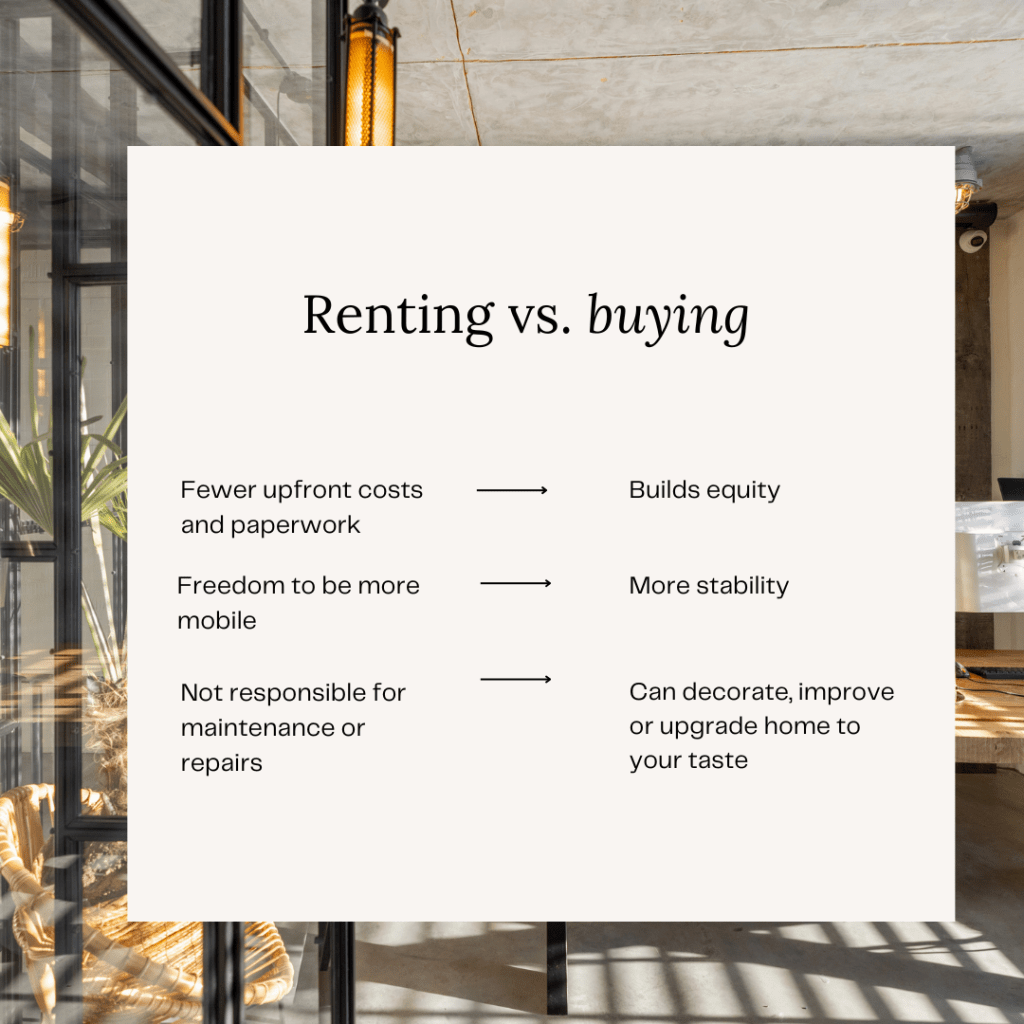
The Beauty of Renting

Here’s where I like to shift the narrative: renting isn’t a “failure.” Renting gives you flexibility, space to change paths without being tied to a mortgage. It allows you to focus on building your foundation, whether that’s paying off debt, growing savings, or preparing for the home that will truly fit your life later on.

My Personal Take

There have been seasons when buying a home was the right move for me, and seasons when renting gave me the freedom I needed. The truth is, neither one makes you more “grown up” or more successful. What matters is whether your choice lines up with your values and with God’s plan for your life.

A Final Word

Whether you buy or rent, your worth isn’t tied to your mortgage statement. Proverbs 24:3 says, “By wisdom a house is built, and by understanding it is established.” The wisdom comes first—the house comes second.

So if you’re thinking about buying, pray about it, run the numbers, count the costs, and make sure it fits not just your budget, but your calling. And when the time is right, you’ll step into it with peace, not pressure.

And if you do end up with that yard, may God bless you with the kind of joy that makes it more than just a piece of land, it becomes a piece of your story.